Contents 3 dk okuma
Important Note
This page is not medical advice. Although the potential benefits of Tongkat Ali are supported by research, it should not be used to treat any health problems. Consult a healthcare professional before using any supplement that affects hormone levels.
What is Tongkat Ali?
Tongkat Ali (Eurycoma longifolia) is a slow-growing tree native to Southeast Asian rainforests. Its root has been used for centuries in Malay traditional medicine (Jamu) for energy, libido, stress resistance and general vitality. Also known as "Longjack" or "Malaysian Ginseng".
Among the active compounds of the plant quasinoids, alkaloids and peptides is available. Quasinoids (primarily euricomanone) are the best-studied compounds and are responsible for most of the biological activity of the plant. Standardized extracts are usually normalized according to eurycomanone content.
Mechanism of Effect

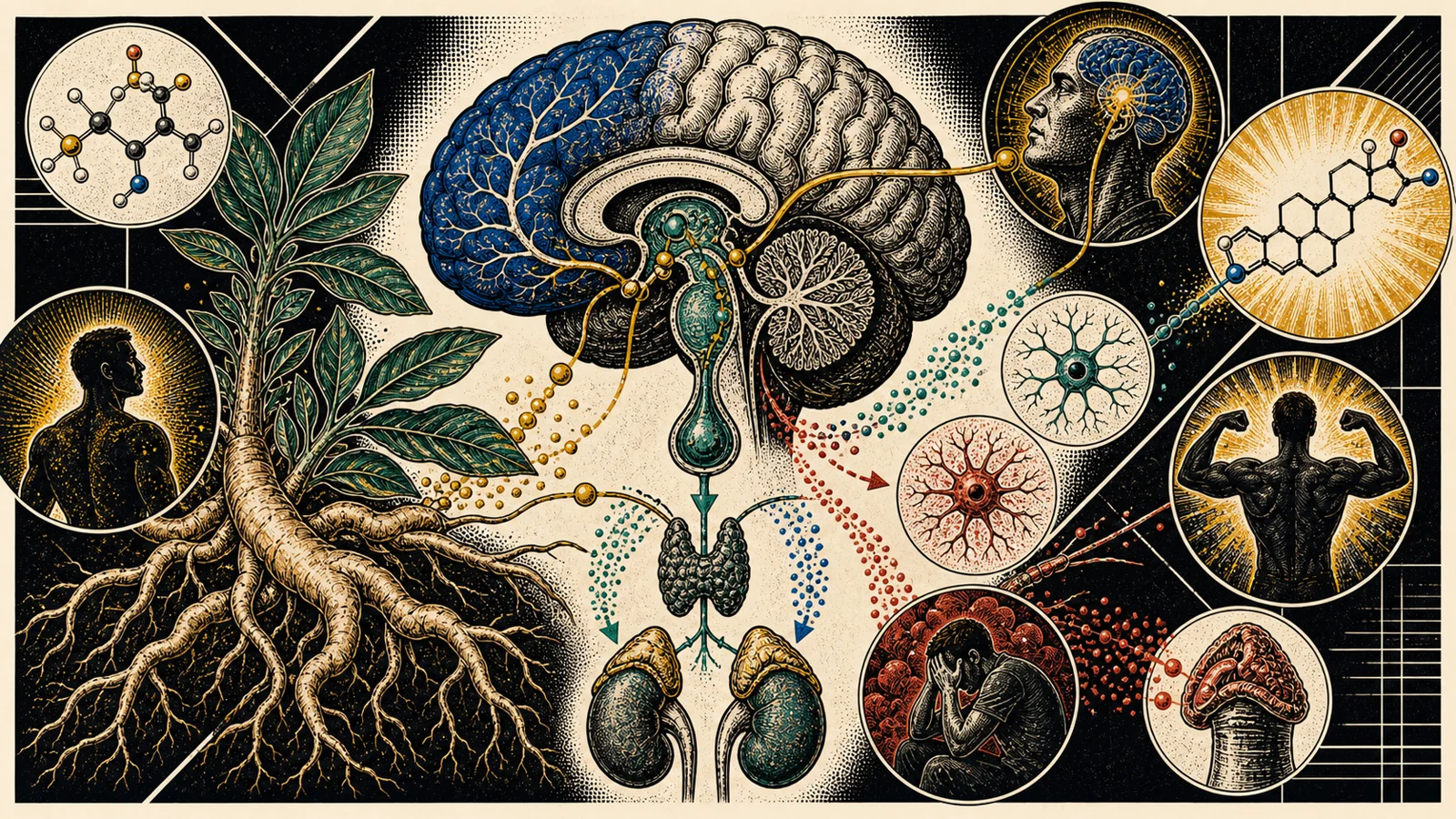
| mechanism | target | Conclusion |
|---|---|---|
| cortisol suppression | Glucocorticoid receptors, HPA axis | Increased stress tolerance, energy recovery |
| SHBG inhibition | Sex hormone binding globulin | Free testosterone increase |
| LH stimulation | Pituitary-gonad axis | Testosterone synthesis support |
| antioxidant effect | ROS scavenging | Cellular protection, mitochondrial support |
Clinical Evidence
A double-blind randomized study (Talbott, etc.) published in 2013 showed that 4 weeks of Tongkat Ali use in stressed adults reduced cortisol levels by 16%, increased testosterone levels by 37%, and significantly improved stress scores compared to placebo. Another study from 2012 found positive effects on testosterone, muscle mass and strength in older men.
⚠ Research Limitations
Most human studies on Tongkat Ali have small sample sizes and some are sponsored studies. Larger, independent studies are required to generalize the findings.
Tongkat Ali in a Nootropic Context
Tongkat Ali's cognitive effects occur through indirect mechanisms. It alleviates the harmful effects of chronic stress on cognitive performance through cortisol reduction. Supporting testosterone levels may have indirect benefits on motivation, energy and cognitive clarity, especially in middle-aged and older-aged men. Direct neurotransmitter effects are limited.
Dosage Protocol
| Intended Use | Dose | Timing |
|---|---|---|
| Stress/cortisol management | 200–400 mg/day (std. extract) | Morning, with food |
| Dose used in studies | 200 mg/day (100:1 extract) | morning |
| cyclic use | Use for 5 days / 2 days break | For tolerance management |
Safety and Side Effects
Tongkat Ali has been well tolerated in studies. In terms of liver safety, no problems have been identified in long-term human studies. Possible side effects:
- Insomnia or increased arousal (especially when taken in the evening)
- Mild nervousness or agitation (at high doses)
- Hormone-sensitive conditions (prostate cancer, PCOS, etc.): Do not use due to testosterone effect
- Those receiving hormone therapy: Consult physician for potential interactions
Sources
- Talbott SM, et al. (2013). Effect of Tongkat Ali on stress hormones and psychological mood state in moderately stressed subjects. Journal of the International Society of Sports Nutrition, 10, 28. Search PubMed (match unverified)
- Hamzah S, Yusof A. (2003). The ergogenic effects of Eurycoma longifolia Jack. British Journal of Sports Medicine, 37(5), 464–470. Search PubMed (match unverified)
- Henkel RR, et al. (2014). Tongkat Ali as a potential herbal supplement for physically active male and female seniors. Phytotherapy Research, 28(4), 544–550. Search PubMed (match unverified)
- Shuid AN, et al. (2011). Eurycoma longifolia increases testosterone level and bone structure in male osteoporotic rats. Evidence-Based Complementary and Alternative Medicine. Search PubMed (match unverified)
Link verification checks the identity of the publication; it does not constitute independent expert review of clinical claims. Our evidence and source methodology · Source directory
Frequently Asked Questions
Tongkat Ali increases stress tolerance by lowering cortisol levels and supports free testosterone bioavailability. It may have positive effects on energy, motivation and cognitive performance under stress.
Clinical studies show that Tongkat Ali can significantly increase free testosterone levels, especially in men who are under stress or have low testosterone levels. The effects may be more limited in young men who already have normal testosterone levels.
Some research suggests that Tongkat Ali may also benefit women by reducing cortisol and supporting energy. However, its androgenic (male hormone-like) effects warrant medical consultation in PCOS or hormone-sensitive conditions.
Standard extracts should be normalized according to eurycomanone content. Commonly used concentration ratios of 200:1 or 100:1 indicate how many times the plant's active compounds are concentrated compared to the raw plant. The MIT-manufactured Physta® standardized extract is the most researched form.


