Contents 5 dk okuma
Important Note
This page is not medical advice. Although the potential benefits of Rhodiola rosea are supported by research, it should not be used to treat any health problems. Consult a healthcare professional.
What is Rhodiola Rosea?
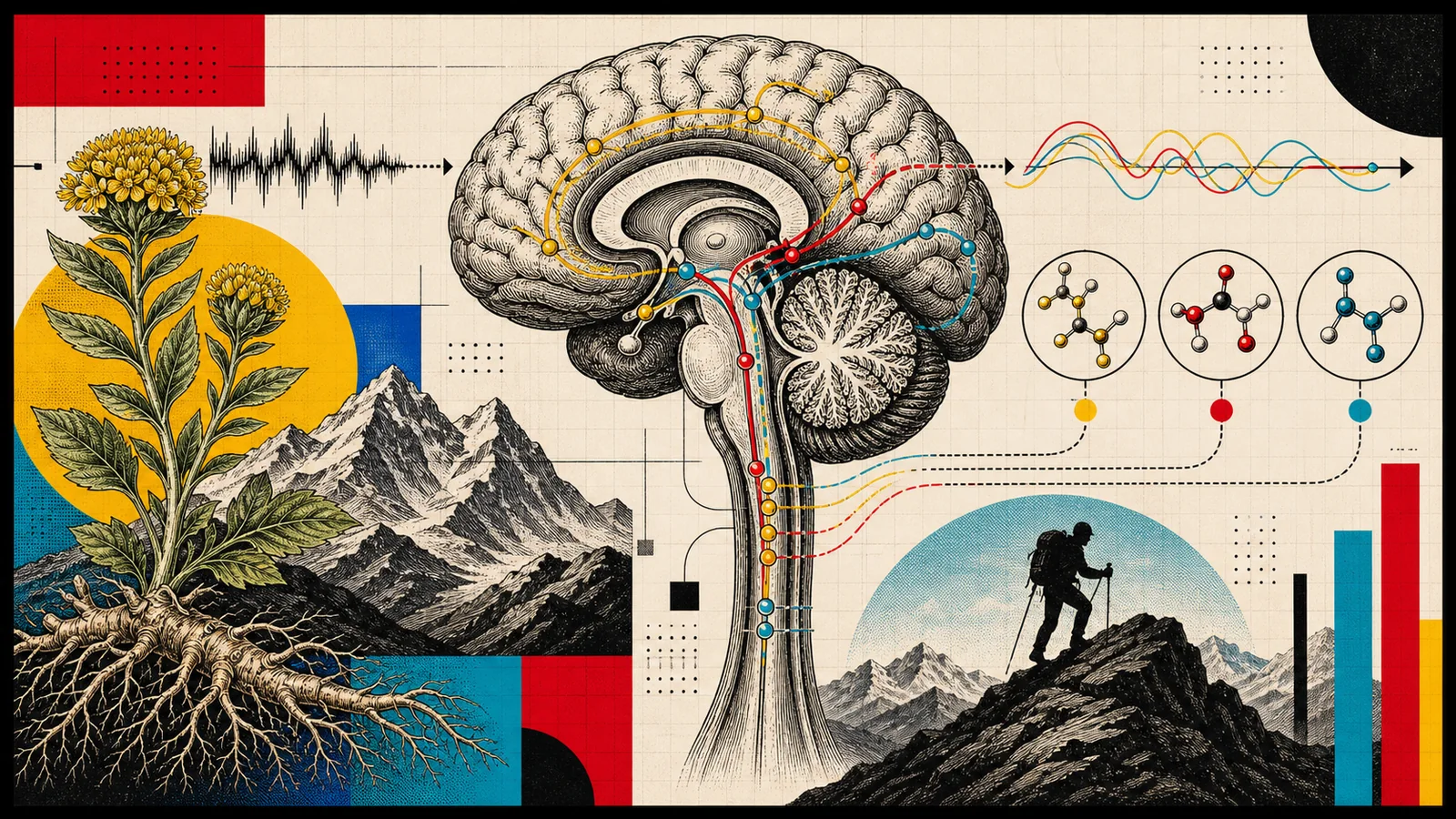
Rhodiola rosea is a perennial herb that grows in the cold and rugged mountainous terrains of Siberia, Northern Europe and the Arctic regions. This plant, also known as "golden root", "rose root" or "Arctic root", was named Rhodiola due to the characteristic rose-like scent of its root.
The historical use of the plant dates back thousands of years. Vikings for physical endurance; Siberian tribes used this plant as a traditional treatment to gain resistance to stress, fatigue and cold. During the Soviet period, Rhodiola was extensively researched as a performance enhancing agent for Russian soldiers and space researchers; During this period, the concept of adaptogen was largely shaped by Rhodiola studies.
Modern science has conducted extensive studies confirming the basis of Soviet research. Rhodiola has a solid evidence base as an adaptogenic herb that increases physiological and psychological resistance to stress, reduces fatigue, and maintains mental performance.
Active Compounds
Rhodiola rosea has two main active compounds: salidroside (p-tyrosol-glucoside) and rosavins (rosavin, rosarin, rosin). These two classes of compounds work synergistically but exhibit different action profiles.
The most widely accepted standardization format for quality assessment is based on the SHR-5 extract used in clinical studies. 3% rosavin + 1% salidroside combination. The effectiveness of products that do not have this standardization may vary; The ingredients of products that only say "Rhodiola rosea extract" on the label should be evaluated with suspicion.
| compound | target | Impact |
|---|---|---|
| salidroside | Monoamine system, HPA axis | Regulates stress hormones, neuroprotective |
| rosavin | Serotonin, dopamine pathways | Mood and energy regulation |
| p-Tyrosol | antioxidant defense | Oxidative stress reduction |
| Caffeic acid derivatives | Inflammation pathways | Anti-inflammatory effect |
Mechanism of Effect

Rhodiola rosea exhibits a multi-target effect profile. The basic mechanisms are:
Monoamine modulation: Rhodiola slightly inhibits the monoamine oxidase (MAO) enzyme responsible for the breakdown of serotonin and dopamine. It also regulates serotonin and dopamine levels through neurotransmitter carriers in the blood-brain barrier. This effect explains its mood-improving effects and increase in motivation.
HPA axis adaptation: Rhodiola normalizes the stress response of the hypothalamic-pituitary-adrenal (HPA) axis. Rather than suppressing cortisol release, it modulates hyperresponse and functions as a protective buffer against chronic stress. Thanks to this adaptogenic effect, individuals respond less physiologically to the same stress load.
Nitric oxide pathway: Rhodiola improves vascular reactivity and blood flow by modulating nitric oxide (NO) synthesis. This effect partially explains the benefits in exercise performance.
Lactate clearance: Reducing lactate accumulation plays a role in its effectiveness against physical fatigue. Rhodiola accelerates recovery by clearing lactic acid accumulated in muscle tissue faster during intense exercise.
Clinical Evidence
Although a significant portion of Rhodiola rosea research was published during the Soviet period, modern double-blind placebo-controlled studies also largely support these findings.
Darbinyan et al. In the double-blind crossover design study conducted by (2000), healthy physicians who were on night duty and therefore working under fatigue were evaluated. Repeated use of low-dose SHR-5 extract resulted in significant improvements in cognitive measures related to work performance and mental fatigue compared to placebo.
Spasov et al. (2000) also reported that 20 days of SHR-5 use in a similar student population was associated with significant improvements in tests of cognitive function and mental performance.
Shevtsov et al. (2003) revealed that a single dose of Rhodiola significantly improved short-term cognitive performance and attention tests compared to placebo in 161 military personnel. This study remains one of the strongest lines of evidence supporting the acute effectiveness of Rhodiola.
Dosage Protocol
| Purpose | Dose | Timing | Note |
|---|---|---|---|
| acute mental fatigue | 200–400 mg | Morning, on an empty stomach | 30 minutes before meals for fastest absorption. |
| Chronic stress/adaptation | 200mg | Morning + afternoon | Split doses provide more stable effect |
| before exercise | 200mg | 1 hour before training | Recommended for endurance sports |
Important: Rhodiola has mild stimulant properties. Evening or nighttime intake may make sleep onset difficult; Therefore, the last dose should be taken before 15:00 in the afternoon. It is also thought that daily and cyclical use (use for 5 days, take a break for 2 days) prevents the development of tolerance.
⚠ Situations to Consider
Caution should be exercised in individuals with bipolar disorder or manic tendencies; Rhodiola's stimulant and mood-stabilizing effects may trigger manic episodes. It is recommended not to use during pregnancy and breastfeeding as there is not enough safety data. Those using MAO inhibitors and those receiving antidepressant treatment should consult their doctor before starting.
Safety and Side Effects
Rhodiola rosea is a well-tolerated and safe herbal product based on available research. Serious side effects are extremely rare. The most commonly reported side effects are:
- Dizziness or mild headache (especially in the beginning)
- Difficulty sleeping or vivid dreams with night use
- Feeling of restlessness or palpitations (high dose or personal sensitivity)
- Dry mouth (rare)
The majority of these side effects disappear with dose reduction or timing adjustment. Rhodiola's long-term safety is supported largely by its history of traditional use, not by clinical studies; However, in existing studies, use for up to 12 weeks has been found to be safe.
Sources
- Darbinyan V, et al. (2000). Rhodiola rosea in stress induced fatigue - a double blind cross-over study of a standardized extract SHR-5 with a repeated low-dose regimen on the mental performance of healthy physicians during night duty. Phytomedicine, 7(5), 365–371. PubMed · PMID 11081987
- Spasov AA, et al. (2000). A double-blind, placebo-controlled pilot study of the stimulating and adaptogenic effect of Rhodiola rosea SHR-5 extract on the fatigue of students caused by stress during an examination period with a repeated low-dose regimen. Phytomedicine, 7(2), 85–89. PubMed · PMID 10839209
- Shevtsov VA, et al. (2003). A randomized trial of two different doses of a SHR-5 Rhodiola rosea extract versus placebo and control of capacity for mental work. Phytomedicine, 10(2-3), 95–105. PubMed · PMID 12725561
- Panossian A, Wikman G. (2010). Effects of Adaptogens on the Central Nervous System and the Molecular Mechanisms Associated with Their Stress-Protective Activity. Pharmaceuticals, 3(1), 188–224. PubMed · PMID 27713248
- Ishaque S, et al. (2012). Rhodiola rosea for physical and mental fatigue: a systematic review. BMC Complementary and Alternative Medicine, 12, 70. PubMed · PMID 22643043
Link verification checks the identity of the publication; it does not constitute independent expert review of clinical claims. Our evidence and source methodology · Source directory
Frequently Asked Questions
Rhodiola rosea is an adaptogenic herb that increases the body's resistance to stress. Its main effects include reducing mental fatigue, supporting attention and concentration, regulating mood and increasing physical endurance. Thanks to its active compounds called salidroside and rosavin, it reduces cortisol load by balancing the HPA balance; It also has a mild regulatory effect on the serotonin and dopamine systems.
The most commonly used dose range in clinical studies is 200–400 mg daily. The standard extract is expected to contain 3 percent rosavin and 1 percent salidroside. Due to its mild stimulant effect, it is recommended to take it in the morning or in the afternoon, preferably 30 minutes before a meal. To prevent the development of tolerance, cyclical use may be preferred: use for 5 days, take a break for 2 days.
Rhodiola rosea is an herbal product that is generally well tolerated and considered safe. The most commonly reported side effects include mild dizziness or headache in the initial period, difficulty sleeping in the evening, and feeling restless or palpitating at high doses. People with bipolar disorder, using MAO inhibitors, or being treated with antidepressants should consult their doctor before use. It is not recommended during pregnancy and breastfeeding as there is not enough safety data.
Rhodiola rosea has two different windows of action. Acute effects, particularly improvements in mental fatigue and attention, may be felt 30–60 minutes after ingestion; Single dose studies in military personnel support this. Chronic adaptogenic effects, that is, permanent increase in stress resistance and improvement in general energy level, occur after 2–4 weeks of regular use. It becomes evident during the week.
Rhodiola rosea is freely available as a legal herbal supplement in Türkiye; There are no controlled substance restrictions. It is available from wellness stores, pharmacies and online supplement sellers. When purchasing, choosing brands that provide 3 percent rosavin and 1 percent salidroside standardization and third-party laboratory testing (COA certificate) is the most reliable way to guarantee product quality.


