Contents 2 min read
Information
This content is for educational and informational purposes only; It does not constitute medical advice. If you are sensitive to caffeine, have a heart rhythm disorder, or have an anxiety disorder, consult a physician before use.
Which doses were studied in humans?
Owen et al. (2008) studied 50 mg caffeine plus 100 mg L-theanine in 27 people; some attention-switching measures improved. The study used behavioral tests; it does not prove an ideal 2:1 ratio for everyone or guaranteed prevention of caffeine adverse effects.
| Study | caffeine | L-Theanine | Study context |
|---|---|---|---|
| Owen et al. (2008) | 50mg | 100 mg | 27 adults; single dose, attention-switching measures |
| Giesbrecht et al. (2010) | 40 mg | 97 mg | 44 adults; selected attention and alertness measures |
| Haskell et al. (2008) | 150 mg | 250 mg | Acute crossover study; cognition and mood measures |
Small studies have examined some attention measures; a universal ideal ratio, prevention of caffeine side effects or safe use for everyone has not been established.
Mechanism and clinical interpretation
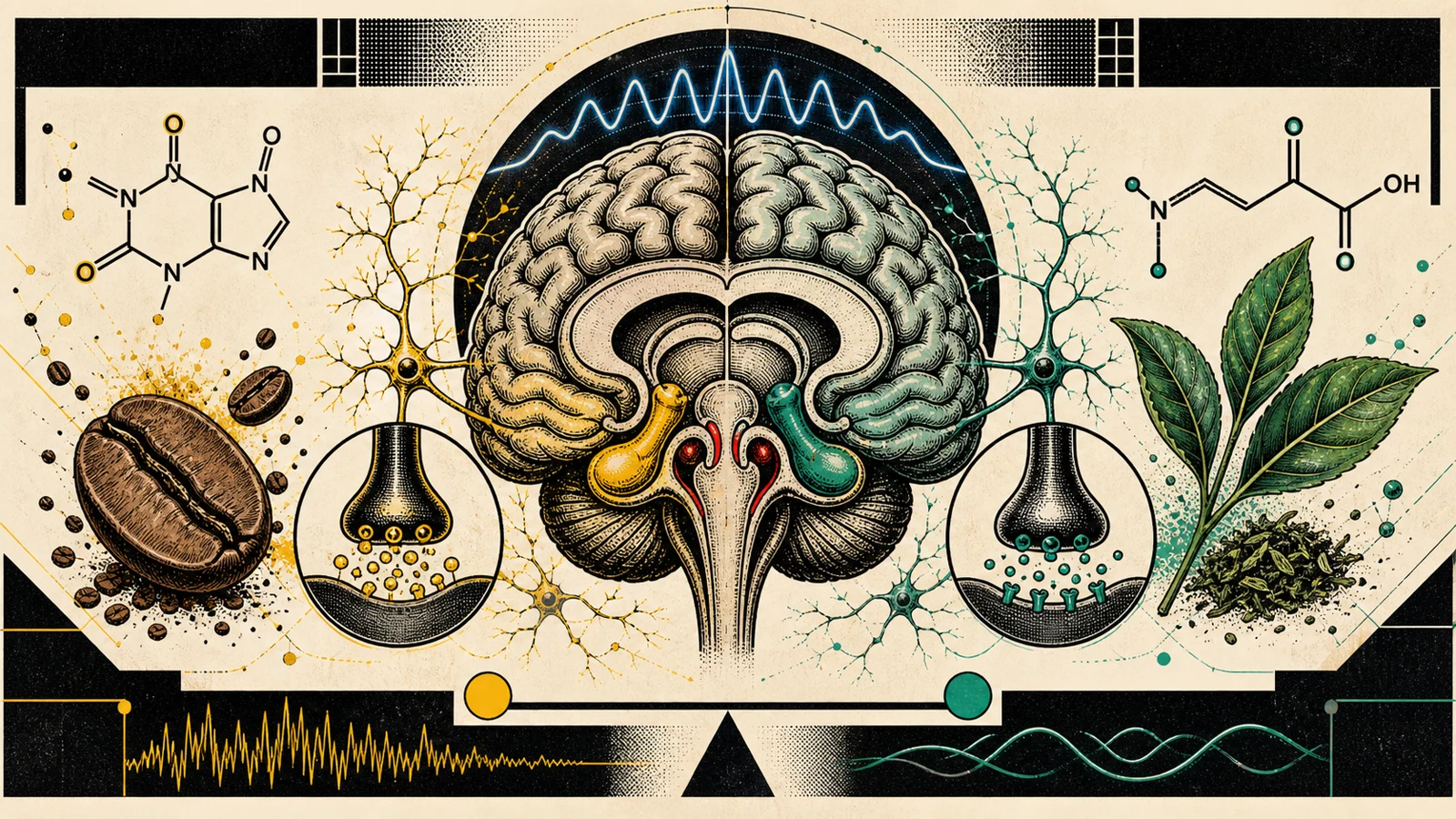
Caffeine blocks adenosine receptors. Changes in EEG or behavioral tests with L-theanine do not establish the same clinical effect in every person.

Timing and safety limits
Caffeine can disrupt sleep; sensitivity, medications and timing matter. Study doses are not personal starting-dose or daily-use recommendations.
⚠ Beware of Caffeine
L-theanine does not make caffeine safe for everyone. Pregnancy, heart rhythm problems, marked anxiety or medication use require individual assessment.
Sources
- Owen, G.N. et al. (2008). The combined effects of L-Theanine and caffeine on cognitive performance and mood. Nutritional Neuroscience, 11(4), 193–198. PubMed · PMID 18681988
- Giesbrecht, T. et al. (2010). The combination of L-Theanine and caffeine improves cognitive performance and increases subjective alertness. Nutritional Neuroscience, 13(6), 283–290. PubMed · PMID 21040626
- Haskell, C.F. et al. (2008). The effects of L-Theanine, caffeine and their combination on cognition and mood. Biological Psychology, 77(2), 113–122. PubMed · PMID 18006208
Link verification checks the identity of the publication; it does not constitute independent expert review of clinical claims. Our evidence and source methodology · Source directory
Frequently Asked Questions
Owen et al. (2008) studied 50 mg caffeine plus 100 mg L-theanine in 27 people; some attention-switching measures improved. The study used behavioral tests; it does not prove an ideal 2:1 ratio for everyone or guaranteed prevention of caffeine adverse effects.
Small studies have examined some attention measures; a universal ideal ratio, prevention of caffeine side effects or safe use for everyone has not been established.
Caffeine can disrupt sleep; sensitivity, medications and timing matter. Study doses are not personal starting-dose or daily-use recommendations.
L-theanine has also been studied alone; these studies do not guarantee calming effects, sleep treatment or use without side effects for everyone.
L-theanine does not make caffeine safe for everyone. Pregnancy, heart rhythm problems, marked anxiety or medication use require individual assessment.


