Contents 3 dk okuma
Important Note
This page is not medical advice. Since Panax ginseng may affect blood sugar and blood clotting, those taking medications and those with chronic diseases should not use it without consulting a healthcare professional.
What is Panax Ginseng?
Panax ginseng (panax ginseng), is an adaptogen originating from Korea, China and Siberia, valued as the "root of life" in traditional Asian medicine. The name "Panax" comes from Greek meaning "cure for everything". panacea comes from the word. Siberian ginseng (Eleutherococcus) should not be confused with ; These are different plants.
Key compounds responsible for the plant's effects ginsenosides It is a group of steroidal compounds called (saponins). Different ginsenosides, such as Rb1 and Rg1, sometimes show opposing effects; This increases the importance of standardized extracts.
Mechanism of Effect

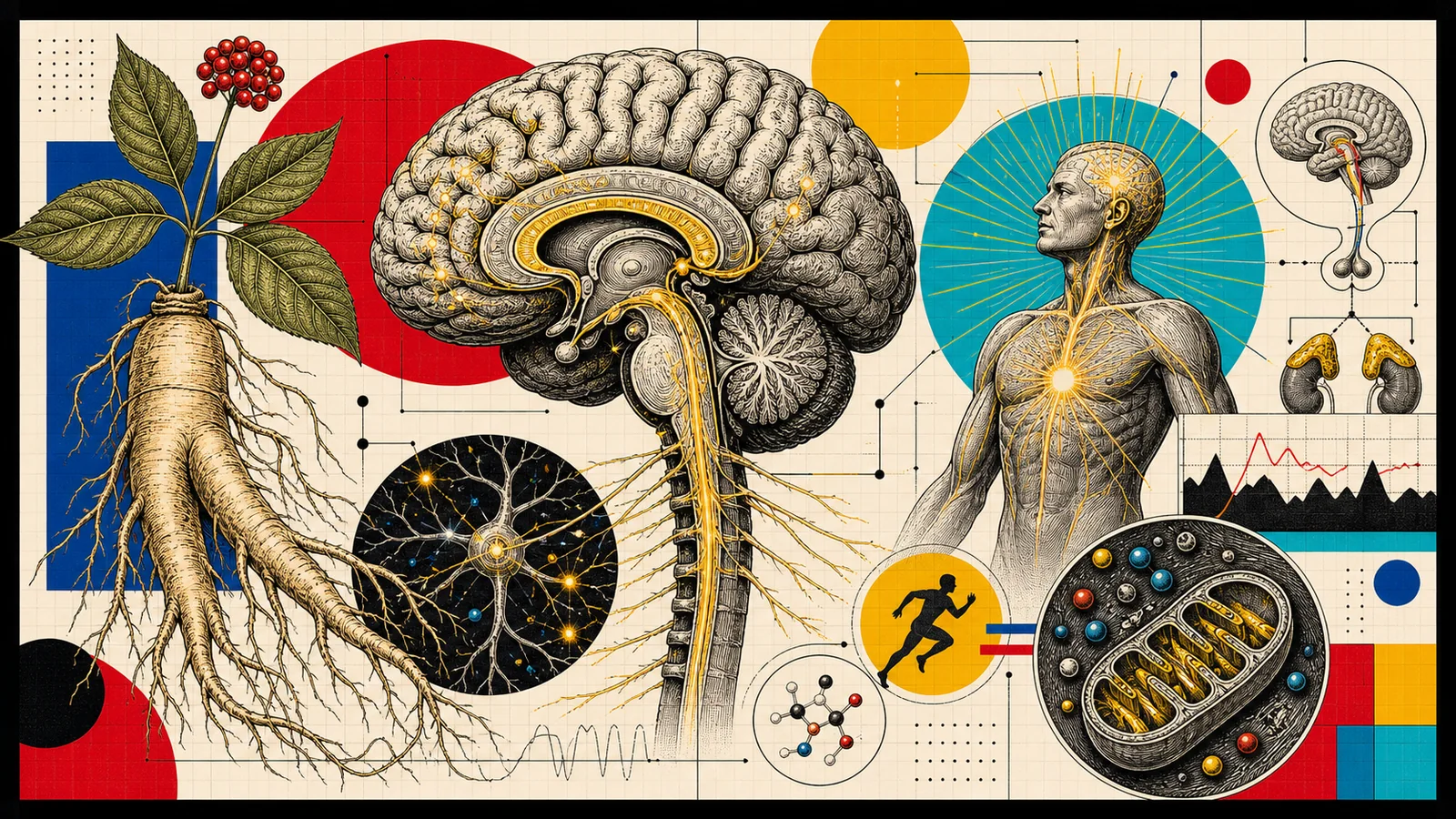
As an adaptogen, Panax ginseng balances the stress response via the hypothalamic-pituitary-adrenal (HPA) axis. Ginsenosides also act through nitric oxide signaling, neurotransmitter modulation, and antioxidant pathways.
| Compound / Pathway | mechanism | Impact |
|---|---|---|
| Ginsenoside Rg1 | Stimulant, nitric oxide increase | Energy, blood flow, alertness |
| Ginsenoside Rb1 | Calming, neuroprotective | Memory support, balance |
| HPA axis modulation | Balancing the cortisol response | Resistance to stress and fatigue |
| glucose metabolism | Insulin sensitivity/glucose uptake | Drop in postprandial blood sugar |
Clinical Evidence
Reay et al. (2005) showed that 200 mg of Panax ginseng extract reduced mental fatigue and lowered postprandial blood sugar during challenging mental tasks in healthy individuals. The effect was especially pronounced in cognitively taxing tasks.
Scholey et al. (2010), American ginseng (Panax quinquefolius) reported in their double-blind study that the acute dose improved working memory performance and subjective calmness measurements. (Note: this finding is the subject of this page. panax ginsengIt belongs to American ginseng, a related species of; Since ginsenoside profiles vary from species to species, the effects may not be exactly the same.) In general, it indicates that ginseng may have acute effects on both cognitive and mood dimensions.
⚠ Research Limitations
Ginseng studies may produce inconsistent results due to differences in extract standardization (ginsenoside ratios). Evidence for long-term cognitive benefits is still limited and larger, standardized studies are needed.
Dosage Protocol
The form most used in clinical studies is extracts, usually standardized to 4–7% ginsenoside. Daytime intake is preferred due to its stimulating effect.
| Intended Use | Dose | Timing |
|---|---|---|
| Cognitive support/fatigue | 200–400 mg standardized extract | Morning, with food |
| acute working memory | 200mg | 1–2 hours before the task |
| General adaptogen use | 200 mg/day | Daytime; avoid taking at night |
Cycle recommendation: Some users take a short break after 2–3 weeks of use to prevent tolerance development. Due to the stimulant effect, evening doses may disrupt sleep.
Safety and Side Effects
Panax ginseng is generally well tolerated; However, its stimulant nature may cause some side effects:
- Insomnia (especially at night)
- Nervousness, restlessness, palpitations
- Headache, digestive upset
- Hypoglycemia (caution in those using diabetes medication)
Who Does It Interact With?
- Anticoagulants (warfarin): May reduce effect/alter bleeding risk
- Diabetes medications: May additionally lower blood sugar - risk of hypoglycemia
- Stimulants / caffeine: Overstimulation, palpitations
- MAO inhibitors: Theoretical interaction, attention
Sources
- Reay JL, Kennedy DO, Scholey AB. (2005). Single doses of Panax ginseng (G115) reduce blood glucose levels and improve cognitive performance during sustained mental activity. Journal of Psychopharmacology, 19(4), 357–365. PubMed · PMID 15982990
- Scholey A, et al. (2010). Effects of American ginseng (Panax quinquefolius) on neurocognitive function: an acute, randomised, double-blind, placebo-controlled, crossover study. Psychopharmacology, 212(3), 345–356. PubMed · PMID 20676609
- Kennedy DO, Scholey AB. (2003). Ginseng: potential for the enhancement of cognitive performance and mood. Pharmacology Biochemistry and Behavior, 75(3), 687–700. PubMed · PMID 12895687
- Geng J, et al. (2010). Ginseng for cognition. Cochrane Database of Systematic Reviews, (12), CD007769. Search PubMed (match unverified)
Link verification checks the identity of the publication; it does not constitute independent expert review of clinical claims. Our evidence and source methodology · Source directory
Frequently Asked Questions
Panax Ginseng is an adaptogen used to reduce mental fatigue, support working memory and increase resistance to stress, primarily through its active compounds called ginsenosides. It also has researched positive effects on regulating blood sugar. It may help maintain mental performance during cognitively demanding tasks.
The most commonly used dose in clinical studies is 200 to 400 mg daily of 4 to 7 percent ginsenoside standardized extract. For acute cognitive support, 200 mg may be taken 1–2 hours before duty. Morning or daytime intake should be preferred, as evening doses may disrupt sleep due to its stimulating effect.
Panax Ginseng is generally well tolerated; However, some people may experience insomnia, irritability, palpitations, headaches, or digestive upset. For those taking diabetes medications, there is a risk of hypoglycemia as it may additionally lower blood sugar. Those using anticoagulants, pregnant or breastfeeding individuals, and those with chronic diseases should consult a healthcare professional before use.
Panax Ginseng is not a controlled or banned substance in Türkiye; It is freely sold as a food supplement. It is available in standardized capsule or tablet form through pharmacies, health food stores and reliable online sellers. When choosing a product, it is important for quality to choose brands from certified manufacturers that specify the ginsenoside percentage.
With an acute dose, the effect usually begins to be felt 1 to 3 hours after ingestion; It manifests itself especially as a decrease in mental fatigue and an increase in mental clarity. Adaptogenic and long-term benefits usually become apparent within 2 to 4 weeks with regular use. Some users take a short break after 2–3 weeks of use to prevent tolerance development.


