Contents 3 dk okuma
Information
This content is for educational and informational purposes only; It does not constitute medical advice. If low motivation persists or there are symptoms of depression, contact a healthcare professional.
What Does Dopamine Actually Do?
Main function of dopamine reward expectation and is effort motivation. When the possibility of achieving a goal appears, dopamine rises and this rise provides the energy needed to take action. So dopamine is activated most strongly when you "chase" the reward, not when you "get" it.
Animal studies show this clearly: a dopamine-depleted subject still "likes" the reward but is less likely to exert effort to obtain it. does not want. Therefore, low dopamine tone is experienced as apathy, procrastination, and an “inability to get started.”
Major Dopamine Pathways
| pathway | Connected Region | Function |
|---|---|---|
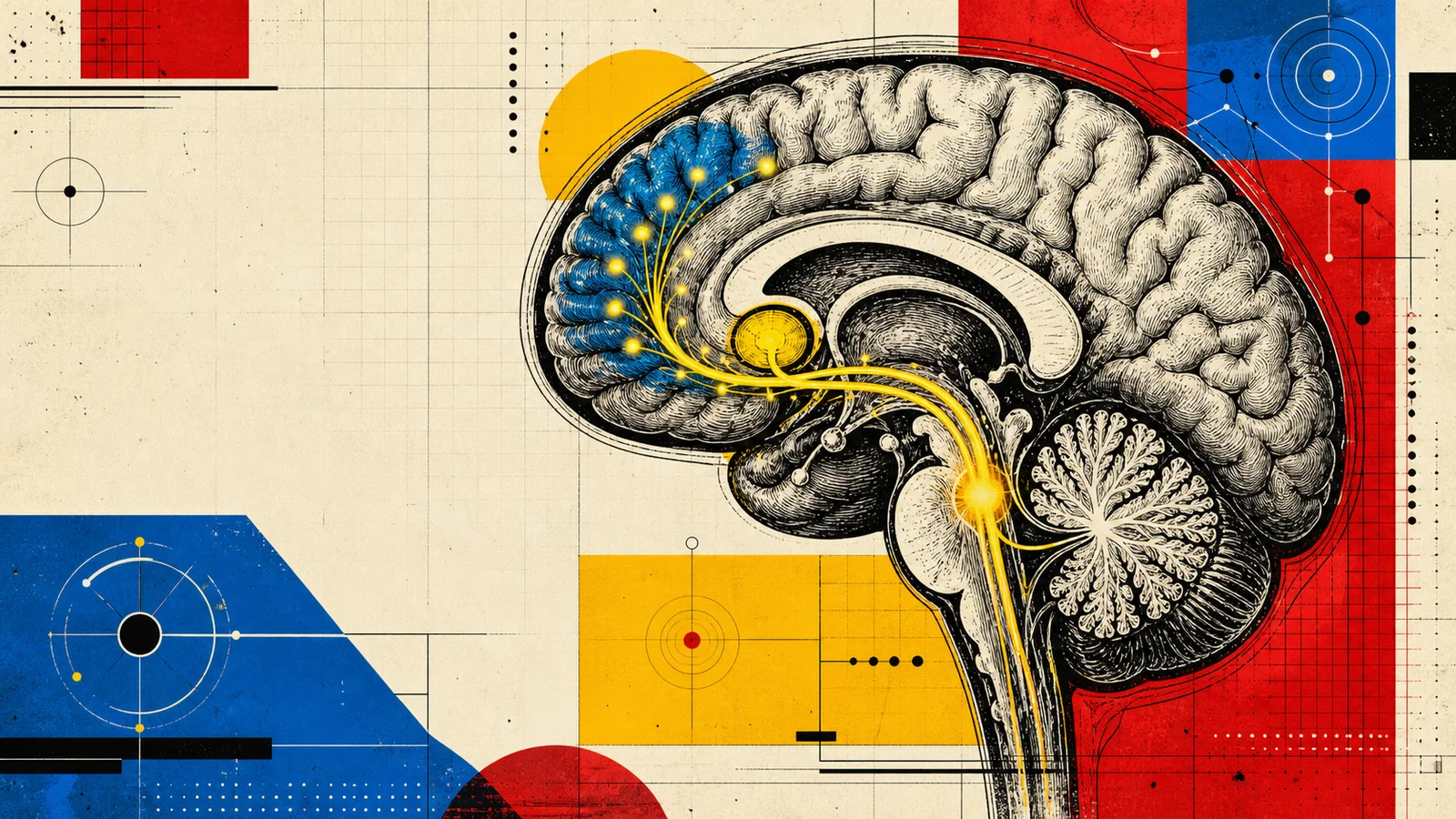
| mesolimbic | VTA → Nucleus accumbens | Reward, motivation, reinforcement |
| mesocortical | VTA → Prefrontal cortex | Focus, planning, executive functions |
| Nigrostriatal | Substantia nigra → Striatum | motion control |
| tuberoinfundibular | Hypothalamus → Pituitary | Regulation of prolactin release |
How is Dopamine Produced?
The synthesis of dopamine begins with a dietary amino acid. The pathway is as follows:
- L-Phenylalanine → L-Tyrosine → L-DOPA → dopamine
The rate-limiting step in this chain is that the enzyme tyrosine hydroxylase converts tyrosine to L-DOPA. This is why tyrosine and its direct product, L-DOPA, are at the heart of dopaminergic nootropics.

Dopaminergic Nootropics
The following compounds support dopamine synthesis or dopaminergic function by different mechanisms:
- N-Acetyl-L-Tyrosine (NALT): The more bioavailable form of tyrosine. There is evidence that it helps maintain performance under acute stress, insomnia, or intense cognitive load—that is, when dopamine and noradrenaline are rapidly depleted. Its effect is limited in rested and well-nourished individuals.
- Mucuna pruriens: naturally L-DOPA It is the only herbal source containing Because it is a direct precursor of dopamine, its effect may be stronger than that of tyrosine; However, for this reason it should be used more carefully and a cyclical approach should be adopted.
- rhodiola rosea: As an adaptogenic herb, it slightly inhibits the enzymes (MAO) that break down dopamine and noradrenaline, contributing to keeping these neurotransmitters active for longer. It reduces mental fatigue and increases endurance.
⚠ Dopamine Receptor Sensitivity
Constantly and aggressively “driving up” dopamine can lead to receptor downregulation; that is, the system responds less to the same stimulus over time. For potent dopaminergics such as Mucuna, cyclical use (e.g. 5 days on / 2 days off) is recommended. Constant high dopamine stimulation does not increase motivation, it depletes it.
Practical Suggestions
The most sustainable way to support motivation is to combine supplements with behavioral strategies: breaking challenging tasks into small steps, attributing reward to process rather than effort, maintaining basal dopamine tone with quality sleep and regular exercise. Nootropics do not replace this system; fine-tunes it.
Sources
- Salamone JD, Correa M. (2012). The mysterious motivational functions of mesolimbic dopamine. Neuron, 76(3), 470–485. PubMed · PMID 23141060
- Jongkees BJ, et al. (2015). Effect of tyrosine supplementation on clinical and healthy populations under stress or cognitive demands. Journal of Psychiatric Research, 70, 50–57. Search PubMed (match unverified)
- Lampariello LR, et al. (2012). The magic velvet bean of Mucuna pruriens. Journal of Traditional and Complementary Medicine, 2(4), 331–339. PubMed · PMID 24716148
- Olsson EM, et al. (2009). A randomised, double-blind trial of Rhodiola rosea extract SHR-5 in fatigue. Planta Medica, 75(2), 105–112. Search PubMed (match unverified)
Link verification checks the identity of the publication; it does not constitute independent expert review of clinical claims. Our evidence and source methodology · Source directory
Frequently Asked Questions
No, this is a common misconception. Dopamine is mainly related to reward expectation and effort motivation. When the possibility of achieving a goal appears, dopamine rises and provides the energy needed to take action. It comes into play most powerfully when the reward is pursued, not when it is achieved.
Low dopamine tone often manifests as apathy, chronic procrastination, inability to get started, and lack of motivation. Affected people may continue to like something, but they do not want to put in the effort to get it. If this condition is permanent, it is necessary to consult a healthcare professional.
L-Tyrosine is the leading amino acid of the dopamine synthesis chain. However, its effect is especially pronounced under acute stress, insomnia or intense cognitive load; There is evidence that it helps maintain performance in these conditions. Its effect is quite limited in individuals who are rested and adequately nourished.
Mucuna pruriens is the only herbal source that naturally contains L-DOPA, the direct precursor of dopamine. Therefore, its effect may be faster and stronger than tyrosine. However, for the same reason, it should be used more carefully; A cycling approach should be adopted to maintain receptor sensitivity.
No, it could be the opposite. Constantly and aggressively elevating dopamine leads to receptor downregulation; That is, the brain responds less to the same stimulus over time. The most sustainable approach is to cycle supplements and supplement them with quality sleep, regular exercise, and behavioral strategies.


