Contents 4 dk okuma
Important Note
This page is not medical advice. While the potential benefits of N-Acetyl L-Tyrosine are supported by research, it should not be used to diagnose or treat any health problem. Consult a healthcare professional before starting supplementation.
What is N-Acetyl L-Tyrosine?
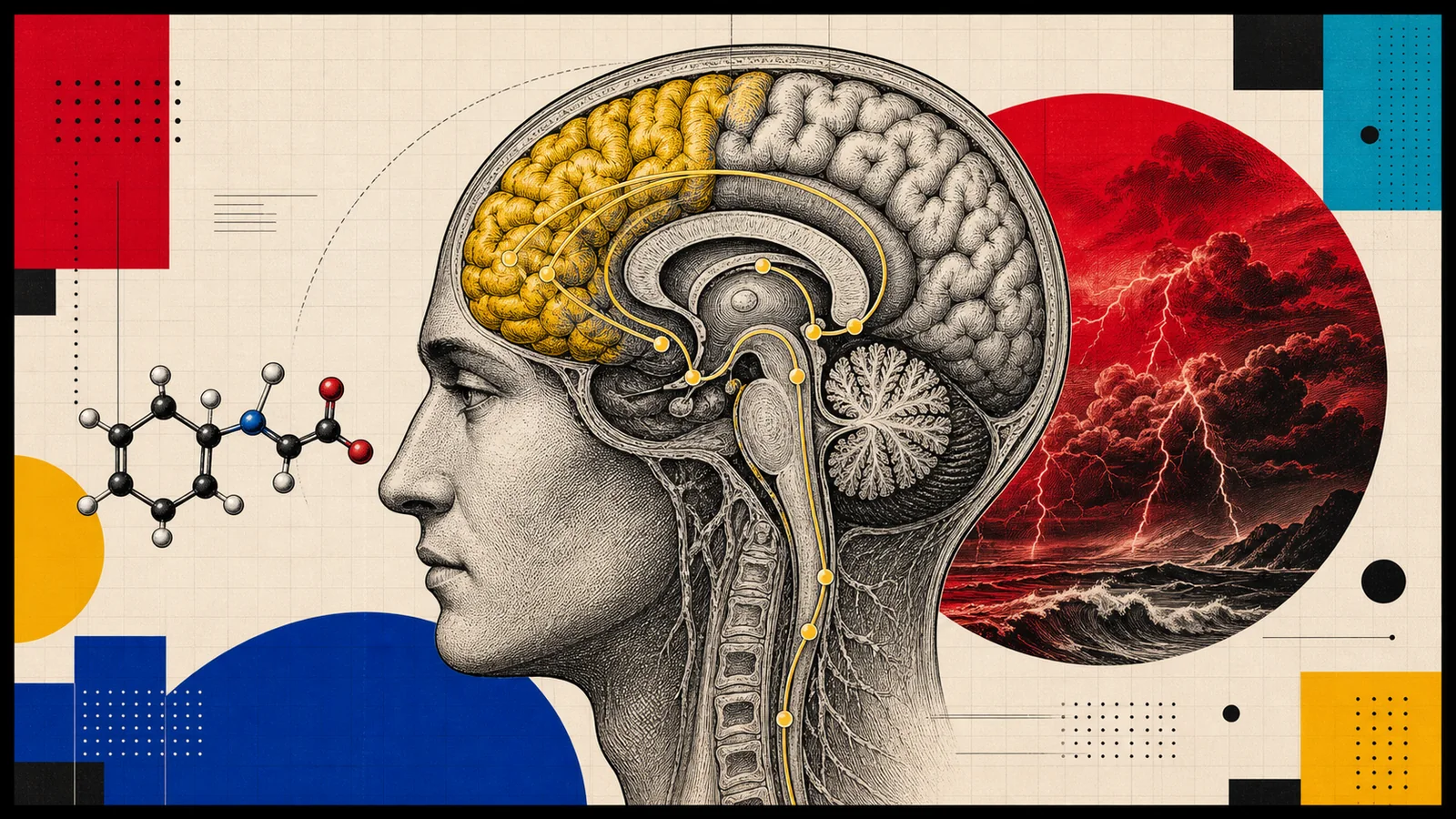
N-Acetyl L-Tyrosine (NALT), L-Tyrosine It is the form of an amino acid with an acetyl group added to the amino group. L-Tyrosine produces substances in the body such as dopamine, noradrenaline (norepinephrine) and adrenaline. catecholamine It is the precursor of thyroid hormones as well as neurotransmitters.
The purpose of acetylation is to increase the water solubility of tyrosine. However, the conversion efficiency of NALT to free tyrosine in humans is low: Magnusson et al. (1989) reported that, upon intravenous administration, the majority of NALT (approximately 56%) was excreted unchanged in the urine and produced only a limited increase in plasma tyrosine. Therefore, many researchers argue that plain L-Tyrosine is more reliable as a catecholamine precursor. NALT is still widely used as a form with high resolution and practical application.
Mechanism of Effect

The functional logic of NALT is based on providing raw material for catecholamine synthesis. In conditions such as intense stress, cold, noise or sleep deprivation, the brain rapidly depletes dopamine and noradrenaline. This includes depletion, attention, working memory, and decision-making. executive functions causes deterioration.
Providing additional tyrosine may help maintain catecholamine synthesis by increasing the substrate of the enzyme tyrosine hydroxylase. The point is: NALT is basically under acute stress conditions maintains performance; does not provide a significant cognitive increase in low-stress, rested individuals.
| pathway | Process | Conclusion |
|---|---|---|
| Tyrosine → L-DOPA | Tyrosine hydroxylase (rate limiting) | Dopamine precursor increase |
| Dopamine → Noradrenaline | Dopamine beta-hydroxylase | Alertness, stress response |
| catecholamine reserve | Regeneration under stress | Preservation of executive function |
| thyroid pathway | Substrate for thyroid hormone synthesis | (Indirect; dose requires caution) |
Clinical Evidence
Much of the tyrosine literature focuses on the context of stress and performance. Neri et al. (1995) reported that tyrosine supplementation in individuals exposed to one night of sleep deprivation significantly attenuated performance decline on cognitive tasks and alertness compared to placebo.
Mahoney et al. (2007) showed that tyrosine protected working memory performance in participants exposed to cold stress. Similarly, studies in military and multi-task stress scenarios indicate that tyrosine can reduce stress-induced cognitive decline. These findings were largely achieved with L-Tyrosine; Direct human data specific to NALT is more limited.
⚠ Research Limitations
Most of the evidence has been obtained with free L-Tyrosine, and the conversion efficiency of NALT in humans is unclear. Benefits are only evident under conditions of acute stress/sleep deprivation; A "cognitive enhancing" effect should not be expected in rested, stress-free individuals.
Dosage Protocol
NALT is used as an acute, "as needed" supplement. It is typically taken 30–60 minutes before a stressful task, exam, or sleep-deprived shift.
| Intended Use | Dose | Timing |
|---|---|---|
| Acute stress/focus (NALT) | 350–500 mg | 30–60 minutes before stressful task |
| Sleep deprivation support | 500 mg | Before shift/sleep period |
| Comparison: plain L-Tyrosine | 500–2000 mg | Acute, same window |
Note: Plain L-Tyrosine has generally been used at higher doses (scaled per kilogram) in studies. For NALT, 350–500 mg is a practical starting range; Need-based use is recommended instead of continuous/daily chronic use.
Safety and Side Effects
NALT and L-Tyrosine are generally well tolerated at recommended doses. Possible side effects:
- Headache, nausea
- Irritability or restlessness (especially with stimulants)
- Insomnia when taken late at night
- Feeling of heart palpitations (at high doses, in sensitive individuals)
⚠ Interaction and Contraindication Warning
Those using MAOI (monoamine oxidase inhibitor) should not take NALT/tyrosine; This combination can lead to dangerous increases in blood pressure (hypertensive crisis). Additionally, since tyrosine is the precursor of thyroid hormone, hyperthyroidism or Graves' disease Those who are using thyroid medication should not use it without consulting a physician. It may compete for the same transporters as Levodopa; Those receiving treatment for Parkinson's should be careful.
Sources
- Neri DF, et al. (1995). The effects of tyrosine on cognitive performance during extended wakefulness. Aviation, Space, and Environmental Medicine, 66(4), 313–319. PubMed · PMID 7794222
- Mahoney CR, et al. (2007). Tyrosine supplementation mitigates working memory decrements during cold exposure. Physiology & Behavior, 92(4), 575–582. PubMed · PMID 17585971
- Jongkees BJ, et al. (2015). Effect of tyrosine supplementation on clinical and healthy populations under stress or cognitive demands-A review. Journal of Psychiatric Research, 70, 50–57. Search PubMed (match unverified)
- Magnusson I, et al. (1989). N-acetyl-L-tyrosine and the bioavailability of tyrosine. Journal of Parenteral and Enteral Nutrition, 13(4), 423–425. Search PubMed (match unverified)
Link verification checks the identity of the publication; it does not constitute independent expert review of clinical claims. Our evidence and source methodology · Source directory
Frequently Asked Questions
N-Acetyl L-Tyrosine (NALT) provides the precursor required for the synthesis of catecholamine neurotransmitters such as dopamine and noradrenaline in the body. It helps protect executive functions such as attention, working memory and decision-making by supporting catecholamine reserves, which decrease especially under acute stress, sleep deprivation or intense mental load. No cognitive enhancing effect is expected in rested and stress-free individuals.
For tasks requiring acute stress or focus, the typical NALT dose is between 350-500 mg. This dose is taken 30-60 minutes before starting a stressful task, exam, or a sleep-deprived shift. Although higher doses (500-2000 mg) have been used in plain L-Tyrosine studies, 350-500 mg is considered a practical and safe starting range for NALT. Need-based use should be preferred instead of chronic daily use.
NALT is generally well tolerated at recommended doses and has a high safety profile. Possible side effects include headache, nausea, nervousness or restlessness, insomnia when taken at late hours, and heart palpitations in people sensitive to high doses. Those taking MAOI medications, those with hyperthyroidism or Graves' disease, and those being treated for Parkinson's should not use NALT without consulting a healthcare professional.
N-Acetyl L-Tyrosine is classified as a nutritional supplement in Türkiye and is available for sale without a prescription. It can be obtained in capsule or powder form from domestic sports nutrition and supplement stores or international online supplement platforms. Since customs regulations may change from time to time, it is recommended to check current regulations when ordering from abroad.
The effect begins approximately 30-60 minutes after taking NALT; Therefore, it is recommended to consume it in this window before a stressful task or exam. Since it is a compound with a half-life of approximately 2-3 hours, the duration of the effects is limited to this range. It does not provide a sustained cognitive increase; it only supports performance under conditions of catecholamine depletion, such as acute stress or sleep deprivation.


