Contents 3 dk okuma
Important Note
This page is not medical advice. Melatonin is a hormone; If you have chronic insomnia or an underlying health problem, consult a healthcare professional rather than self-treat.
⚠ Interaction and Usage Warning
melatonin does not become a habit and the potential for addiction is low; however, higher doses are generally not more effective and may cause morning drowsiness. With anticoagulants (warfarin), sedatives, immunosuppressants and some antihypertensives may interact. It should not be used during pregnancy, breastfeeding and autoimmune disorders without consulting a physician. Dark environment and avoiding blue light are important for effect demonstration.
What is Melatonin?
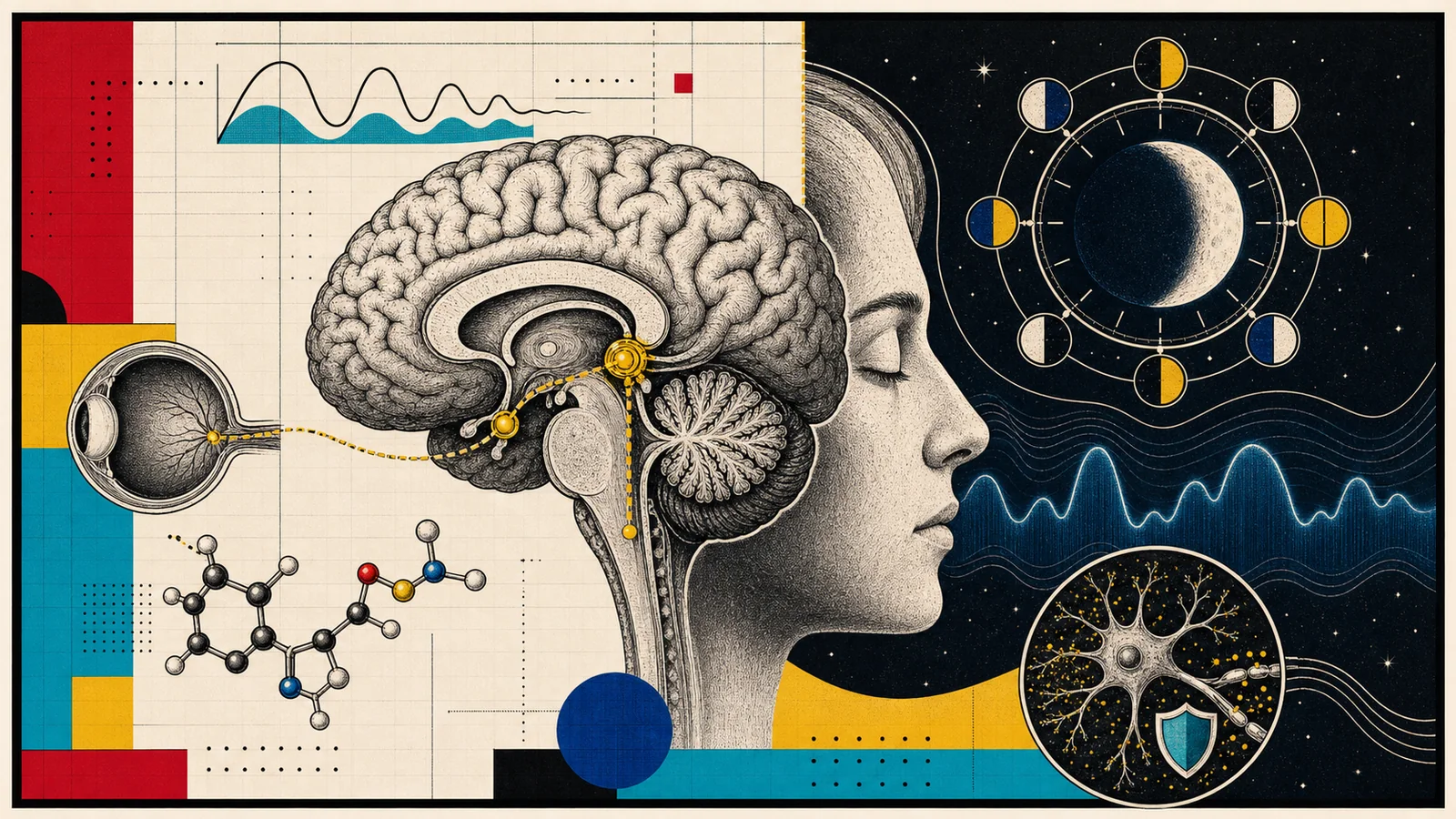
Melatonin (N-acetyl-5-methoxytryptamine) is a hormone produced by the pineal gland in the brain and secreted in response to darkness. By giving a "night" signal to the body's internal clock, it regulates the sleep-wake cycle, i.e. circadian rhythm regulates.
Melatonin, synthesized from serotonin, is suppressed by light exposure; Therefore, blue light emitted from screens in the evening can delay natural secretion. As a supplement, melatonin is used to externally strengthen this signal.
Mechanism of Effect

Melatonin in the brain MT1 and MT2 receptors It acts by binding. While MT1 receptors suppress the drive to wakefulness, MT2 receptors play a role in shifting the phase of the circadian rhythm. This makes melatonin a “time adjuster” (chronobiotic) rather than a “sleep trigger.”
| target | mechanism | Impact |
|---|---|---|
| MT1 receptor | Suppressing the wakefulness signal | Makes it easier to fall asleep |
| MT2 receptor | Circadian phase shift | Resets internal clock (jet-lag) |
| Suprachiasmatic nucleus (SCN) | Feedback on central clock | Stabilizes sleep-wake rhythm |
| antioxidant effect | Free radical scavenging | Cellular protection (secondary) |
Clinical Evidence
Brzezinski et al. (2005) meta-analysis revealed that melatonin significantly shortened sleep latency (time to fall asleep), slightly increased total sleep time, and improved overall sleep quality. Effect sizes are moderate but consistent.
Ferracioli-Oda et al. (2013) meta-analysis, which included 19 randomized studies, confirmed that melatonin both shortens sleep latency and increases sleep efficiency and total sleep time. The authors emphasized that, unlike other sleep medications, melatonin does not cause tolerance or loss of effect.
⚠ Research Note
Melatonin has the strongest evidence in circadian rhythm disorders (jet-lag, delayed sleep phase); In classic chronic insomnia, its effect is more modest. Since the actual melatonin content in products on the market can deviate greatly from what is on the label, quality and tested brands should be preferred.
Dosage Protocol
“More is better” does not apply to melatonin. Low doses (0.5–1 mg) are often as effective as, or even more effective than, higher doses and reduce the risk of morning drowsiness.
| Intended Use | Dose | Timing |
|---|---|---|
| Sleep latency / general | 0.5–1 mg | 30–60 minutes before bed |
| jet lag | 0.5–3mg | Bedtime in target time zone |
| delayed sleep phase | 0.5–1 mg | 1–2 hours before the desired bedtime |
Hint: Correct timing is more important than dose. While melatonin taken too late causes morning drowsiness, a low dose taken early promotes phase shift. Dark environments and avoiding screen light significantly increase the effect.
Safety and Side Effects
Melatonin is considered very safe in short-term use and is not habit-forming. Side effects that may occur are generally mild:
- Morning drowsiness/dizziness (especially with high doses)
- Headache, dizziness
- vivid dreams or nightmares
- mild nausea
Who Does It Interact With?
- Anticoagulants (warfarin): May increase the risk of bleeding
- Sedatives/benzodiazepines: excessive sedation
- Immunosuppressants: Caution due to immune effects
- Antihypertensives and diabetes medications: Effect may vary
Sources
- Brzezinski A, et al. (2005). Effects of exogenous melatonin on sleep: a meta-analysis. Sleep Medicine Reviews, 9(1), 41–50. Search PubMed (match unverified)
- Ferracioli-Oda E, Qawasmi A, Bloch MH. (2013). Meta-analysis: melatonin for the treatment of primary sleep disorders. PLOS ONE, 8(5), e63773. Search PubMed (match unverified)
- Auld F, et al. (2017). Evidence for the efficacy of melatonin in the treatment of primary adult sleep disorders. Sleep Medicine Reviews, 34, 10–22. PubMed · PMID 28648359
- Herxheimer A, Petrie KJ. (2002). Melatonin for the prevention and treatment of jet lag. Cochrane Database of Systematic Reviews, (2), CD001520. Search PubMed (match unverified)
Link verification checks the identity of the publication; it does not constitute independent expert review of clinical claims. Our evidence and source methodology · Source directory
Frequently Asked Questions
Melatonin is a hormone produced by the pineal gland and regulates the body's sleep-wake cycle (circadian rhythm). When taken as a supplement, it shortens the time to fall asleep (sleep latency) and helps correct rhythm disorders such as jet lag and night shift. It does not dramatically extend sleep time; Its main function is to give the body a "night time" signal, that is, to set the internal clock.
More doses of melatonin do not mean better effects. Clinical studies show that doses as low as 0.5–1 mg are as or more effective than higher doses. High doses (5–10 mg) increase the risk of morning drowsiness and dizziness. The general recommended approach is to start with 0.5–1 mg 30–60 minutes before bedtime and increase up to 3 mg if necessary. For jet lag, 0.5–3 mg can be used at bedtime in the target time zone.
Melatonin is considered very safe for short-term use and is not addictive. The most common side effects are morning drowsiness or drowsiness (especially at high doses), headache, dizziness, vivid dreams or nightmares, and mild nausea. These side effects are usually resolved by lowering the dose. Since it may interact with anticoagulants, sedatives, immunosuppressants and some antihypertensive drugs, those using these drugs should consult a physician.
In Türkiye, melatonin supplement can be sold without a prescription in pharmacies and some food supplement stores as a food supplement within the limits determined by the Ministry of Health (usually in doses of 1 mg and below). Higher dose formulations may be considered medicinal products and may require a prescription. It is recommended to confirm the legal status and content accuracy of the product from reliable sources before purchasing.
Oral melatonin usually begins to rise in blood levels 30–60 minutes after administration. Therefore, taking it approximately 30–60 minutes before bedtime is considered the optimal timing. Since its half-life is between 20 and 50 minutes, its effect decreases within a few hours; This explains why it is more successful at making it easier to fall asleep rather than prolonging sleep time throughout the night. Reducing evening blue light exposure significantly strengthens the natural and reinforcing effects of melatonin.


