Contents 3 dk okuma
Starting Trio
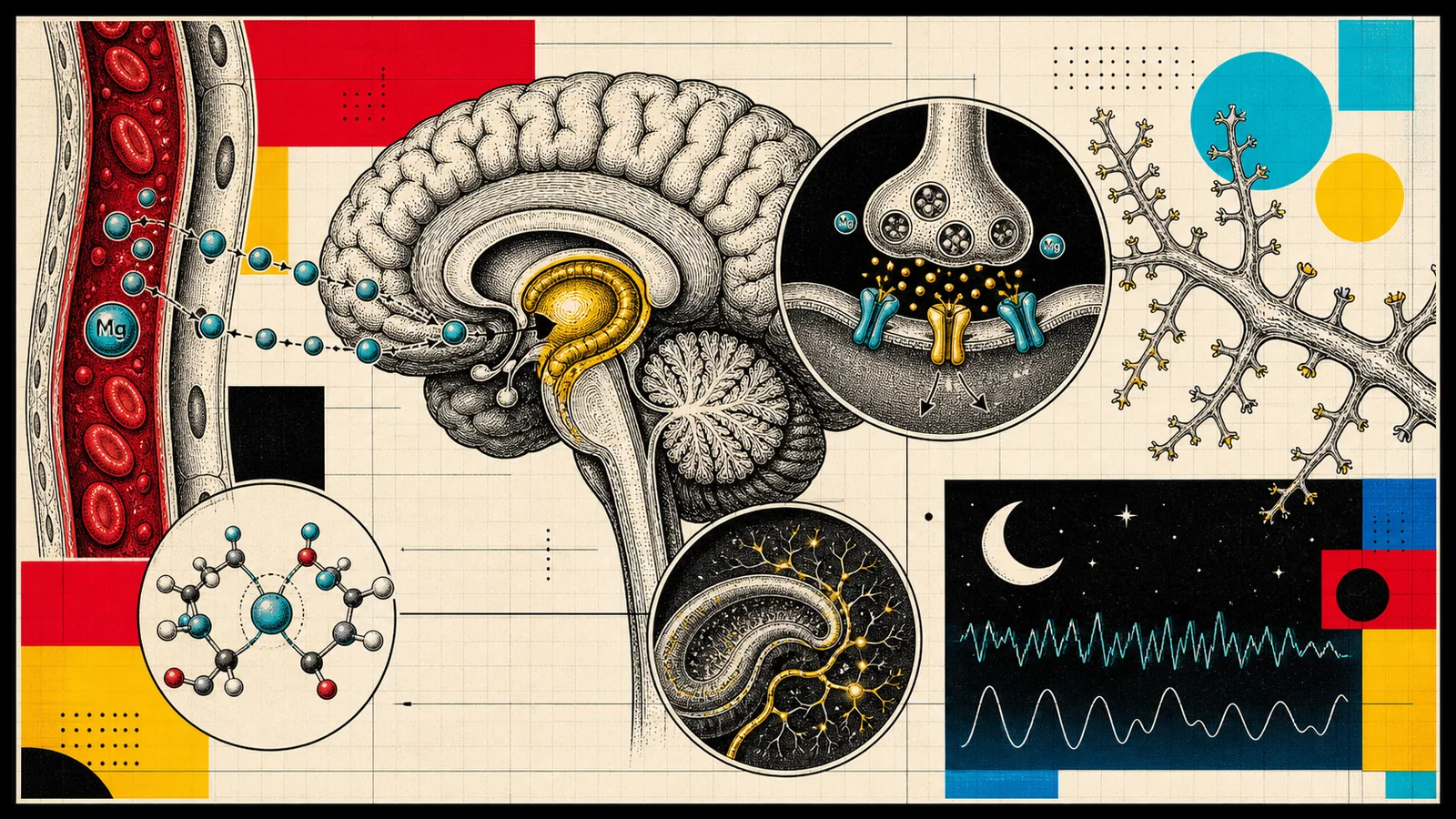
Magnesium L-Threonate, along with Lion's Mane and Bacopa Monnieri, is known as the "Starter Trio for Beginners". This combination provides a safe and evidence-based starting point for short- and long-term cognitive support.
What is Magnesium L-Threonate?
Magnesium L-Threonate is a salt form of magnesium bonded with L-threonic acid. From MIT in 2010, Dr. This compound, developed by Guosong Liu and his team, is significantly superior to other forms of magnesium (oxide, citrate, malate, glycinase) in its ability to cross the blood-brain barrier.
Magnesium plays a role in more than 300 enzymatic reactions of the body. Its critical importance for the brain stems from its function in the regulation of NMDA (N-methyl-D-aspartate) receptors. These receptors are central to learning and memory. long-term potentiation (LTP) manages the mechanism.
Why Are Other Forms of Magnesium Not Enough?
| Magnesium Form | BBB Pass | Brain Mg ↑ | Primary Use |
|---|---|---|---|
| L-Threonate | ✅ High | ✅ 15% increase | Cognitive support, sleep, brain health |
| Glycinase | medium | minimal | sleep, muscle relaxation |
| citrate | Low | minimal | General Mg deficiency, constipation |
| malate | Low | minimal | energy, fibromyalgia |
| oxide | too low | None | Antacid, cheap supplement |
Mechanism of Effect

NMDA receptor modulation: Magnesium directs voltage-dependent Mg²⁺ blockade of NMDA receptors. When brain magnesium levels are sufficient, these receptors work more efficiently, facilitating LTP (necessary for learning and memory) processes.
Synaptic density increase: Liu et al. (2010) study showed that Magnesium L-Threonate increased brain Mg²⁺ level and improved synaptic density (dendrite number and maturity).
Cortex and hippocampus support: It supports both short-term and long-term memory by increasing synaptic plasticity in the prefrontal cortex and hippocampus.
Clinical Evidence
In the double-blind, placebo-controlled randomized trial conducted by Liu et al. (2016), the MMFS-01 study, adults aged 50–70 with cognitive complaints received magnesium L-threonate for 12 weeks. The results reported improvements in overall cognitive ability, executive function and working memory compared with placebo. Because the sample was small, the findings require confirmation in larger studies.
Liu et al. (2010, MIT) reported in an animal model that increasing brain Mg²⁺ allowed older animals to reach the synaptic density of young people—a groundbreaking finding in terms of potential anti-aging neurological effect.
Dosage Protocol
| Intended Use | Dose | Timing | Notes |
|---|---|---|---|
| General cognitive support | 1.5–2 g/day (Magtein®) | morning + night | ~144 mg elemental Mg |
| sleep quality | 2g/day | 1–2 hours before bed | Can be combined with glycinase |
| Old age cognitive support | 2g/day | split doses | At least 12 weeks of use |
Important: Dosage is for the active ingredient Magnesium L-Threonate (Magtein®). The amount of elemental magnesium is approximately 7.2%; 2 g Magtein = ~144 mg elemental Mg.
Safety and Side Effects
Magnesium L-Threonate has been found safe in existing studies. Common side effects of high doses of magnesium: gastrointestinal upset or diarrhea It is quite rare in the L-Threonate form compared to other forms.
- Rare: initial headache (goes away in the first 1–2 weeks)
- Caution in people with renal failure (Mg excretion)
- Drug interaction: do not take simultaneously with antibiotics (tetracyclines, fluoroquinolones)
⚠ Important Notice
People with kidney failure should consult their doctor before starting magnesium supplements; Impaired kidney function can lead to magnesium accumulation and hypermagnesemia. An interval of at least 2 hours should be maintained with antibiotics, and simultaneous use should be avoided due to the absorbing effect.
Sources
- Slutsky I, et al. (2010). Enhancement of learning and memory by elevating brain magnesium. Neuron, 65(2), 165–177. PubMed · PMID 20152124
- Liu G, et al. (2016). Efficacy and safety of MMFS-01, a synapse density enhancer, for treating cognitive impairment in older adults. Journal of Alzheimer's Disease, 49(4), 971–990. Search PubMed (match unverified)
- Wang J, et al. (2013). Magnesium L-threonate prevents and restores memory deficits associated with neuropathic pain. Pain Physician, 16(5), E563. Search PubMed (match unverified)
- Zhang C, et al. (2022). A Magtein®, Magnesium L-Threonate, -Based Formula Improves Brain Cognitive Functions in Healthy Chinese Adults. Nutrients, 14(24), 5235. PubMed · PMID 36558392
Link verification checks the identity of the publication; it does not constitute independent expert review of clinical claims. Our evidence and source methodology · Source directory
Frequently Asked Questions
Magnesium L-Threonate is the only form of magnesium that can cross the blood-brain barrier. It increases synaptic density by modulating NMDA receptors in brain cells; In this way, learning capacity, short-term and long-term memory are supported. It also improves sleep quality and helps protect cognitive functions that decrease with aging.
The standard dose used in clinical studies is 1.5–2 grams of Magnesium L-Threonate per day (for Magtein brand products). This amount corresponds to approximately 144 mg of elemental magnesium. For general cognitive support, divided doses, morning and night, are recommended; Those who want to improve their sleep quality can take the entire dose 1–2 hours before bedtime.
Magnesium L-Threonate is the best tolerated form in terms of gastrointestinal side effects (diarrhea, upset stomach) compared to other forms of magnesium. Some users may experience mild headaches in the first 1–2 weeks of use; This usually goes away with continued use. It is recommended that people with kidney failure and those using tetracyclines and fluoroquinolone group antibiotics obtain doctor's approval.
Yes, Magnesium L-Threonate is a legal food supplement in Türkiye; It does not require any prescription. It can be found in pharmacies, vitamin markets and international e-commerce sites selling supplements. Imported products containing the original Magtein formula are priced higher; It is important for quality assurance to verify that it contains "Magtein" or "Magnesium L-Threonate" when purchasing.
Improvement in sleep quality is usually noticeable within the first week. Significant improvements in memory, learning, and overall cognitive performance typically occur after 2–4 weeks of regular use. Clinical studies show that the most comprehensive benefits are achieved with 8–12 weeks of continuous use; Therefore, patient and regular use is critical.


