Contents 3 dk okuma
Information
This content is for educational purposes only. In case of hormonal imbalance, prescription drug use, or pregnancy, a gynecologist or endocrinologist should be consulted.
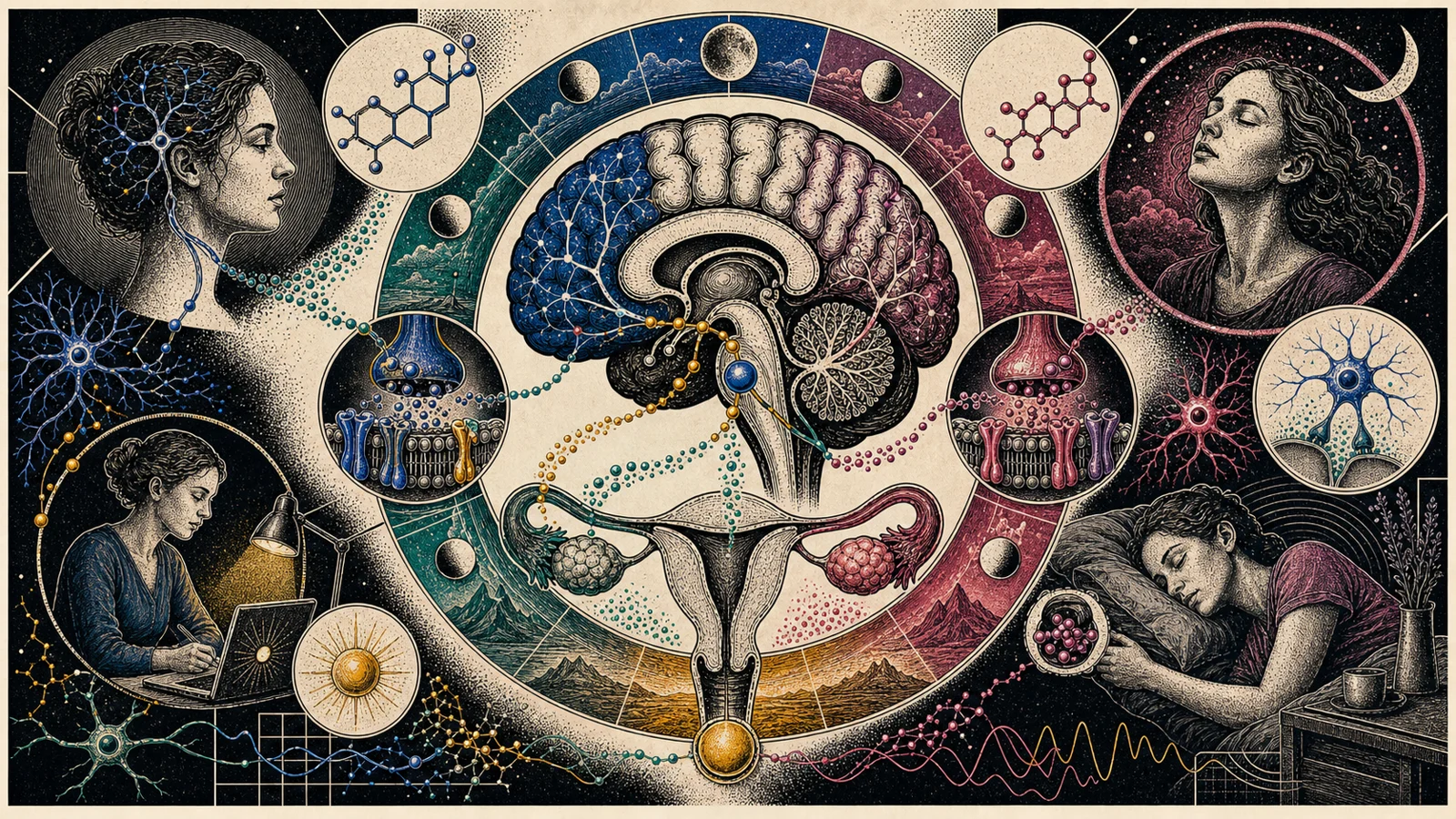
How Does the Hormonal Cycle Affect the Brain?
Increases estrogen, serotonin and dopamine receptor density; It supports BDNF production and has a neuroprotective effect. Progesterone, on the other hand, transforms into allopregnanolone, which potentiates GABA-A and acts as a calming hormone with an anxiolytic effect. The cyclical fluctuation of these hormones means that cognitive performance—particularly verbal memory, attention, and mood—changes throughout the cycle.

| Cycle Phase | Dominant Hormones | Cognitive Bias | Supportive Approach |
|---|---|---|---|
| Follicular (day 1–13) | Rising estrogen | Focus, verbal fluency, increased energy | Caffeine + L-Theanine, Lion's Mane |
| Ovulation (day 14) | LH peak, estrogen peak | Social intelligence, motivation at its peak | Minimal intervention, benefit from focus capacity |
| Luteal (day 15–28) | high progesterone | Brain fog, difficulty concentrating, irritability | Magnesium, B6, Ashwagandha |
| Premenstrual (day 26–28) | Progesterone drops rapidly | PMS symptoms, anxiety, mood swings | Saffron, magnesium, Omega-3 |
Nootropic Supplements for Women
Ashwagandha – HPA Axis and Hormonal Harmony
ashwagandhaBy regulating cortisol, it limits the HPA axis from disrupting the hormonal cycle. Chronic stress negatively affects the estrogen-progesterone balance; Cortisol regulation indirectly contributes to hormonal stability. It is also effective against increased anxiety during PMS. It should not be used during pregnancy and breastfeeding.
Magnesium - Luteal Phase Supporter
magnesiumis one of the most studied supplements in the context of PMS. Randomized studies show that 250–400 mg/day magnesium significantly reduces PMS symptoms, including anxiety, water retention, and headache. It is effective against both brain fog and irritability through GABA modulation and NMDA antagonism.
Vitamin D3 - Supporter of Estrogen Synthesis
vitamin D receptors (VDR) are present in ovarian tissue; Vitamin D plays a role in estrogen synthesis and steroid hormone production. Vitamin D deficiency is extremely common in women who experience depressive symptoms, low energy, and hormonal imbalance. Supplementation of 2000–4000 IU/day should be optimized by measuring serum levels.
Omega-3 (EPA) – PMS and Mood
EPA-dominated omega-3By regulating prostaglandin balance, it reduces the severity of dysmenorrhea and supports mood. Meta-analyses show that omega-3 containing more than 1 g of EPA per day improves PMS symptoms and depressive mood. Increasing intake during the luteal phase may be considered.
Lion's Mane - Cognitive Groundwork in the Follicular Phase
Lion's ManeIt increases neuroplasticity in the long term by supporting the production of NGF and BDNF. Building on the already high cognitive capacity in the follicular phase, regular use keeps the cognitive base high throughout the entire cycle. It is one of the most useful nootropics with its accumulation effect in daily use.
Interactions to Avoid
⚠ Drug Interactions
- St. John's wort: May metabolize birth control pills (OCS), reducing their effectiveness - women using oral contraceptives should never use
- High dose melatonin: May affect LH/FSH balance; It should be used with caution in those with cycle irregularities.
- 5-HTP: There is a risk of serotonin syndrome in women using antidepressants (SSRI/SNRI)
Perimenopause and Menopause: Additional Considerations
Estrogen fluctuations during perimenopause lead to brain fog, memory difficulties, and mood swings. During this period, Lion's Mane (NGF/BDNF support), omega-3 (anti-inflammatory, mood) and vitamin D (hormonal support) are especially valuable. Phytoestrogens (isoflavones) remain controversial; Current evidence indicates limited but safe support for symptom relief.
Sources
- Barth C, et al. (2015). Sex hormones affect neurotransmitters and shape the adult female brain during hormonal transition periods. Frontiers in Neuroscience, 9, 37. PubMed · PMID 25750611
- Facchinetti F, et al. (1991). Oral magnesium successfully relieves premenstrual mood changes. Obstetrics and Gynecology, 78(2), 177–181. PubMed · PMID 2067759
- Sublette ME, et al. (2011). Meta-analysis of the effects of EPA in clinical trials in depression. Journal of Clinical Psychiatry, 72(12), 1577–1584. Search PubMed (match unverified)
- McEwen BS, Milner TA. (2007). Hippocampal formation: shedding light on the influence of sex and stress on the brain. Brain Research Reviews, 55(2), 343–355. PubMed · PMID 17395265
Link verification checks the identity of the publication; it does not constitute independent expert review of clinical claims. Our evidence and source methodology · Source directory
Frequently Asked Questions
In general, since women's body weight and hormone profile are different, it is a prudent approach to start initial doses from the lower limit of male studies. Some substances (e.g. caffeine) may have a stronger effect during the luteal phase; During this period, reducing the dose may be considered.
St. John's wort reduces the effectiveness of oral contraceptives through CYP3A4 induction and is contraindicated. There are no known serious interactions with other nootropics; However, it is necessary to consult a physician before adding a new supplement.
Progesterone and its metabolite allopregnanolone potentiate GABA-A, producing a sedation-like effect; This may make focus and concentration difficult. Falling estrogen reduces serotonin and dopamine receptor density. Both together create a period of decreased cognitive acuity.
Extra caution is essential during pregnancy. Nutritional supplements such as high doses of vitamin D, B12 and folic acid can be used under the supervision of a physician. Most herbal nootropics (including ashwagandha, rhodiola, saffron) are not recommended because there is insufficient safety data in pregnancy.


