Contents 3 dk okuma
Important Note
This page is not medical advice. Ginkgo biloba is a plant that has blood thinning effects. Those who use anticoagulant drugs (aspirin, warfarin, etc.) should definitely get doctor's approval before surgery or during pregnancy.
What is Ginkgo Biloba?
Ginkgo biloba is the world's oldest tree species, known as a "living fossil" and appearing approximately 250 million years ago. The leaves of this plant, which has been used in traditional medicine in China for thousands of years, are also the focus of modern neuroscience research.
Ginkgo biloba used for nootropic purposes is not the raw leaf, standardized leaf extract. The most commonly researched form EGb 761 It is standardized to contain 24% flavonoid glycosides and 6% terpenlactone.
Active Compounds and Mechanism of Action

The nootropic effects of ginkgo biloba come from two main groups of compounds:
| Compound Group | Contents | Primary Effect |
|---|---|---|
| Flavonoid Glycosides | Kempferol, quercetin, isoramnetin | Antioxidant, free radical scavenging |
| Terpenlactones (Ginkgolides) | Ginkgolide A, B, C; bilobalide | PAF inhibition → vasodilation, neuroprotection |
| Ginkgolide B | PAF antagonist | Inhibition of platelet aggregation, increased blood flow |
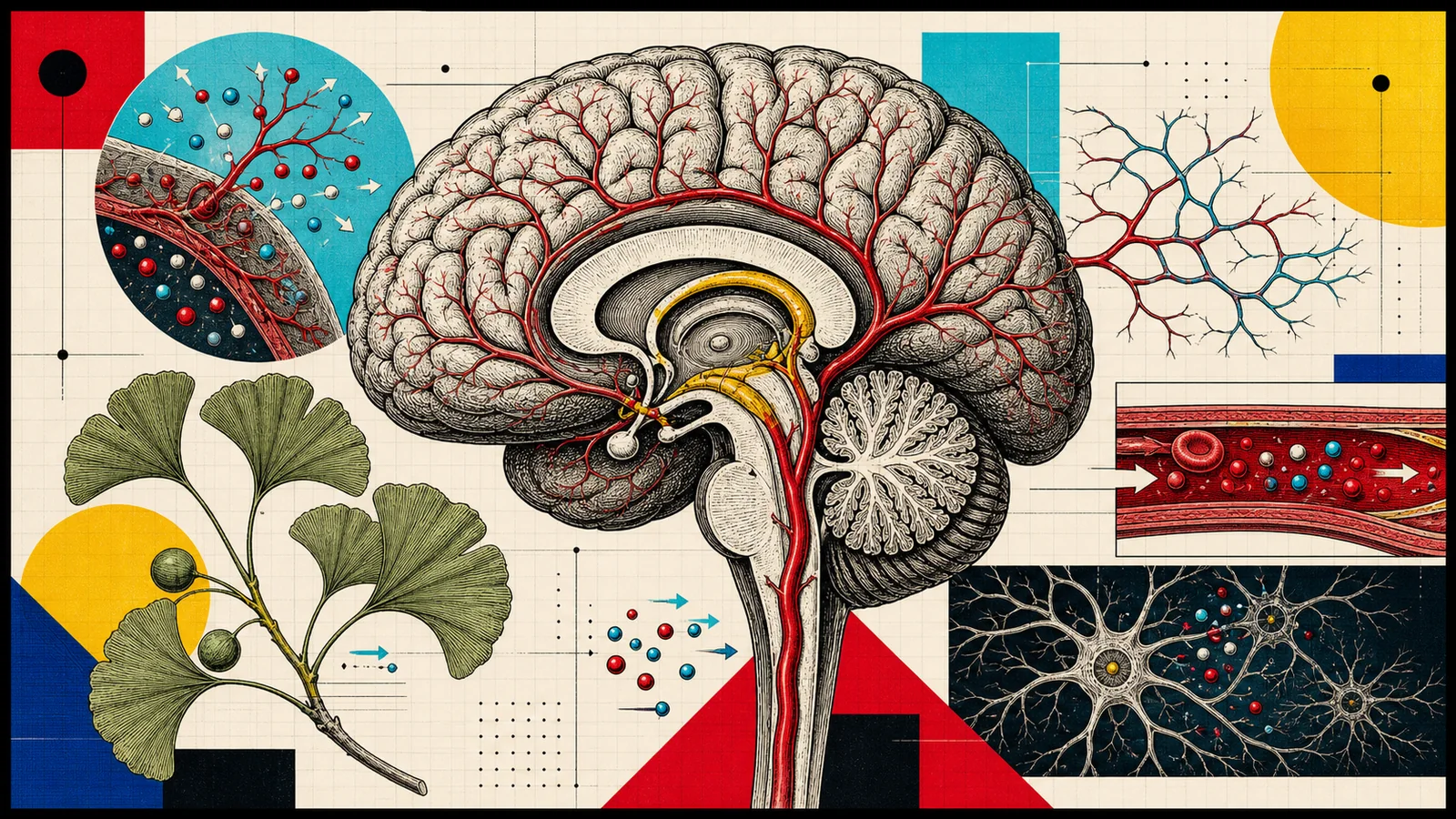
Cerebral vasodilation: Ginkgolide B dilates cerebral blood vessels by antagonizing platelet-activator factor (PAF). This increases the amount of oxygen and glucose going to the brain.
Antioxidant protection: Flavonoids protect neurons against oxidative stress and support mitochondrial function.
Neurotransmitter modulation: It affects neurotransmitter levels through inhibition of serotonin, dopamine and norepinephrine uptake.
Clinical Evidence
Ginkgo biloba, especially elderly individuals and mild cognitive impairment It has the strongest evidence base in patients. Effects appear to be more modest in healthy young individuals.
The study by Le Bars et al. (1997), published in JAMA, showed that EGb 761 significantly improved cognitive function and social functioning in patients with Alzheimer's disease compared with placebo.
The comprehensive GEM (Ginkgo Evaluation of Memory) study published in 2009 revealed that it did not reduce the risk of Alzheimer's in healthy individuals. These findings suggest that Ginkgo is not preventive, but symptomatic support indicates that it should be evaluated purposefully.
Dosage Protocol
| Intended Use | Dose | Timing | Notes |
|---|---|---|---|
| General cognitive support | 120 mg/day | 2 divided doses (60+60) | Take with food |
| Old age/memory | 240 mg/day | 3 divided doses | EGb 761 standard |
| Ringing in the ears (tinnitus) | 150–240 mg/day | split doses | 8–12 weeks trial period |
⚠ Blood Thinning Interaction
Ginkgo biloba may increase the risk of bleeding when taken with anticoagulant medications such as aspirin, warfarin, clopidogrel. It should be discontinued at least 2 weeks before surgery.
Safety and Side Effects
Standardized Ginkgo extract is generally considered safe. Observed side effects:
- Headache (usually temporary, in the first weeks)
- Gastrointestinal discomfort
- Dizziness (rare)
- Prolongation of bleeding time (in those using anticoagulants)
Important: Raw ginkgo leaves and especially raw seeds may contain neurotoxic ginkgotoxin (4'-O-methylpyridoxine), a vitamin B6 antagonist; this compound is not a ginkgolide. Use only standardized extract.
Sources
- Le Bars PL, et al. (1997). A placebo-controlled, double-blind, randomized trial of an extract of Ginkgo biloba for dementia. JAMA, 278(16), 1327–1332. Search PubMed (match unverified)
- DeKosky ST, et al. (2008). Ginkgo biloba for prevention of dementia: a randomized controlled trial. JAMA, 300(19), 2253–2262. PubMed · PMID 19017911
- Weinmann S, et al. (2010). Effects of Ginkgo biloba in dementia. BMC Geriatrics, 10, 14. Search PubMed (match unverified)
- Brondino N, et al. (2013). A systematic review and meta-analysis of Ginkgo biloba in neuropsychiatric disorders: from ancient tradition to modern-day medicine. Evidence-Based Complementary and Alternative Medicine, 2013, 915691. PubMed · PMID 23781271
- Tan MS, et al. (2015). Efficacy and adverse effects of ginkgo biloba for cognitive impairment and dementia: a systematic review and meta-analysis. Journal of Alzheimer's Disease, 43(2), 589–603. PubMed · PMID 25114079
Link verification checks the identity of the publication; it does not constitute independent expert review of clinical claims. Our evidence and source methodology · Source directory
Frequently Asked Questions
Ginkgo biloba increases cerebral blood flow, allowing more oxygen and glucose to reach the brain. Standardized extract (EGb 761) shows a supporting effect on memory, concentration and cognitive processing speed; It also protects neurons against oxidative damage thanks to its strong antioxidant properties.
120 mg per day of standardized extract (24 percent flavonoid glycoside, 6 percent terpenlactone) is recommended for general cognitive support and 240 mg for memory problems due to old age. The dose should be taken in 2-3 equal parts with food to avoid stomach upset.
The most common side effects are mild headache and digestive upset that occur in the first weeks; these are usually temporary. A more important risk is the blood-thinning effect: those who use anticoagulant drugs such as aspirin, warfarin or clopidogrel should consult their doctor before using Ginkgo biloba before surgery or during pregnancy.
Clinical studies show that cognitive effects generally begin to be felt after 4-6 weeks of regular use. For vascular effects such as tinnitus, a trial period of 8-12 weeks is recommended. Short-term use may not produce significant results.
Yes, Ginkgo biloba is sold completely legally in Türkiye as a food supplement. It is possible to find capsule forms containing standardized extract in pharmacies and health product stores. For effectiveness, it is necessary to choose products where the standardization "24 percent flavonoid glycoside, 6 percent terpenlactone" is stated on the packaging; Raw leaf tea or low standard products do not provide the same effect.


