Contents 3 dk okuma
Important Note
This page is not medical advice. Since 5-HTP directly affects the serotonin system, be sure to consult a physician before starting any supplements, especially those taking antidepressants.
⚠ Critical Interaction Warning - Serotonin Syndrome
5-HTP DO NOT use with SSRIs, SNRIs, MAO inhibitors, triptans or other antidepressants. This combination can be life-threatening to serotonin syndrome (agitation, tachycardia, hyperthermia, muscle stiffness, tremor). Additionally, long-term high-dose use without carbidopa may lead to excessive synthesis of serotonin in the periphery and theoretical cardiac risks; Long-term use should be avoided or done under the supervision of a physician.
What is 5-HTP?
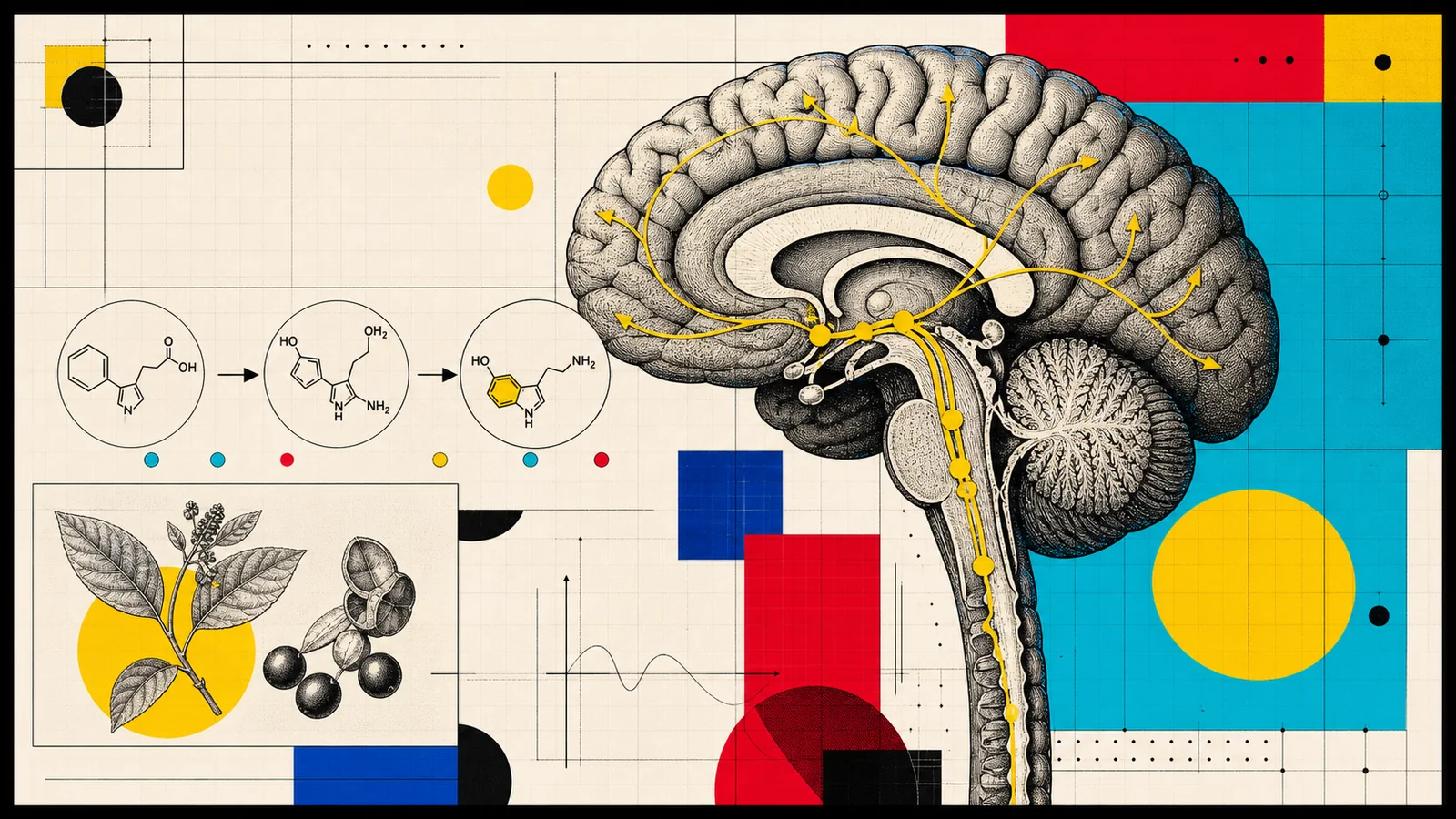
5-HTP (5-Hydroxytryptophan) is a compound produced in the body from the essential amino acid tryptophan and is a direct intermediate step in the synthesis of serotonin (5-HT). Commercial supplements often Griffonia simplicifolia It is obtained from the seeds of the West African plant called.
Unlike tryptophan, 5-HTP bypasses the rate-limiting enzyme tryptophan hydroxylase and converts directly to serotonin after crossing the blood-brain barrier. For this reason, it is being investigated as a serotonin precursor that may have an effect on mood, sleep patterns and appetite.
Mechanism of Effect

5-HTP is converted to serotonin by the enzyme aromatic L-amino acid decarboxylase (AADC). Serotonin can then be metabolized to melatonin in the pineal gland, which explains its effects on sleep.
| step | Process | Conclusion |
|---|---|---|
| Tryptophan → 5-HTP | Tryptophan hydroxylase (rate limiting; omitted in supplements) | 5-HTP pool increases |
| 5-HTP → Serotonin | AADC decarboxylation | 5-HT synthesis |
| Serotonin → Melatonin | Pineal gland metabolism | Sleep-wake regulation |
| peripheral transformation | Increased intestinal 5-HT without carbidopa | Nausea; theoretical cardiac risk |
Clinical Evidence
A comprehensive review by Birdsall (1998) examined the potential clinical benefits of 5-HTP as a serotonin precursor in conditions such as depression, fibromyalgia, chronic headache, and obesity, and noted that many small studies reported superior results to placebo.
Shaw et al. (2002) systematic review conducted for Cochrane emphasized that 5-HTP and tryptophan may be effective compared to placebo in the treatment of depression, but due to the low methodological quality of the studies, larger, well-designed studies are needed for definitive results.
⚠ Research Limitations
Most 5-HTP studies have small samples and short durations. Past cases of EMS (Eosinophilia-Myalgia Syndrome) attributed to contamination in a batch of 5-HTP demonstrate the critical importance of product purity. High-quality, third-party tested products should be preferred.
Dosage Protocol
5-HTP is a supplement that is recommended to start at a low dose and increase gradually. Generally, evening intake is preferred for both sleep support and reducing daytime nausea.
| Intended Use | Dose | Timing |
|---|---|---|
| Start/mood support | 50 mg/day | Evening, with dinner |
| sleep support | 100–200 mg | 30–45 minutes before bed |
| General cap (short term) | 200 mg/day | Split or evening |
Cofactors: Vitamin B6 (P5P) supports the transformation as it is a cofactor of the AADC enzyme. Some formulas contain B6 for this reason. If long-term use is planned, it should be evaluated with a physician.
Safety and Side Effects
When used alone and in moderate doses, 5-HTP is generally tolerated; but the most common side effects are of gastrointestinal origin:
- Nausea (most common; associated with dose increase)
- Diarrhea, abdominal cramping, loss of appetite
- Dizziness, drowsiness (in high doses)
- Vivid dreams (evening use)
Who Does It Interact With?
- SSRI/SNRI/antidepressants: DO NOT COMBINE - risk of serotonin syndrome
- MAO inhibitors: Contraindicated
- Triptans (migraine medications): Increased serotonergic load
- Tramadol, dextromethorphan: Serotonergic interaction
- Carbidopa: Reduces peripheral conversion; only under physician supervision
Sources
- Birdsall TC. (1998). 5-Hydroxytryptophan: a clinically-effective serotonin precursor. Alternative Medicine Review, 3(4), 271–280. PubMed · PMID 9727088
- Shaw K, Turner J, Del Mar C. (2002). Tryptophan and 5-hydroxytryptophan for depression. Cochrane Database of Systematic Reviews, (1), CD003198. Search PubMed (match unverified)
- Turner EH, et al. (2006). Serotonin a la carte: supplementation with the serotonin precursor 5-hydroxytryptophan. Pharmacology & Therapeutics, 109(3), 325–338. Search PubMed (match unverified)
- Das YT, et al. (2004). Safety of 5-hydroxy-L-tryptophan. Toxicology Letters, 150(1), 111–122. PubMed · PMID 15068828
Link verification checks the identity of the publication; it does not constitute independent expert review of clinical claims. Our evidence and source methodology · Source directory
Frequently Asked Questions
5-HTP (5-Hydroxytryptophan) is an amino acid derivative that is a direct precursor to serotonin production in the body. It can help improve mood, improve sleep quality, reduce anxiety and regulate appetite by increasing serotonin levels. Clinical studies have reported positive results compared to placebo, particularly on depressive symptoms, sleep disturbances, and fibromyalgia symptoms; however, most available evidence is based on small-scale studies.
The starting dose is generally suggested as 50 mg daily; if the effect is insufficient, it may be increased to 100–200 mg. A commonly used sleep-support protocol takes 100–200 mg 30–45 minutes before bed. Taking it with dinner is preferred to reduce nausea. Long-term use should be avoided, and 200 mg/day should not be exceeded. Vitamin B6 (P5P) supports conversion to serotonin as a cofactor and is included in some formulations.
The most common side effect is nausea; It occurs especially in high doses and when taken on an empty stomach. In addition, diarrhea, abdominal cramps, loss of appetite, dizziness and drowsiness may occur. Vivid dreams are reported with evening use. At very high doses or when combined with serotonergic drugs, there is a risk of life-threatening serotonin syndrome, manifested by agitation, tachycardia, hyperthermia and muscle rigidity. It should never be used together with SSRIs, SNRIs, MAO inhibitors or triptans.
5-HTP is not licensed as a medicine in Türkiye; For this reason, it is not sold as a prescription or over-the-counter medicine in pharmacies. In addition, foreign-sourced products with nutritional supplement status can be purchased for personal use over the internet. Since product quality and purity are of great importance, only reliable brands with third-party laboratory testing should be preferred, considering that there have been serious health incidents due to contamination in the past.
The effect of 5-HTP on sleep (via melatonin conversion) can be felt several hours after ingestion. For more significant effects on mood and anxiety, regular use generally requires 1-6 weeks, as it takes time for the serotonin system to rebalance. Duration of action varies depending on individual metabolic differences, dose and timing of use, which affect bioavailability. Its half-life is approximately 2-7 hours.


