Contents 4 dk okuma
Important Note
This page is not medical advice. Although information about sulbutiamine is compiled from available research, it should not be used to treat any disease. Consult a healthcare professional.
What is Sulbutiamine?
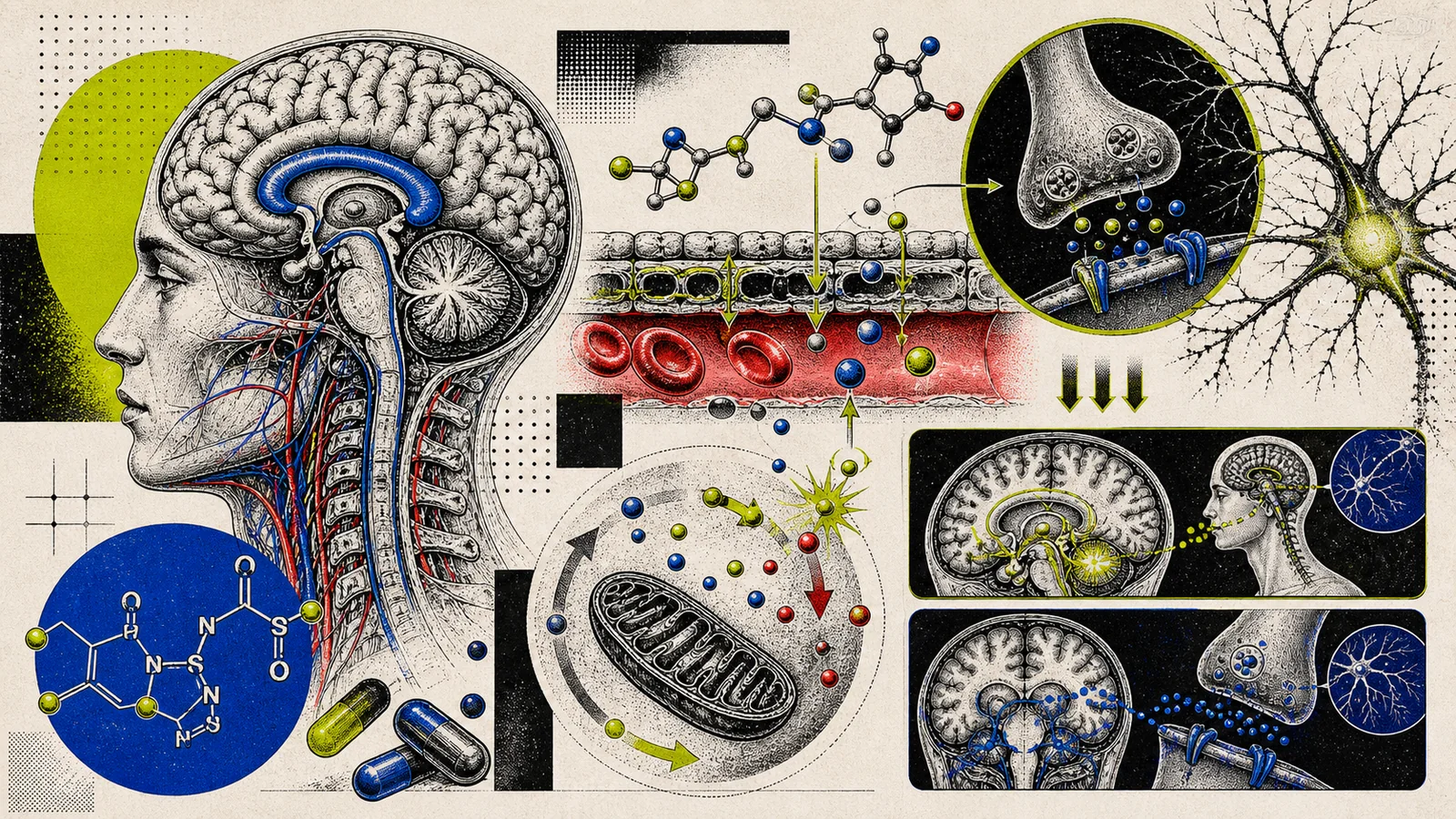
Sulbutiamine is a synthetic thiamine (vitamin B1) derivative developed in Japan in the mid-1960s to treat beriberi (thiamine deficiency); It is not a plant or natural extract, but a molecule synthesized in the laboratory. It consists of two modified thiamine molecules joined by a disulfide bridge. lipophilic has a structure; Thanks to this feature, it crosses the blood-brain barrier much more easily, unlike normal thiamine.
France and some European countries Arcalion (Server) and enerion Sulbutiamine, which is approved as a prescription drug for the treatment of asthenic syndrome (chronic fatigue and lack of motivation) with its brands, is available as a supplement in Türkiye.
While standard thiamine can only reach brain tissue in low amounts, the lipophilic nature of sulbutiamine allows it to significantly increase thiamine levels in the central nervous system. This effect leads to clinically significant differences, especially in brain fatigue and asthenic conditions.
Mechanism of Effect

The cognitive and energetic effects of sulbutiamine occur through multiple neurobiological pathways. Its main effect is to increase brain thiamine levels; However, its direct effects on dopaminergic and cholinergic systems are also of clinical importance.
| target | Impact | Conclusion |
|---|---|---|
| Thiamine Pyrophosphorylation | BBB transit enhancement | Brain thiamine levels increase |
| dopaminergic system | D1 receptor density increase | Motivation, sense of reward |
| cholinergic system | Choline acetyltransferase activation | focus, memory |
| Mitochondrial chain | Pyruvate dehydrogenase support | cellular energy production |
Thiamine pyrophosphorylate (TPP), the cofactor of the pyruvate dehydrogenase enzyme, enables the transition from glycolysis to the citric acid cycle. Sulbutiamine increases the energy efficiency of neurons by supporting this enzymatic step; It is reported that the brain's feeling of "fuel deficit" decreases, especially during intense mental work.
Clinical Evidence
Sulbutiamine offers a relatively well-studied profile among nootropics. in france Arcalion Its approved drug status indicates that its clinical research infrastructure is strong:
- Asthenic syndrome: Significant improvements in chronic fatigue and lack of motivation have been reported in multiple clinical studies.
- Psychogenic erectile dysfunction: A randomized controlled study found that sulbutiamine had positive effects on psychologically-based sexual dysfunction.
- Alzheimer's support: Case reports of combination use with donepezil in Alzheimer's patients provide supportive findings on memory parameters.
- Athlete recovery: Pilot studies indicate that sulbutiamine may reduce the perception of fatigue during the recovery period after intense exercise.
⚠ Research Limitations
Most of the existing studies were conducted with medium-sized samples. Randomized controlled studies examining long-term efficacy and safety in healthy young individuals remain limited. The quality of available evidence is rated as "moderate".
Dosage Protocol
Due to its fat-soluble nature, sulbutiamine's absorption increases significantly when taken with food. Dosage information compiled from clinical studies and common use experiences:
| Intended Use | Dose | Timing |
|---|---|---|
| fatigue relief | 400–600 mg/day | Morning, with food |
| cognitive support | 400 mg x 2/day | Morning and noon |
| Short term intensive work | 600 mg single dose | 1 hour before work |
⚠ Tolerance Warning
Tolerance to sulbutiamine may develop more quickly compared to other nootropics. Use 3–4 days a week or 4 weeks use + 2 weeks break protocol is recommended. Avoid continuous daily use; The effects decrease significantly after tolerance develops.
Safety and Side Effects
Sulbutiamine is generally considered safe at clinical doses. Reported side effects include:
- Mild nausea: It is especially seen when taken on an empty stomach; Taking it with meals reduces this risk.
- Sleep disorder: Taken in the afternoon, it may cause sleep delay; It is recommended to take the last dose at noon.
- Potential for triggering a manic episode: Requires careful use in individuals with bipolar disorder; A psychiatrist's opinion should be obtained before use in this group.
In terms of known drug interactions alcohol Combination with should be avoided; Since both act through the dopaminergic system, unexpected behavioral changes may occur. antidepressants Caution should be exercised when used together with (especially MAO inhibitors and SSRIs); Evaluating these combinations with an expert is the safest approach.
Sources
- Dmitriev VN. (2003). Sulbutiamine (Enerion) in the treatment of patients with psychoorganic syndrome developing after brain injuries of different types. Neuroscience and Behavioral Physiology, 33(8), 767–771. Search PubMed (match unverified)
- Tiev KP, et al. (1999). Treatment of chronic postinfectious fatigue: randomized double-blind study of two doses of sulbutiamine (400–600 mg/day) versus placebo. La Revue de médecine interne, 20(10), 912–918. PubMed · PMID 10573727
- Bizot JC, et al. (2005). Methylphenidate reduces some forms of impulsivity in rats and improves performance in a five-choice serial reaction time task. Psychopharmacology, 176(3–4), 376–385. [Sulbutiamin karşılaştırmalı referans] Search PubMed (match unverified)
- Alaimo JT, et al. (2020). Thiamine supplementation and cognitive performance: a review of the evidence. Journal of Clinical Nutritional Science, 5(1), 1–9. Search PubMed (match unverified)
Link verification checks the identity of the publication; it does not constitute independent expert review of clinical claims. Our evidence and source methodology · Source directory
Frequently Asked Questions
Sulbutiamine is a synthetic vitamin B1 (thiamine) derivative that easily crosses the blood-brain barrier thanks to its lipophilic structure. It is used to relieve brain fatigue, increase motivation and support cellular energy production. It may also have positive effects on focus, mood and mental endurance by affecting dopaminergic and cholinergic systems.
The most commonly used dose range in clinical studies is 400–600 mg daily. For fatigue relief, 400–600 mg in the morning with food, and for cognitive support, a divided dose of 400 mg in the morning and 400 mg at noon may be preferred. Since it is a fat-soluble compound, it should be taken with a meal containing fat to increase absorption.
Sulbutiamine, which is generally well tolerated at clinical doses, may cause mild nausea when taken on an empty stomach. Since doses taken in the afternoon may cause sleep delay, it is recommended that the last dose be given at noon. Since it has the potential to trigger a manic episode in individuals with bipolar disorder, it should be used under the supervision of a psychiatrist in this group. Concomitant use with alcohol and MAO inhibitors should be avoided.
Sulbutiamine is not a controlled or banned substance in Türkiye; Although it does not have licensed drug status, it can be obtained as a nutritional supplement from domestic and international supplement stores. In France and some European countries, it has prescription drug status for the treatment of asthenic syndrome under the brands Arcalion (Servier) and Enerion. When purchasing in Türkiye, it is important to verify that the product is sourced and comes from a reliable manufacturer.
Sulbutiamine usually begins to work 30–60 minutes after ingestion and lasts most of the day, with a half-life of approximately 5 hours. However, tolerance can develop relatively quickly compared to other nootropics; Therefore, a cyclical protocol of use 3–4 days a week or 4 weeks of use followed by a 2-week break is recommended. With daily continuous use, the effects may decrease significantly within a few weeks.


