Contents 5 dk okuma
Information
This content is for educational and informational purposes only; It does not constitute medical advice. Be sure to consult a physician for any digestive system or mood problems. Although gut-brain axis research is promising, much of it has not yet achieved clinical certainty.
What is the Gut-Brain Axis?
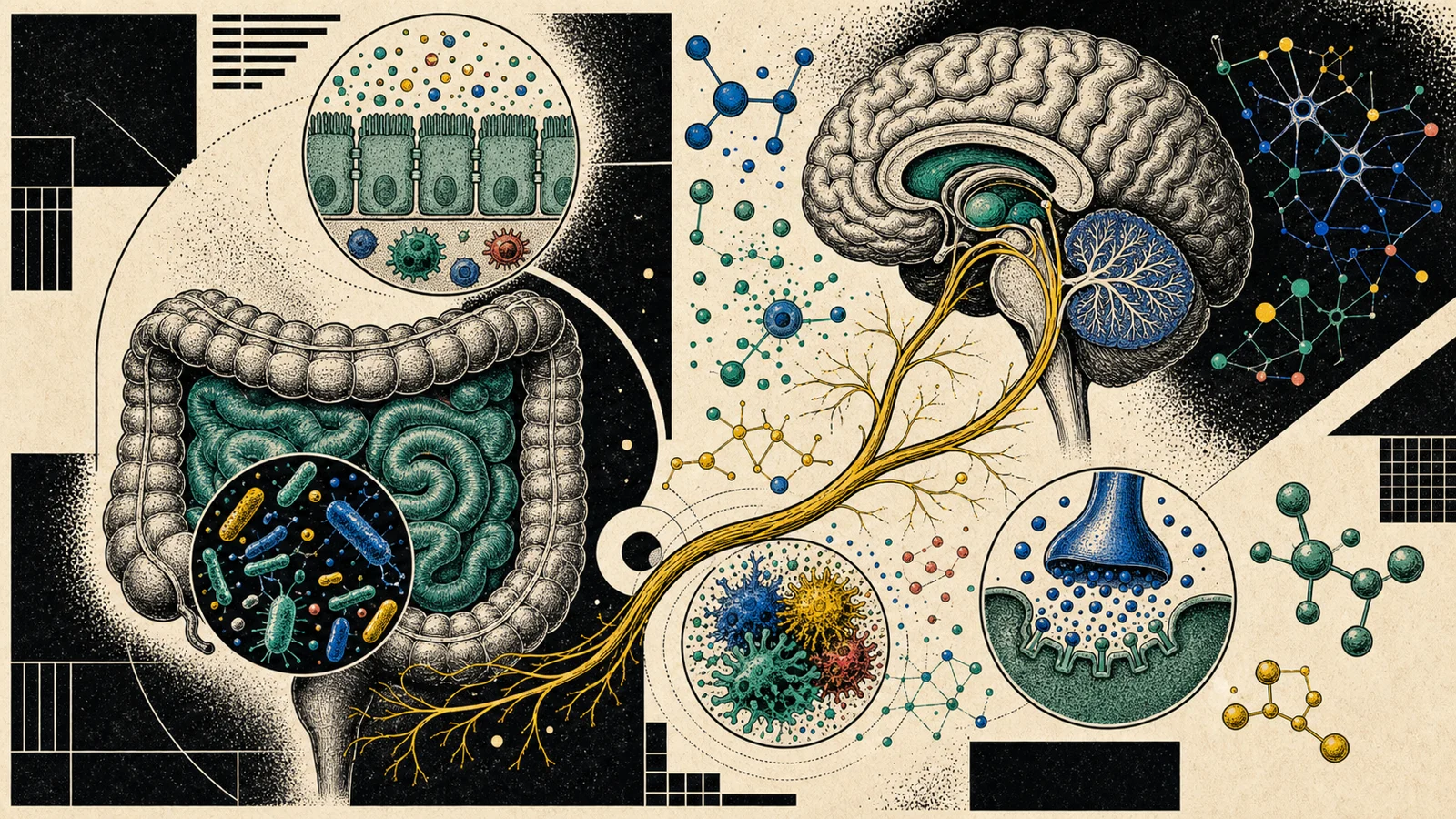
Gut-brain axis (gut-brain axis) is the name given to the bidirectional communication network between the central nervous system and the gastrointestinal system. This network includes neural, hormonal, and immune channels; While the brain sends commands to the intestine, the intestine constantly transmits signals to the brain. In other words, the classical understanding of "the brain manages from above" is an incomplete picture.
This axis has three main components: vagus nerve (direct neural line), enteric nervous system (the intestine's own neural network) and gut microbiome (community of trillions of bacteria, fungi and viruses). All three work together to affect both the regular functioning of the intestines and brain chemistry.

Vagus Nerve: A Two-Way Highway
The vagus nerve is the longest cranial nerve, running directly from the brainstem to the gut without passing through the spinal cord. Approximately 80% of its fibers are afferent, carrying signals from the gut to the brain; only 20% carry signals from the brain to the gut. This shows that most information flows upward from the gut.
Microbiome products (short-chain fatty acids, neurotransmitter precursors) activate enterochromaffin cells and intestinal neurons on the vagus nerve and transmit the signal to the brain. Animal studies involving vagotomy (cutting of the vagus nerve) have shown that the anxiety-reducing effect of probiotics is largely lost – a finding that strongly supports the central role of the vagus.
Enteric Nervous System: The Second Brain
In the intestinal wall approximately 500 million neurons - this number is close to the number of neurons in the spinal cord. The enteric nervous system (ENS) can function independently; It regulates digestion, bowel movements and mucus secretion without the intervention of the brain. However, the ongoing dialogue between the ENS and the central nervous system directly affects mood and cognition.
ENS also in the dictionary synthesizes and uses many of the neurotransmitters described; Therefore, researchers often refer to ENS "second brain" gives its name.
Microbiome and Neurotransmitter Production
Perhaps the most striking finding is this: Approximately 90–95% of serotonin is produced in the intestine. This serotonin, synthesized by intestinal enterochromaffin cells, does not enter the circulation and is not used in the brain; but it indirectly affects brain chemistry through bowel movements, pain perception, and the vagus nerve. The gut microbiome is one of the major factors determining the bioavailability of tryptophan, which is required for serotonin synthesis.
| Neurotransmitter/Precursor | Role in the Intestine | Effect on the Brain |
|---|---|---|
| serotonin | Bowel movements, pain perception | Indirect mood effect via vagus |
| GABA | Some bacteria (Lactobacillus) synthesize | Reduced anxiety (animal studies) |
| Dopamine precursor (DOPA) | Gut bacteria produce L-DOPA | Potential impact on dopaminergic pathways |
| tryptophan | Microbiome regulates bioavailability | Serotonin and kynurenine pathway |
Important note: The clinical significance of these mechanisms in humans is still being investigated. Strong findings from animal studies are not always directly transferable to humans; The evidence in this area is promising but not yet conclusive.
Short Chain Fatty Acids (SCFA) and Butyrate
Intestinal bacteria ferment dietary fiber short chain fatty acids (SCFA) produces: acetate, propionate and especially butyrate. Butyrate; It is the primary energy source of colon cells, a signaling molecule that strengthens the intestinal barrier, and a potent inhibitor of histone deacetylase.
The importance of butyrate to neuroscience comes from the fact that it has been shown to affect the blood-brain barrier, modulate brain microglia activation, and increase neurotrophic factor (BDNF) expression. Adequate fiber consumption is the basic condition for SCFA production in the intestine.
Intestinal Permeability and Neuroinflammation
Healthy intestinal epithelium forms a tight barrier that prevents bacteria and toxins from entering the bloodstream. When this barrier is broken - "leaky gut" - bacterial lipopolysaccharides (LPS) can enter the blood and trigger systemic inflammation.
Because chronic low-grade inflammation can negatively impact brain function, the connection between neuroinflammation and depression, cognitive slowing, and fatigue is being investigated. Omega-3 fatty acidsIt is one of the prominent foods in this field with its intestinal barrier supporting and anti-inflammatory properties.
Probiotics and Psychobiotics
psychobiotic The concept has been proposed to describe live microorganisms (probiotics) or prebiotics that may affect mood and cognition. Among the most studied strains in this field Lactobacillus rhamnosus, Bifidobacterium longum and Lactobacillus helveticus is available.
Meta-analyses of human studies suggest that probiotic supplementation may slightly reduce anxiety and depressive symptoms in healthy individuals—but effect sizes are generally modest and study quality is variable. Probiotics cannot be strictly defined as “nootropic”; but they may provide indirect cognitive support by improving gut health.
Nutrition Strategies: What to Eat?
- Fiber: Vegetables, legumes, whole grains and fruit – a variety of fibers feed different bacterial communities and increase SCFA production.
- Fermented foods: Yogurt, kefir, sauerkraut, kimchi - provide live bacteria directly; It has been shown to increase microbiome diversity.
- Omega-3: Oily fish, flaxseed – anti-inflammatory effect and intestinal barrier support. For details Omega-3 page you can look.
- Polyphenols: Olive oil, fruits, green tea - serve as a prebiotic substrate for the microbiome.
- Overly processed foods and high sugar: Reduces microbiome diversity, can support the growth of inflammatory bacteria – limit if possible.
It should not be forgotten that sleep quality also has a significant impact on the microbiome. Sleep and Nootropics We discuss this connection separately in our article.
⚠ Realistic Expectation
While gut-brain axis research is extremely exciting, much of it is based on animal models or small human studies. Claims like “heal your gut and your depression will go away” are an oversimplification. Probiotic supplements or dietary changes cannot replace serious mood or cognitive problems; For these, you need to consult a specialist.
Sources
- Cryan, J.F. et al. (2019). The Microbiota-Gut-Brain Axis. Physiological Reviews, 99(4), 1877–2013. Search PubMed (match unverified)
- Dinan, T.G., Stanton, C., & Cryan, J.F. (2013). Psychobiotics: a novel class of psychotropic. Biological Psychiatry, 74(10), 720–726. PubMed · PMID 23759244
- Sonnenburg, J.L. & Bäckhed, F. (2016). Diet–microbiota interactions as moderators of human metabolism. Nature, 535, 56–64. PubMed · PMID 27383980
Link verification checks the identity of the publication; it does not constitute independent expert review of clinical claims. Our evidence and source methodology · Source directory
Frequently Asked Questions
The existence of the axis is well documented; There is strong mechanistic evidence that the vagus nerve, enteric nervous system, and microbiome influence brain function. However, most clinical applications in humans are still in the research phase. It is fair to say that it is a real but somewhat exaggerated field.
Meta-analyses suggest that probiotics may exert modest positive effects on anxiety and depressive symptoms. Direct effects on cognitive performance (memory, attention speed) are less studied and less clear. Probiotics can be a support element; however, it cannot be accurately described as cognitive enhancing.
Various fiber sources (vegetables, legumes, whole grains), fermented foods (yoghurt, kefir, kimchi), fatty fish rich in omega-3 and colorful fruits rich in polyphenols come to the fore. It is known that overly processed foods and high sugar intake negatively affect microbiome health.
Butyrate is a short-chain fatty acid produced by the fermentation of dietary fiber by intestinal bacteria. It is the energy source of colon cells, strengthens the intestinal barrier, and is suggested to provide neurological benefits with its anti-inflammatory properties. Adequate fiber consumption is a prerequisite for butyrate production.
Yes. Poor sleep can reduce microbiome diversity and increase the rate of inflammatory bacteria. Conversely, the microbiome may influence circadian rhythm through serotonin precursors. This two-way relationship requires considering sleep quality as a part of gut health.


