Contents 3 dk okuma
Information
This content is for educational and informational purposes only; It is not medical advice. Anti-aging protocols are not a substitute for consulting a physician for diagnosis and treatment.
Basic Mechanisms of Brain Aging
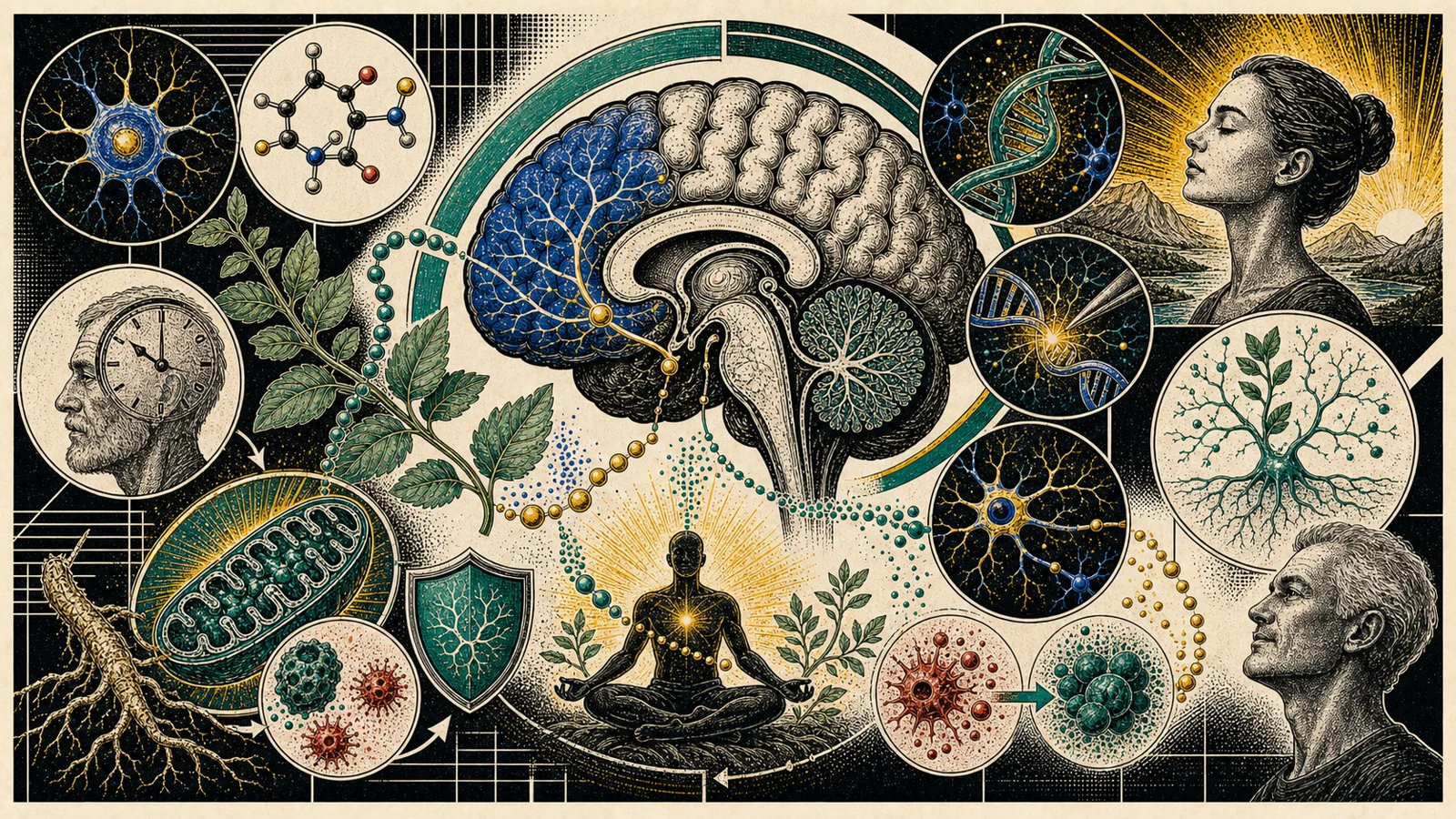
Brain aging is not the result of a single process, but the simultaneous progression of several interconnected mechanisms. Understanding these mechanisms is critical to seeing which interventions are effective and at what point.

| mechanism | What Happens? | Conclusion |
|---|---|---|
| NAD+ decrease | 50%+ reduction from age 40 | SIRT1/3 suppression, decreased mitochondrial efficiency |
| Accumulation of neuroinflammation | Chronic activation of microglia | Cytokine damage, synaptic loss |
| Decreased neurogenesis | BDNF decrease, hippocampus atrophy | Creating new memories becomes difficult |
| mitophagy disorder | Accumulation of damaged mitochondria | Energy inefficiency, increased ROS |
| telomere shortening | Tip losses in each division | Cellular senescence, loss of tissue function |
| protein aggregation | Amyloid β, tau aggregation | Increased neurodegenerative risk |
Anti-aging Nootropics: Mechanism-Oriented Selection
NMN - NAD+ Renewal
NMNIt turns into NAD+ within the cell and activates SIRT1 and SIRT3. SIRT1 epigenetic regulation and inflammation control; SIRT3 governs mitochondrial protein deacetylation. David Sinclair laboratory studies have shown that NMN preserves muscle strength, endurance, and cognitive function in mouse models. Human studies are still evolving; Current findings are promising on energy and metabolic health.
Resveratrol - Direct Activation of SIRT1
resveratrolIt works synergistically with NMN by directly activating SIRT1. It also suppresses neuroinflammation and increases cerebral blood flow through NF-κB inhibition. Increasing the bioavailability of resveratrol with piperine or liposomal forms is critical: the absorption of the standard form is extremely low.
Lion's Mane - Maintaining Neurogenesis
Lion's ManeIt protects neuroplasticity and new neuron formation by supporting NGF and BDNF production, which decreases with age. It is one of the most important long-term nootropics in terms of neurodegenerative risk; effects are cumulative over months of use.
Curcumin – Breaking Neuroinflammation
curcuminSuppresses chronic neuroinflammation through NF-κB inhibition and free radical scavenging. Protective effects against amyloid plaque formation have been demonstrated in vitro and in animal models. Piperine or Meriva (phospholipid complex) forms increase bioavailability 20–30-fold.
Berberine - Metabolic-Cognitive Bridge
Berberineimproves insulin sensitivity through AMPK activation. Insulin resistance and metabolic syndrome are independent predictors of cognitive decline and Alzheimer's risk. Berberine indirectly supports brain health by reducing these risk factors.
Omega-3 (DHA) - Structural Brain Care
DHAis the most important building block of brain cell membranes; It supports membrane fluidity, which decreases with age. There are cohort studies showing that long-term DHA intake slows cognitive decline.
Evidence-Based Anti-aging Brain Protocol
| Article | Dose | Timing | Targeted Mechanism |
|---|---|---|---|
| NMN | 250–500 mg | morning | NAD+ replenishment, SIRT activation |
| resveratrol | 250–500 mg | Morning (with fatty meal + piperine) | SIRT1 activation, neuroinflammation ↓ |
| Lion's Mane | 500–1000 mg | Morning, with food | NGF/BDNF increase, neurogenesis protection |
| Curcumin (Meriva/piperine) | 500 mg | with food | NF-κB ↓, amyloid ↓, neuroinflammation ↓ |
| Omega-3 (mainly DHA) | 1–2 g EPA+DHA | with food | Membrane health, neuroprotection |
| Berberine | 500mg × 2 | with food | AMPK activation, insulin sensitivity |
⚠ Foundation First
Lifestyle, not nootropics, forms the basis of the protocol. Aerobic exercise (150+ min per week), quality sleep (7–9 hours), Mediterranean diet, and social connection – these four have stronger and more proven anti-aging effects than any other nootropic on the list. Nootropics make sense when added to these.
Sources
- Mills KF, et al. (2016). Long-term administration of nicotinamide mononucleotide mitigates age-associated physiological decline in mice. Cell Metabolism, 24(6), 795–806. PubMed · PMID 28068222
- Witte AV, et al. (2014). Effects of resveratrol on memory performance, hippocampal functional connectivity, and glucose metabolism in healthy older adults. Journal of Neuroscience, 34(23), 7862–7870. PubMed · PMID 24899709
- Mori K, et al. (2009). Improving effects of Lion's Mane on mild cognitive impairment. Phytotherapy Research, 23(3), 367–372. Search PubMed (match unverified)
- Bhatt JK, et al. (2012). Resveratrol supplementation improves glycemic control in type 2 diabetes mellitus. Nutrition Research, 32(7), 537–541. PubMed · PMID 22901562
Link verification checks the identity of the publication; it does not constitute independent expert review of clinical claims. Our evidence and source methodology · Source directory
Frequently Asked Questions
Although NAD+ decline becomes evident around the age of 40, the accumulation of neuroinflammation and oxidative damage begins earlier. According to general opinion, a preventive protocol can be considered in the 30s; but the lifestyle foundation must be established first.
Yes, this combination is one of the most studied protocols in anti-aging research. NMN, as a NAD+ precursor, activates SIRT1 indirectly and resveratrol directly; Synergistic mechanisms reinforce each other.
Some level of cognitive aging is universal; However, this process can be significantly slowed down with cognitive reserve, lifestyle and preventive interventions. Exercise, sleep, and mental stimulation are the most powerful cognitive protection tools available.
The oral bioavailability of the standard form of curcumin is extremely low; Most of it is broken down before metabolism. Products that use piperine (black pepper extract) or phospholipid complex (Meriva, Theracurmin) should be chosen; Otherwise, the amount reaching the cells remains negligible.


