Contents 3 dk okuma
Important Note
This page is not medical advice. While the potential benefits of resveratrol are supported by research, it should not be used to treat any health problems. Consult a healthcare professional.
What is Resveratrol?
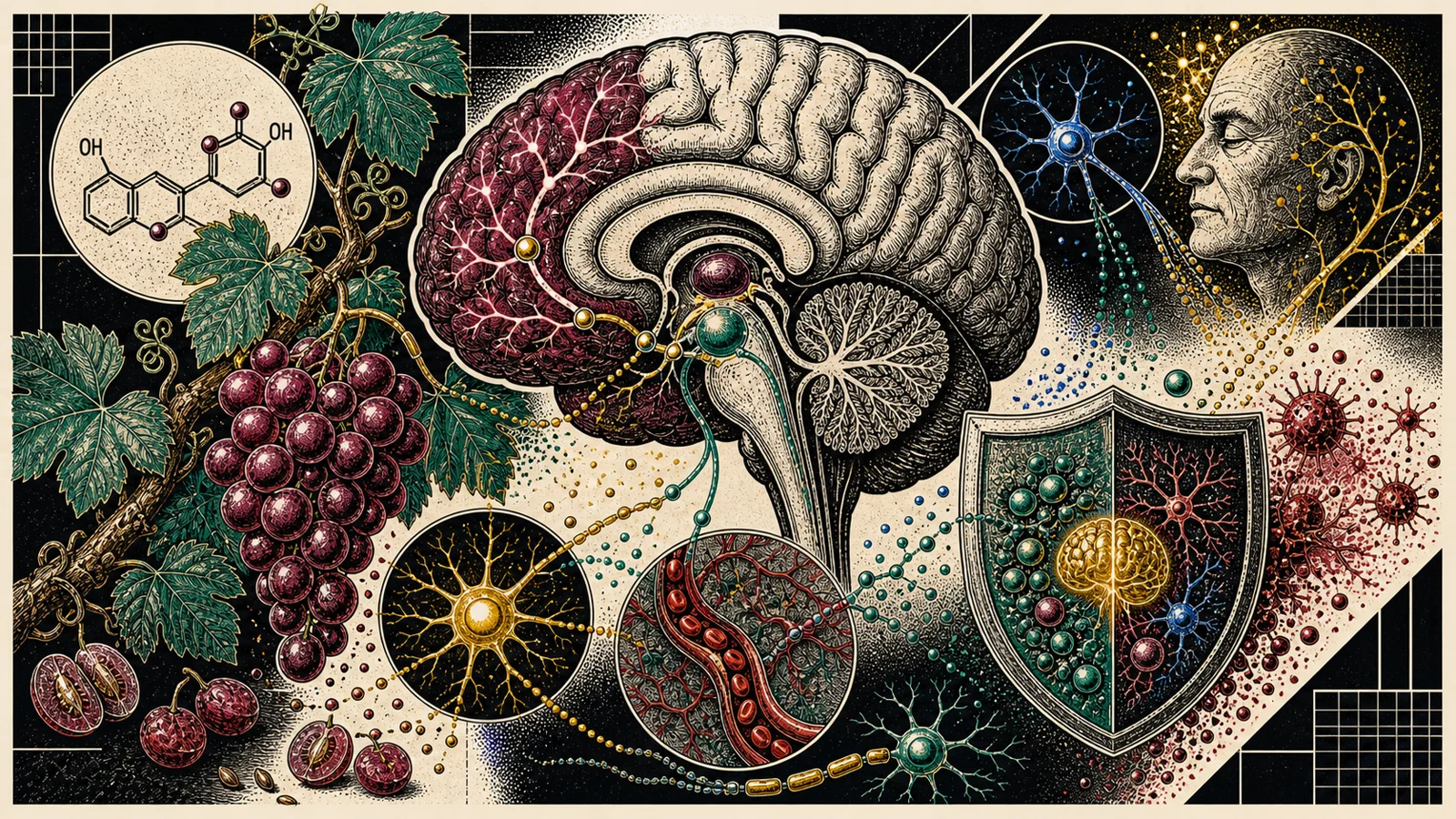
Resveratrol is a chemical produced by plants against stress conditions such as fungal infection, UV radiation and insect attack. stilbene polyphenolis. In nature, it is richest in grape skins, red wine, blueberries, pomegranates and Japanese knotweed (Polygonum cuspidatum) is found in the plant. Commercial supplements are largely derived from Japanese knotweed root. trans-Contains resveratrol form; This form is the most biologically active isomer.
Resveratrol came to prominence in the late 1990s during research on the "French paradox" (low risk of heart disease in French people despite high saturated fat consumption). Today, extensive research continues on its neuroprotection, anti-aging, metabolic health and cardiovascular effects.
Mechanism of Effect

Resveratrol acts through multiple molecular pathways:
| target | Impact | Conclusion |
|---|---|---|
| SIRT1 (Sirtuin-1) | activation | Mitochondrial biogenesis, cell aging management |
| AMPK | activation | Energy balance, antioxidant defense |
| NF-κB | inhibition | Anti-inflammatory effect, reduction of neuroinflammation |
| COX-1/COX-2 | inhibition | Anti-inflammatory, prostaglandin reduction |
| BDNF | increase | Neuroplasticity, learning and memory support |
Effects on Brain Health
Resveratrol's effects on the brain involve several different mechanisms. Firstly reduces neuroinflammation; Chronic brain inflammation is strongly associated with cognitive decline and neurodegenerative diseases. Secondly, it has been shown that it can increase BDNF (Brain-Derived Neurotrophic Factor) levels; This contributes to the formation of new neurons and synapses. Thirdly, it improves cerebral blood flow, increasing oxygen and glucose delivery to the brain.
A 2014 double-blind randomized study found that 75–150 mg/day resveratrol supplementation significantly improved cerebral blood flow and verbal memory performance compared to placebo in healthy elderly individuals.
⚠ Bioavailability Problem
The main limitation of resveratrol is its low bioavailability: it is rapidly metabolized when taken orally. Made from black pepper piperine The combination with (or with NMN) significantly increases absorption. Liposome formulations also improve bioavailability.
Dosage Protocol
| Intended Use | Dose | Timing |
|---|---|---|
| General antioxidant support | 100–250 mg/day | With meal, preferably in the evening |
| Neuroprotection/cognitive support | 250–500 mg/day | With food, with piperine |
| Anti-aging (combination with NMN) | 250–500 mg/day | Sabah, with NMN |
Safety and Side Effects
Resveratrol is considered safe for short- and medium-term use. Doses up to 1–2 grams per day have been well tolerated in human studies. Possible interactions:
- Anticoagulants (warfarin etc.): May potentiate blood thinning effect, be careful
- CYP3A4 substrates: May slow the metabolism of some medications
- Estrogen sensitive conditions: It has phytoestrogenic activity, consult a doctor for related diseases
- Mild GI discomfort has been reported at very high doses (above 2 g/day)
Sources
- Kennedy DO, et al. (2010). Effects of resveratrol on cerebral blood flow variables and cognitive performance in humans. American Journal of Clinical Nutrition, 91(6), 1590–1597. Search PubMed (match unverified)
- Witte AV, et al. (2014). Effects of resveratrol on memory performance, hippocampal functional connectivity, and glucose metabolism in healthy older adults. Journal of Neuroscience, 34(23), 7862–7870. PubMed · PMID 24899709
- Baur JA, Sinclair DA. (2006). Therapeutic potential of resveratrol: the in vivo evidence. Nature Reviews Drug Discovery, 5(6), 493–506. PubMed · PMID 16732220
- Lagouge M, et al. (2006). Resveratrol improves mitochondrial function and protects against metabolic disease by activating SIRT1 and PGC-1α. Cell, 127(6), 1109–1122. PubMed · PMID 17112576
Link verification checks the identity of the publication; it does not constitute independent expert review of clinical claims. Our evidence and source methodology · Source directory
Frequently Asked Questions
Resveratrol supports brain health, cardiovascular system and cellular aging management through SIRT1 activation, anti-inflammatory effects and antioxidant defense mechanisms. It may contribute to cognitive performance by increasing cerebral blood flow.
100–250 mg/day for general support and 250–500 mg/day for neuroprotection and anti-aging are commonly used dosages. To increase bioavailability, piperine or liposomal forms should be preferred.
Yes. The combination of resveratrol and NMN creates a synergistic anti-aging effect, as NMN supports SIRT1 activation via NAD+, while resveratrol directly supports SIRT1 activation. Research by the David Sinclair laboratory has attracted attention with protocols based on this combination.
No. One glass of red wine contains approximately 0.3–2 mg of resveratrol. A supplement form is required to reach the doses that show effect in studies (100–500 mg). Moreover, the alcohol content of wine largely overshadows the resveratrol benefits.


