Contents 2 min read
Important Note
This page is not medical advice. While the potential benefits of taurine are supported by research, it should not be used to treat any health problems. Consult a healthcare professional.
What is Taurine?
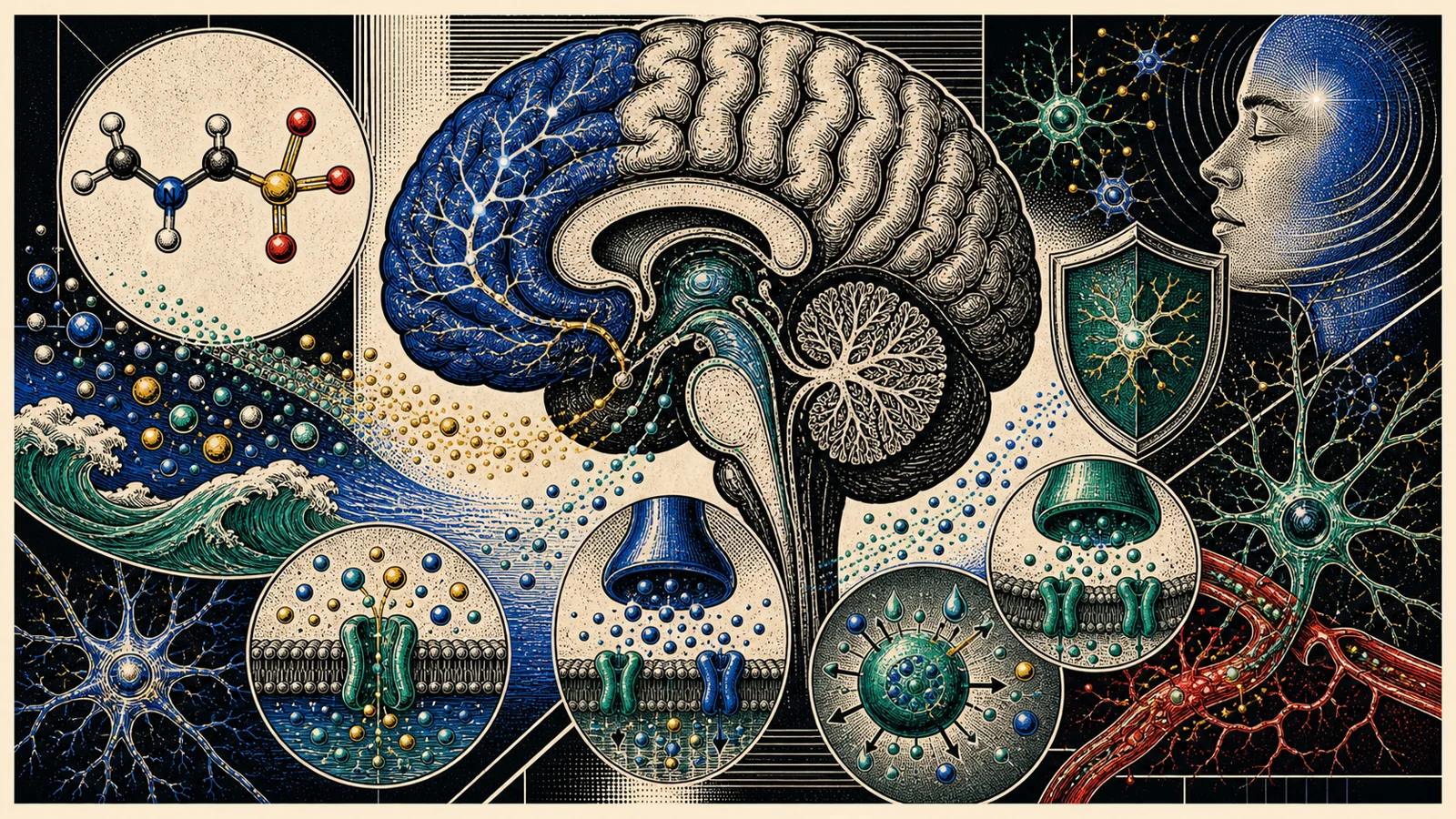
Taurine (2-aminoethanesulfonic acid), although technically an amino acid, contains sulfonic acid instead of alpha-amino group in its structure. amino sulfonic acid It is classified as. It is found in the highest concentration in the body in heart muscle, skeletal muscle, brain tissue and retina. Taurine concentration in human brain tissue exceeds that of many neurotransmitters.
Taurine is synthesized endogenously through the sulfination of cysteine, but production capacity is limited. Taurine is abundant in meat and seafood; plasma levels may be lower in vegans, vegetarians and older adults. Unlike the caffeine and sugar in popular energy drinks (Red Bull, Monster, etc.), taurine may independently have calming and neuroprotective effects.
Mechanism of Effect

| mechanism | target | Conclusion |
|---|---|---|
| GABA-A potentization | GABA-A receptor modulation | Calming, anxiolytic effect |
| Glycine receptor activation | Glycine receptors | Inhibitory neurotransmission support |
| Calcium homeostasis | Internal Ca²⁺ balance | Neuronal excitotoxicity protection |
| Osmolytic regulation | Cell volume balance | Neuron integrity protection |
| antioxidant | ROS scavenging, taurochloric acid | Neuron protection against oxidative damage |
Longevity Connection
in 2023 Science A remarkable study published in the journal New York found that taurine levels were strongly associated with age: in middle-aged mice and monkeys, taurine supplementation prolonged survival and improved markers of healthy aging. Plasma taurine levels decrease markedly with increasing human age; This finding has generated intense interest in the aging research community.
Dosage Protocol
| Intended Use | Dose | Timing |
|---|---|---|
| General neuroprotection/antioxidant | 500–1000 mg/day | Whenever you want, with or without food |
| Anxiety/calming effect | 1000–2000 mg | In the evening or during stressful periods |
| sleep support | 1000–2000 mg | 30–60 minutes before bed |
| Longevity protocol (research) | 1000–3000 mg/day | morning |
Safety and Side Effects
Taurine is one of the best-studied amino acids in terms of its safety profile. Doses up to 3 grams per day have been well tolerated in short- and long-term studies. EFSA (European Food Safety Authority) has deemed it safe to use up to 6 grams per day. There are no known serious drug interactions; However, there are case reports that it may affect lithium levels.
Sources
- Singh P, et al. (2023). Taurine deficiency as a driver of aging. Science, 380(6649), eabn9257. PubMed · PMID 37289866
- Jakaria M, et al. (2019). Taurine and its analogs in neurological disorders: Focus on therapeutic potential and molecular mechanisms. Redox Biology, 24, 101223. PubMed · PMID 31141786
- Bkaily G, et al. (2020). Taurine and cardiac disease: State of the art and perspectives. Canadian Journal of Physiology and Pharmacology. PubMed · PMID 31560859
- El Idrissi A, Trenkner E. (2004). Taurine as a modulator of excitatory and inhibitory neurotransmission. Neurochemical Research, 29(1), 189–197. PubMed · PMID 14992278
Link verification checks the identity of the publication; it does not constitute independent expert review of clinical claims. Our evidence and source methodology · Source directory
Frequently Asked Questions
Taurine creates calming, anxiolytic and neuroprotective effects by potentiating GABAergic neurotransmission in brain cells. It also reduces oxidative stress, regulates calcium homeostasis, and may be related to aging processes, according to 2023 research.
Taurine is added to energy drinks in addition to caffeine and sugar to create a synergistic effect; but ironically, it works via the exact opposite mechanism with caffeine – taurine has a sedative and neuroprotective effect, while caffeine is a stimulant. The amount of taurine in energy drinks (usually 1000 mg) matches the doses used in studies.
Yes. Thanks to GABA-A potentiation, taurine may facilitate sleep. It is recommended to take 1000–2000 mg 30–60 minutes before bedtime. Taurine in caffeine-containing energy drinks has the opposite effect - in this case, the calming effect is suppressed by the stimulating effect of caffeine.
Yes. Taurine is largely found in animal foods; It is almost absent in herbal sources. Those who follow vegan and vegetarian diets are more dependent on endogenous synthesis, and plasma taurine levels may be lower than those who eat meat. Taurine supplementation may be especially considered for this group.


