Contents 5 dk okuma
Important Note
This page is not medical advice. Research on Uridine Monophosphate is largely based on animal models and small pilot studies. Consult a healthcare professional before using it to treat any health problem.
What is Uridine Monophosphate?
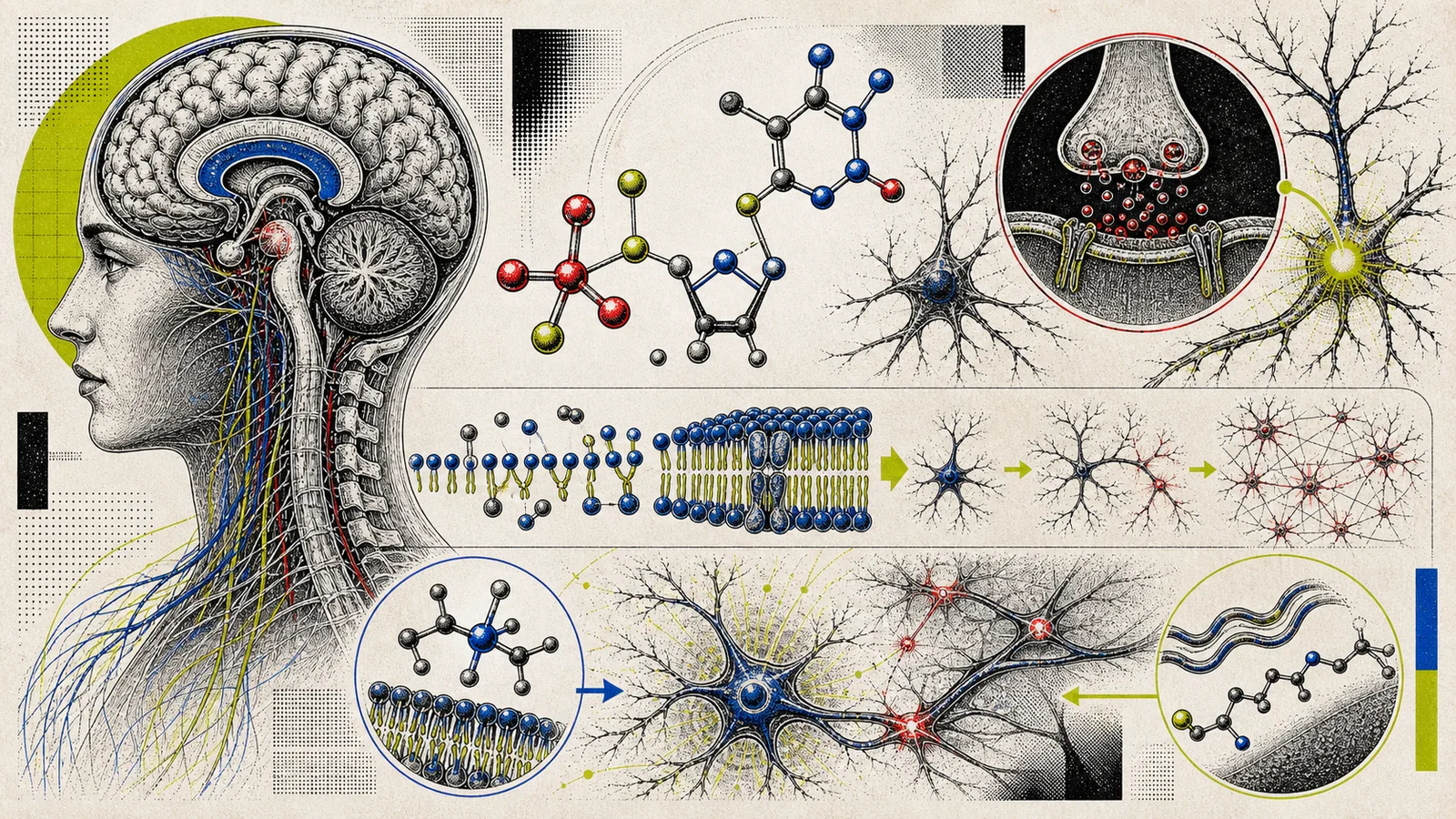
Uridine is a pyrimidine nucleoside, one of the building blocks of RNA. The monophosphate form (UMP) is the biologically active form that can be easily used by the brain. Gaining importance for brain health; This is due to the fact that it is a critical precursor for phosphatidylcholine (PC) synthesis. Phosphatidylcholine is the basic building block of neuron membranes.
Uridine occurs naturally in human milk; This clearly demonstrates its role in brain development. When nutritional sources are considered, it is seen that it is found in higher concentrations in fish (especially sardines and tuna), red meat and organ meats such as offal. It is found in very low amounts in vegetables.
Uridine Monophosphate taken as a supplement undergoes hydrolysis in the gastrointestinal tract and passes into the systemic circulation as uridine; Then, it crosses the blood-brain barrier and is taken up by neurons in the brain. Here, it is converted to phosphatidylcholine via CDP-Choline and participates in cell membrane repair and synaptogenesis processes.
Mechanism of Action - Triple Synergy (Uridine + Choline + DHA)

Uridine's effect on the brain occurs not by itself, but through a biochemical network that works as a whole. Based on research by MIT's Richard Wurtman and his team, and in the nootropic community "Mr. Happy Stack" The combination known as is the model that best summarizes this network: Uridine + Choline + DHA/EPA. These three components together provide much more significant dendrite elongation and synaptic growth than observed when used individually in animal studies.
| mechanism | Impact | Importance |
|---|---|---|
| CDP-Choline Pathway | Phosphatidylcholine synthesis | Cell membrane repair and formation |
| BDNF Increase | Neurotrophic factor stimulation | Neuroplasticity and learning capacity |
| Dendrite Formation | Increased synaptogenesis | Establishing new synaptic connections |
| Dopaminergic System | D2 receptor density increase | Motivation and mood regulation |
While Uridine participates in the synthesis of phosphatidylcholine via the Kennedy pathway (CDP-Choline pathway), it simultaneously stimulates the production of BDNF (Brain-Derived Neurotrophic Factor). While DHA contributes to this process by integrating into the dendritic membranes, choline increases the efficiency of the system as a direct precursor of both acetylcholine neurotransmitter and phosphatidylcholine. The combination of the three creates a cycle that catalyzes synaptogenesis.
Clinical Evidence
A significant part of the uridine research comes from MIT Neurobiology Department professor Richard Wurtman and his team. The Wurtman group showed that the combination of Uridine + Choline + DHA given to aged rats significantly increased synaptic protein levels and improved memory performance in Morris Water Maze tests.
Although human studies are still limited, they contain promising findings. In a pilot study on bipolar disorder, uridine supplementation was reported to have positive effects on depressive symptoms and was well tolerated. Uridine research for cognitive support in pediatric populations is also ongoing.
⚠ Research Limitations
The vast majority of available evidence is obtained from animal models. Large-scale, randomized controlled human studies conducted in healthy young and middle-aged individuals are still lacking. It should be considered a complementary approach to overall brain health; It should not be used as a sole treatment tool.
Dosage Protocol
Recommended dosages for Uridine Monophosphate, based on available research and user experience, are summarized in the table below. Taking it with food increases gastrointestinal tolerance and facilitates absorption.
| Intended Use | Dose | Timing |
|---|---|---|
| General cognitive support | 250–500 mg/day | Morning, with food |
| Mr. Happy Stack (Triple Synergy) | 500 mg Uridine + 300 mg Alpha-GPC + 1–2 g Omega-3 | Morning, with food |
| Neuroplasticity protocol | 500 mg, 2 times | Morning and noon |
Form selection: Uridine Monophosphate (UMP) form is the form with the highest oral bioavailability and is the best researched form. Triacetyluridine (TAU) is offered as an alternative with its more lipophilic structure, but molar dosage difference should be taken into consideration. Since CDP-Choline (Citicoline) supplement is also partially converted to uridine in the body, if one of these compounds is already used, it is necessary to adjust the dosage of the supplement uridine accordingly.
Safety and Side Effects
Uridine Monophosphate is considered an extremely safe supplement within the framework of current research. The fact that it is a natural component of human milk is an important indicator supporting its safety profile. No serious side effects were reported in clinical studies.
- Gastrointestinal: Mild stomach upset, rare with high doses; It can be prevented by taking it with food.
- Theoretical warning: Theoretical effects on DNA methylation processes at extremely high doses are discussed; however, this has not been documented clinically.
- Choline balance: Provided adequate choline intake (either through diet or supplementation) uridine can be used safely. In choline deficiency, phosphatidylcholine synthesis may become inefficient.
It is recommended to obtain a physician's opinion before use in cases of pregnancy, breastfeeding or chronic disease. It is recommended that individuals currently taking medication use it under expert supervision.
Sources
- Wurtman RJ, et al. (2010). Synergistic effects of choline and DHA on synaptic formation. Neurochemical Research, 35(12), 2107–2116. Search PubMed (match unverified)
- Cansev M, Wurtman RJ. (2007). Chronic administration of docosahexaenoic acid or eicosapentaenoic acid, but not arachidonic acid, alone or in combination with uridine, increases brain phosphatide and synaptic protein levels in gerbils. Neuroscience, 148(2), 421–431. Search PubMed (match unverified)
- Babb SM, et al. (2002). Chronic citicoline increases phosphodiesters in the brains of healthy older subjects: an in vivo phosphorus magnetic resonance spectroscopy study. Psychopharmacology, 161(3), 248–254. Search PubMed (match unverified)
- Kondo DG, et al. (2011). Open-label uridine for treatment of depressed adolescents with bipolar disorder. Journal of Child and Adolescent Psychopharmacology, 21(2), 171–175. PubMed · PMID 21486171
Link verification checks the identity of the publication; it does not constitute independent expert review of clinical claims. Our evidence and source methodology · Source directory
Frequently Asked Questions
Uridine Monophosphate (UMP) participates in the synthesis of phosphatidylcholine, the basic building block of neuron cell membranes. In this way, synaptic plasticity increases, new dendritic connections are formed, and memory and learning capacity are supported. It also contributes to long-term brain health by increasing BDNF (brain-derived neurotrophic factor) levels.
250–500 mg of UMP daily is recommended for general cognitive support. The most effective use is the "Mr. Happy Stack" protocol, which includes 500 mg UMP + 300 mg Alpha-GPC or CDP-Choline + 1–2 g Omega-3 DHA/EPA. Taking it with food facilitates absorption and prevents possible stomach disorders.
UMP is considered a very safe supplement based on current research. Its natural occurrence in human milk supports this safety profile. Mild stomach upset, which is rare at high doses, can be relieved by taking it with food. No serious side effects were reported in clinical studies. However, it is recommended that people who are pregnant, breastfeeding or have a chronic disease consult their physician before use.
Uridine Monophosphate is not on any controlled substance or drug list in Türkiye; It is considered a nutritional supplement. Although its availability in local pharmacies is limited, it can be obtained from domestic and international online supplement stores. It is recommended that you review the product's content documents and quality certificates (GMP, CoA) before making a purchasing decision.
Since uridine acts through phosphatidylcholine synthesis and synaptic restructuring, results usually begin to be noticed after 2–4 weeks of regular use. It does not have an acute, rapid stimulating effect; Its effect is cumulative and long-term. For the most significant cognitive gains, at least 4–8 weeks of continuous use is recommended.


