Contents 4 dk okuma
Important Note
This page is not medical advice. Although the potential benefits of CDP-Choline are supported by research, it should not be used to diagnose or treat any health problems. Consult a healthcare professional before starting supplementation.
What is CDP-Choline?
CDP-Choline (cytidine 5'-diphosphocholine) is an intermediate molecule that the body produces naturally during the synthesis of phosphatidylcholine. When taken as a supplement, it choline And cytidine is divided into its components; After passing the blood-brain barrier, these components recombine in the brain and participate in intracellular processes. It is commercially known as "Citicoline".
Choline is the basic building block of acetylcholine and cell membrane phospholipids. CDP-Choline differs from other choline sources in that it not only provides choline, but also supports nucleotide metabolism and membrane repair via cytidine (which largely converts to uridine in humans).
Mechanism of Effect

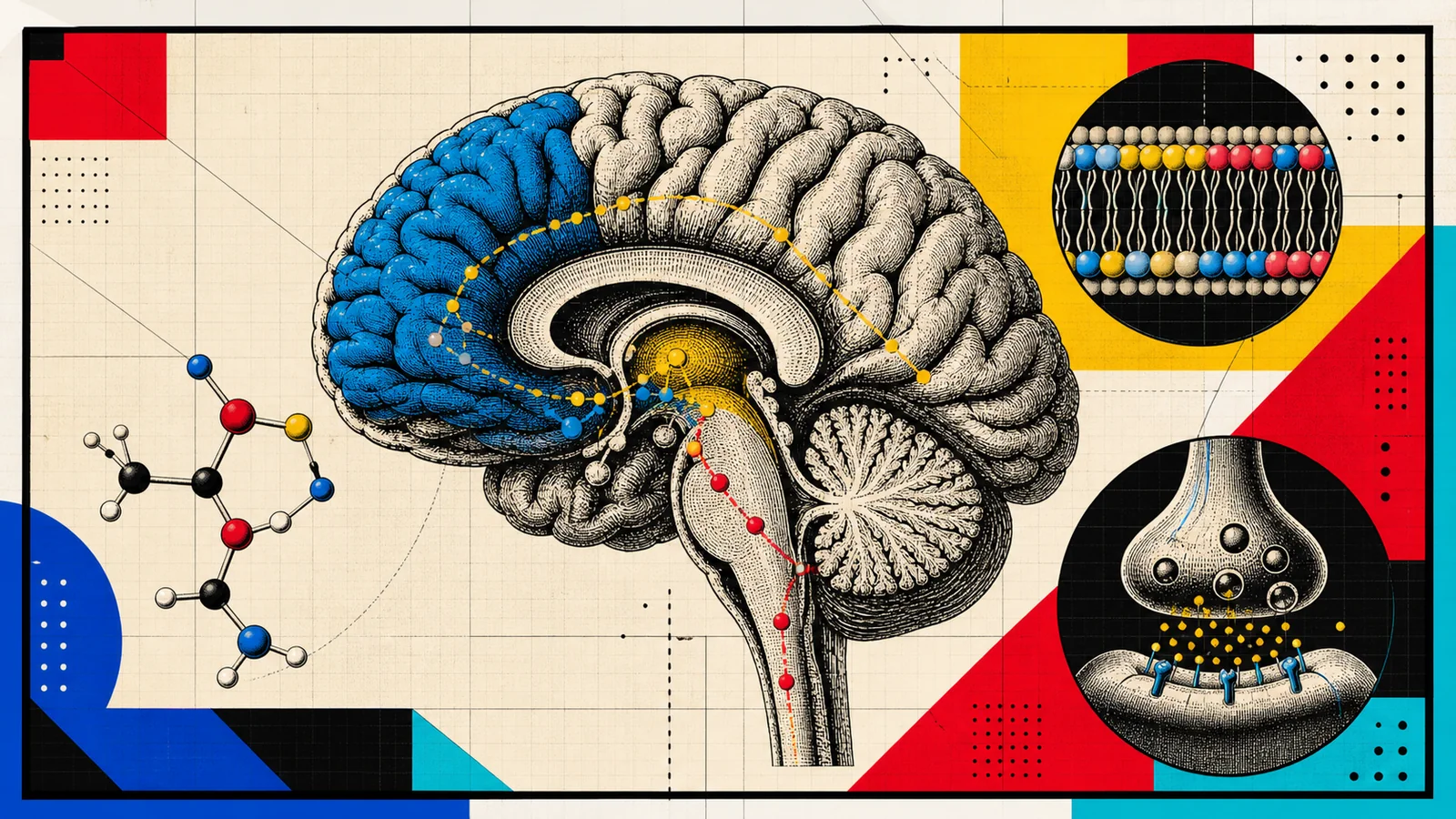
The cognitive effects of CDP-Choline are based on multifaceted mechanisms. Choline component acetylcholine Supports the synthesis of (learning and memory neurotransmitter); also via Kennedy pathway phosphatidylcholine It protects neuronal membrane integrity by contributing to its production.
Additionally, CDP-Choline is found in the striatum. dopamine receptor density It has been shown in animal studies that it increases dopamine reuptake and supports dopaminergic transmission. This feature helps explain its effects on motivation and focus.
| Component / Target | Process | Impact |
|---|---|---|
| choline | Acetylcholine synthesis | Memory, learning, cholinergic transmission |
| Choline + Cytidine | Phosphatidylcholine synthesis (Kennedy pathway) | Neuronal membrane repair and integrity |
| striatal dopamine | Increased receptor density | Motivation, focus, dopaminergic support |
| Cytidine → Uridine | Nucleotide metabolism | Synaptic repair, phospholipid cycle |
Clinical Evidence
CDP-Choline has been studied in hundreds of clinical studies, as summarized in the extensive literature compiled by Secades (2011). Positive effects on age-related memory impairment, vascular cognitive impairment, and attention processes have been reported.
In the field of stroke, a review by Alvarez-Sabín and Román (2013) emphasized that citicoline could support cognitive recovery after acute ischemic stroke. However, the large ICTUS study failed to show statistical significance for the primary outcome in acute stroke; This demonstrated that the effect was population and outcome dependent.
⚠ Research Limitations
Results in the stroke literature are mixed; Some large studies have failed to show a clear benefit. Cognitive performance data in healthy young individuals are more limited. Most clinical evidence has been obtained from elderly or neurologically impaired populations.
Dosage Protocol
For cognitive support, 250–500 mg per day is commonly used. Doses up to 1000–2000 mg/day have been examined in clinical studies in stroke and neurological conditions.
| Intended Use | Dose | Timing |
|---|---|---|
| Cognitive support (general) | 250–500 mg/day | Morning, with food |
| Focal/dopaminergic support | 500 mg/day | Morning or noon |
| Clinical (research dose) | 1000–2000 mg/day | Split doses (under physician supervision) |
CDP-Choline or Alpha-GPC?
Both compounds are highly bioavailable sources of choline and are often compared. Alpha-GPC It provides a higher percentage of choline by weight and is considered slightly more "direct" for acute acetylcholine increase. CDP-Choline Thanks to its cytidine component, it contributes additionally to phosphatidylcholine synthesis and nucleotide metabolism; Some users find it less stimulating/more balanced.
| Property | CDP-Choline | Alpha-GPC |
|---|---|---|
| Choline content (by weight) | ~18% | ~40% |
| additional mechanism | Cytidine/uridine, membrane repair | Higher direct choline delivery |
| Typical dose | 250–500 mg | 300–600 mg |
Safety and Side Effects
CDP-Choline is generally well tolerated and has a low toxicity profile. Reported side effects are generally mild and temporary:
- Headache (may be due to choline overload)
- Gastrointestinal discomfort, nausea
- Insomnia (taken late at night)
- Rare feeling of low blood pressure
High choline intake may cause headaches or fatigue in some individuals; In this case, the dose can be reduced. A physician should be consulted during pregnancy, breastfeeding and existing medical conditions.
Sources
- Secades JJ. (2011). Citicoline: pharmacological and clinical review, 2010 update. Revista de Neurología, 52(Suppl 2), S1–S62. PubMed · PMID 21432836
- Alvarez-Sabín J, Román GC. (2013). The role of citicoline in neuroprotection and neurorepair in ischemic stroke. Brain Sciences, 3(3), 1395–1414. Search PubMed (match unverified)
- Dávalos A, et al. (2012). Citicoline in the treatment of acute ischaemic stroke: the ICTUS trial. The Lancet, 380(9839), 349–357. Search PubMed (match unverified)
- Fioravanti M, Buckley AE. (2006). Citicoline (Cognizin) in the treatment of cognitive impairment. Clinical Interventions in Aging, 1(3), 247–251. PubMed · PMID 18046877
Link verification checks the identity of the publication; it does not constitute independent expert review of clinical claims. Our evidence and source methodology · Source directory
Frequently Asked Questions
CDP-Choline is a highly bioavailable source of choline that supports the synthesis of acetylcholine and phosphatidylcholine in the brain. In addition to contributing to memory, focus and learning processes, it can also have a positive effect on motivation by supporting dopaminergic activity. It also helps neuronal membrane repair and has neuroprotective properties.
250-500 mg of CDP-Choline per day is commonly used for cognitive support. It is recommended to take it with food, in the morning or at noon; Taking it late at night may negatively affect sleep patterns. Although higher doses (1000-2000 mg/day) have been examined in clinical studies, these doses are administered under physician supervision.
CDP-Choline is a supplement that is generally well tolerated and has a high safety profile. The most commonly reported side effects are headache, mild nausea, digestive upset, and insomnia with high doses. These symptoms usually go away when the dose is reduced. If you are pregnant, breastfeeding or have a chronic disease, consult your doctor before using it.
CDP-Choline is freely available as a food supplement in Türkiye; does not require a prescription. It can be found in domestic vitamin and supplement stores, pharmacies and online platforms under the brands Cognizi or Citicoline. Importing from abroad in amounts for personal use generally does not pose a legal problem.
After a single dose, choline levels rise within 1-3 hours; The acute focus and energy effect can be felt during this process. Long-term benefits on memory and cognitive function usually become apparent within 4-8 weeks of regular use. Most studies have used CDP-Choline for several weeks to several months; Taking periodic breaks during continuous use is preferred by many users.


