Contents 5 dk okuma
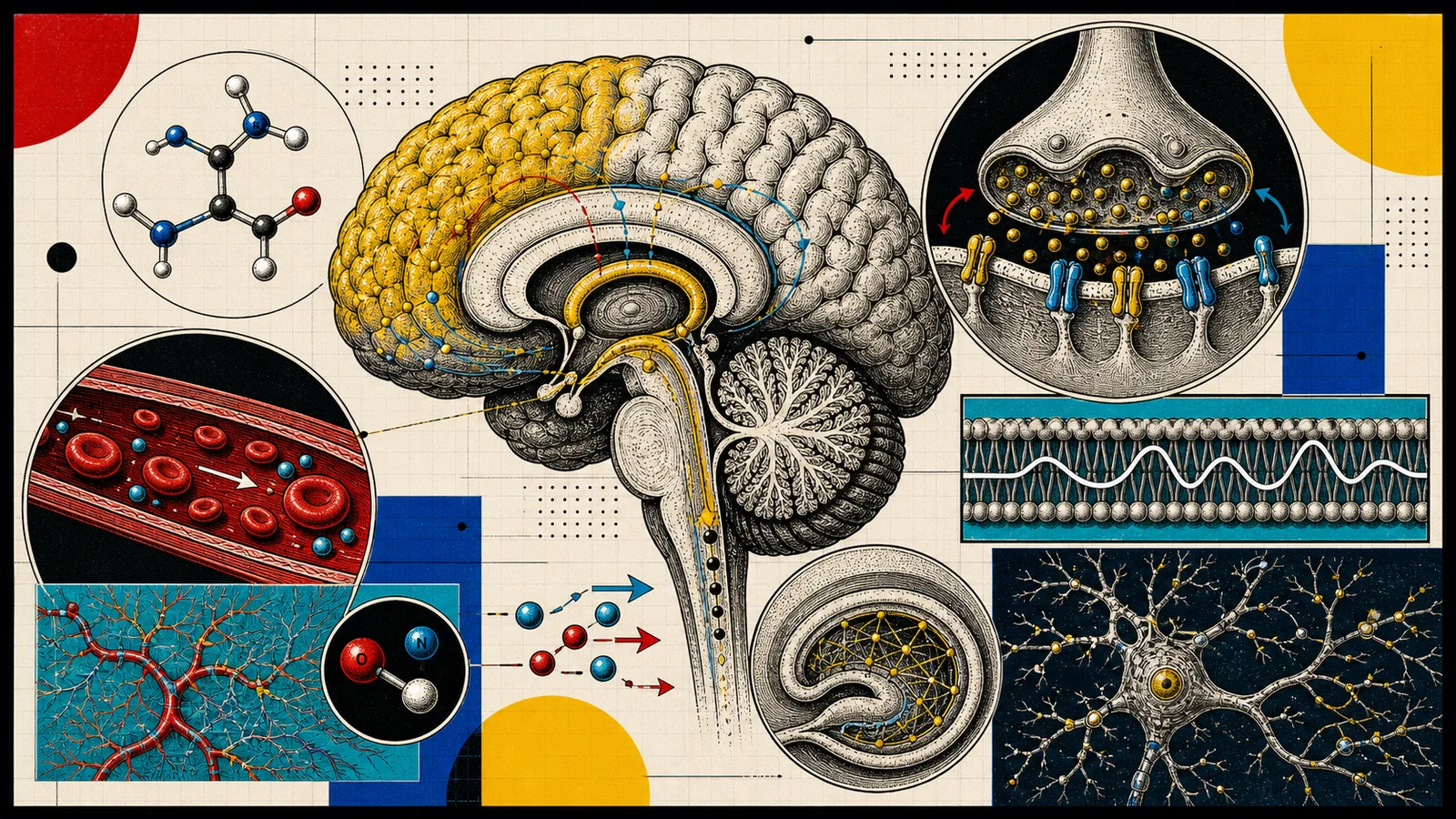
What is Piracetam?
Piracetam is a synthetic compound synthesized in 1964 by Romanian-Belgian neuroscientist Corneliu Giurgea, who first defined the concept of "nootropic". Although piracetam, whose chemical name is 2-oxo-1-pyrrolidineacetamide, is a cyclic GABA derivative, it does not have a direct effect on GABA receptors.
When Giurgea presented the concept of nootropics to the public in 1972, he identified five basic criteria: improving cognitive functions, increasing brain resistance to adverse environmental conditions (hypoxia, electroconvulsive shock), strengthening cortico-subcortical control mechanisms, being non-toxic and psychologically safe. Piracetam is designed to meet all of these criteria.
Today, piracetam; While it has licensed drug status for age-related cognitive decline and myoclonus epilepsy in Europe, it can be used under medical supervision in many countries, including Türkiye.
Historical Note
Historical Note: Piracetam came into clinical use from 1971 (under the name Nootropil) and became especially widespread in Soviet/Eastern European neurological practice. Giurgea's definition of the concept of "nootropic" paved the way for subsequent "smart drug" research.
Mechanism of Effect

Piracetam's mechanism of action is based on four main pathways:
1. AMPA Receptor Positive Allosteric Modulation
Piracetam binds to AMPA (alpha-amino-3-hydroxy-5-methylisoxazole-4-propionic acid) type glutamate receptors as a positive allosteric modulator. This binding lowers the threshold required for the receptor to be activated and strengthens glutamatergic signaling. As a result, long-term potentiation (LTP) – the molecular basis of memory consolidation – occurs more easily.
2. Increasing Membrane Fluidity
With aging, the phospholipid structure in neuron membranes deteriorates and membrane fluidity decreases. Piracetam restores membrane integrity by specifically optimizing the content of phosphatidylcholine and phosphatidylserine. This effect improves both the geometry of neurotransmitter receptors and ion channel dynamics.
3. Optimizing Acetylcholine Utilization
Piracetam increases the efficiency of acetylcholine utilization by increasing muscarinic receptor density in cholinergic neurons. Therefore, choline consumption increases in piracetam applications; Insufficient choline intake can cause headaches. Use together with CDP-Choline or Alpha-GPC eliminates this risk.
4. Communication between Brain Hemispheres
Studies on neurotransmission in the corpus callosum have revealed that piracetam increases right-left hemisphere integration. This effect can be observed as an increase in performance in tasks that require the simultaneous use of verbal-analytical and visual-spatial functions.
Clinical Evidence
Age-Related Cognitive Decline
Waegemans et al. (2002) reported significant improvement in clinical measures of global change in patients with cognitive impairment receiving piracetam compared to placebo (19 studies, n = 1488). A comprehensive review by Winblad (2005) summarizes the clinical uses of piracetam in the context of age-related cognitive decline, dementia and stroke.
Myoclonus Epilepsy
Piracetam is one of the few nootropics with EU-wide approved status for the treatment of cortical myoclonus. It has been shown in multiple open-label studies to significantly reduce the frequency and severity of muscle twitching episodes when used at high doses of 16–24 g per day.
Dyslexia and Learning Disabilities
Wilsher et al. (1987) conducted a multicenter, 36-week, double-blind, placebo-controlled study on children with dyslexia (n = 225), it was reported that reading speed and comprehension scores were improved in the group taking 3.3 g piracetam per day compared to placebo. Findings in this area have been mixed and have not always been replicated in subsequent independent studies.
Recovery After Brain Injury
Piracetam, used to accelerate neuroprotective processes after stroke and hypoxic brain injury, provides limited but consistent evidence that it supports early neurological recovery in 24 studies included in the Cochrane review (Ricci et al., 2012). However, its effect on long-term results has not yet been conclusively proven.
⚠ Important Notice
Important Notice: Data showing the effectiveness of piracetam for cognitive enhancement purposes in healthy young individuals is quite limited compared to the elderly population. Current evidence predominantly belongs to the context of age-related decline or neurological damage.
Dosage and Usage Protocol
| target | Daily Dose | How to Use | Note |
|---|---|---|---|
| Start (tolerance test) | 800 mg/day | Single dose, morning | First 1–2 weeks |
| cognitive support | 2400 mg/day | 3×800 mg, with food | Most common protocol |
| Age-related decline | 4800 mg/day | 3×1600 mg | Choline support is a must |
| Myoclonus (medical) | 16–24 g/day | split doses | Only under physician supervision |
Choline Synergy - Why Is It Important?
Piracetam rapidly depletes the brain's choline reserves while increasing the use of acetylcholine. Choline deficiency; It manifests itself as headache, mental fog and fatigue. For this reason, it is recommended to add a choline source to the piracetam protocol:
- Alpha-GPC: 300–600 mg/day (high BBB permeability, preferred option)
- CDP-Choline (Citicoline): 250–500 mg/day (adds dopamine synergy)
- Choline bitartrate: 500–1500 mg/day (economic option, limited BBB passage)
Safety and Side Effects
Piracetam has a safety profile that did not differ significantly compared to placebo in clinical studies. In toxicity evaluations, LD50 values were found to be extremely high; No serious adverse effects have been reported with long-term use in individuals with normal kidney function.
| Possible Impact | frequency | Management |
|---|---|---|
| headache | Common (in choline deficiency) | Add choline source |
| Restlessness/irritability | rare | Divide or reduce dose |
| insomnia | rare | Avoid using in the afternoon |
| nausea | rare | Take with food |
| Blood thinning effect | high dose | Do not use with anticoagulants |
⚠ Contraindication
Contraindication: Piracetam is eliminated slowly in individuals with renal impairment; dose adjustment may be required. It should not be used during pregnancy and breastfeeding. Avoid the combination as there is a risk of interaction with warfarin, aspirin, or other anticoagulants.
Is Piracetam Legal in Türkiye?
In Türkiye, piracetam has prescription drug status under the brand name Nootropil. Although a physician's prescription is required to purchase medicine, foreign-sourced raw material forms remain in the legal gray area. For those considering use, it is always recommended to consult a neurologist or psychiatrist.
Sources
- Giurgea, C. (1972). Pharmacology of integrative activity of the brain. Actualités pharmacologiques, 25, 115–156. Search PubMed (match unverified)
- Winblad, B. (2005). Piracetam: A review of pharmacological properties and clinical uses. CNS Drug Reviews, 11(2), 169–182. PubMed · PMID 16007238
- Wilsher, C.R. et al. (1987). Piracetam and dyslexia: effects on reading tests. Journal of Clinical Psychopharmacology, 7(4), 230–237. PubMed · PMID 3305591
- Bhatt, M. et al. (1999). Piracetam in myoclonus. Cochrane Database of Systematic Reviews. Search PubMed (match unverified)
- Ricci, S. et al. (2012). Piracetam for acute ischaemic stroke. Cochrane Database of Systematic Reviews, Issue 9. PubMed · PMID 22972044
- Müller, W.E. et al. (1997). Effects of piracetam on membrane fluidity in the aged mouse, rat, and human brain. Biochemical Pharmacology, 53(2), 135–140. Search PubMed (match unverified)
- Waegemans, T. et al. (2002). Clinical efficacy of piracetam in cognitive impairment: a meta-analysis. Dementia and Geriatric Cognitive Disorders, 13(4), 217–224. PubMed · PMID 12006732
Link verification checks the identity of the publication; it does not constitute independent expert review of clinical claims. Our evidence and source methodology · Source directory
Frequently Asked Questions
Piracetam was the first synthetic nootropic, developed in 1964. It promotes memory consolidation, acetylcholine utilization, and cerebral blood flow by positively allosterically modulating AMPA receptors and increasing cell membrane fluidity. It is the basic molecule of the racetam family.
1200–4800 mg per day, in divided doses, has been commonly used in studies. Because Piracetam increases the utilization of acetylcholine, it is often recommended to take it with a choline source such as Alpha-GPC or CDP-Choline to reduce side effects such as headaches.
Piracetam is in a gray area in Türkiye and many countries; It is not licensed as a food supplement and is in the prescription drug category in some countries. As its legal status is unclear, current legislation and a healthcare professional should be consulted before use.
The most commonly reported side effect is headache when a choline source is not added. Apart from this, restlessness, insomnia and digestive discomfort may occur. The overall safety profile is good, but it should be used with caution in those with renal impairment.
Some users notice it in the first days; however, memory and cognitive effects usually become apparent within a few weeks of regular use. The effect is reported more consistently when taken with a choline source.


