Contents 2 min read
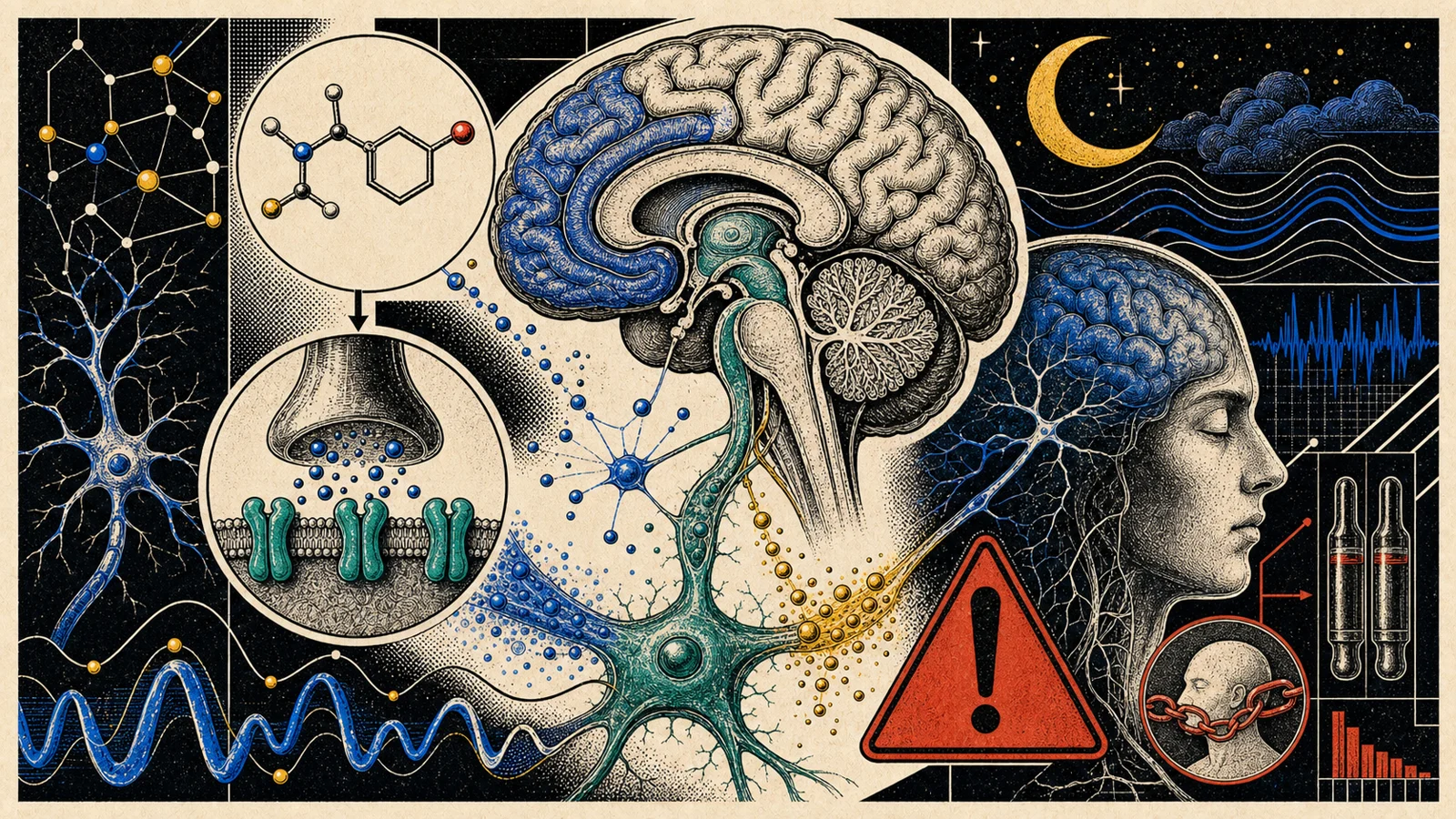
⚠ High Risk of Addiction
Phenibut carries strong physical dependence and tolerance potential. Use more than once a week is strongly not recommended. With sudden withdrawal, severe withdrawal syndrome (anxiety, tremors, sleep disturbance) may occur. This information is for educational purposes only.
What is Phenibut?
Phenibut (β-phenyl-γ-aminobutyric acid) was synthesized in the 1960s by Professor Vsevolod Perekalin at the Leningrad Institute of Pharmacology (now in Saint Petersburg). It was given to Soviet cosmonauts to manage stress and anxiety and was a valuable part of the limited medical supplies available to the Soviet space program. It is still used as a prescription medicine in Russia, Ukraine, and Latvia.
The chemical structure of phenibut consists of a phenyl ring bonded to GABA. This phenyl ring allows phenibutine to easily reach the central nervous system, unlike GABA's inability to cross the blood-brain barrier. primary target They are GABA-B receptors; it also affects GABA-A and beta-phenylethylamine with low affinity.
Mechanism of Effect

| Receptor/System | Impact | Clinical Result |
|---|---|---|
| GABA-B | agonism | Anxiolysis, muscle relaxation, sedation |
| GABA-A | Weak agonism (at high dose) | Strengthening sedative effect |
| dopamine | Indirect increase (via D2) | Euphoric feeling, mood improvement |
| Phenylethylamine | Weak-like effect | Mild stimulating ingredient |
Clinical Trials
Although systematic western medical studies of phenibut are limited, the Russian literature is rich. Confirmed indications include anxiety disorders, PTSD (Post-Traumatic Stress Disorder) and alcohol withdrawal. Small-scale western studies have shown strong effects on social anxiety and performance anxiety.
Tolerance and Addiction
The most critical safety issue of Fenibut is the rapid development of tolerance. With regular (e.g. daily) use, the effects begin to diminish within a few days; Although increasing the dose temporarily restores the effect, this cycle paves the way for addiction. discontinuation syndrome It is similar to benzodiazepine withdrawal and can be serious:
- Intense anxiety and panic attacks
- Tremors, sweating, tachycardia
- Sleep disturbance and hallucinations (in severe cases)
- Depression and anhedonia
- Symptoms may last 2–4 weeks
Safe Use Principles
| principle | Explanation |
|---|---|
| frequency | 1–2 times a week at most, never daily |
| Dose | 250 mg to start; max. 1000 mg should not be exceeded |
| They will not be combined | Alcohol, benzodiazepine, opioid, other GABAergics |
| Duration | Avoid use for longer than 4 weeks in total |
Sources
- Lapin I. (2001). Phenibut (beta-phenyl-GABA): a tranquilizer and nootropic drug. CNS Drug Reviews, 7(4), 471–481. PubMed · PMID 11830761
- Owen DR, et al. (2016). Phenibut (4-amino-3-phenyl-butyric acid): Availability, prevalence of use, desired effects and acute toxicity. Drug and Alcohol Review, 35(5), 591–596. PubMed · PMID 26693960
- Hardman MI, et al. (2019). Phenibut withdrawal: a comprehensive literature review and illustrative case report. Bosnian Journal of Basic Medical Sciences. PubMed · PMID 30501608
- Samokhvalov AV, et al. (2013). Phenibut dependence. BMJ Case Reports. PubMed · PMID 23391959
Link verification checks the identity of the publication; it does not constitute independent expert review of clinical claims. Our evidence and source methodology · Source directory
Frequently Asked Questions
Phenibut produces a rapid and powerful anxiolytic effect through GABA-B receptor agonism. Although it is effective in anxiety, social anxiety and sleep disorders, it should be used with extreme caution due to its strong addiction and tolerance potential.
Yes. Phenibut quickly develops tolerance and physical dependence, especially with regular use. Abrupt discontinuation may lead to severe withdrawal symptoms (anxiety, tremors, sleep disturbance). Therefore, it is critical to use it at most 1-2 times a week and keep the usage time limited.
Fenibut does not have any pharmaceutical license in Türkiye and is not regulated as a food supplement. Its legal status is unclear. It is a prescription drug in Russia and some Eastern European countries.
Phenibut should not be stopped suddenly after long-term or frequent use. The dose should be gradually reduced (tapering) and a physician's supervision should be taken during this process. Medical attention may be required for severe withdrawal symptoms.


