Contents 5 dk okuma
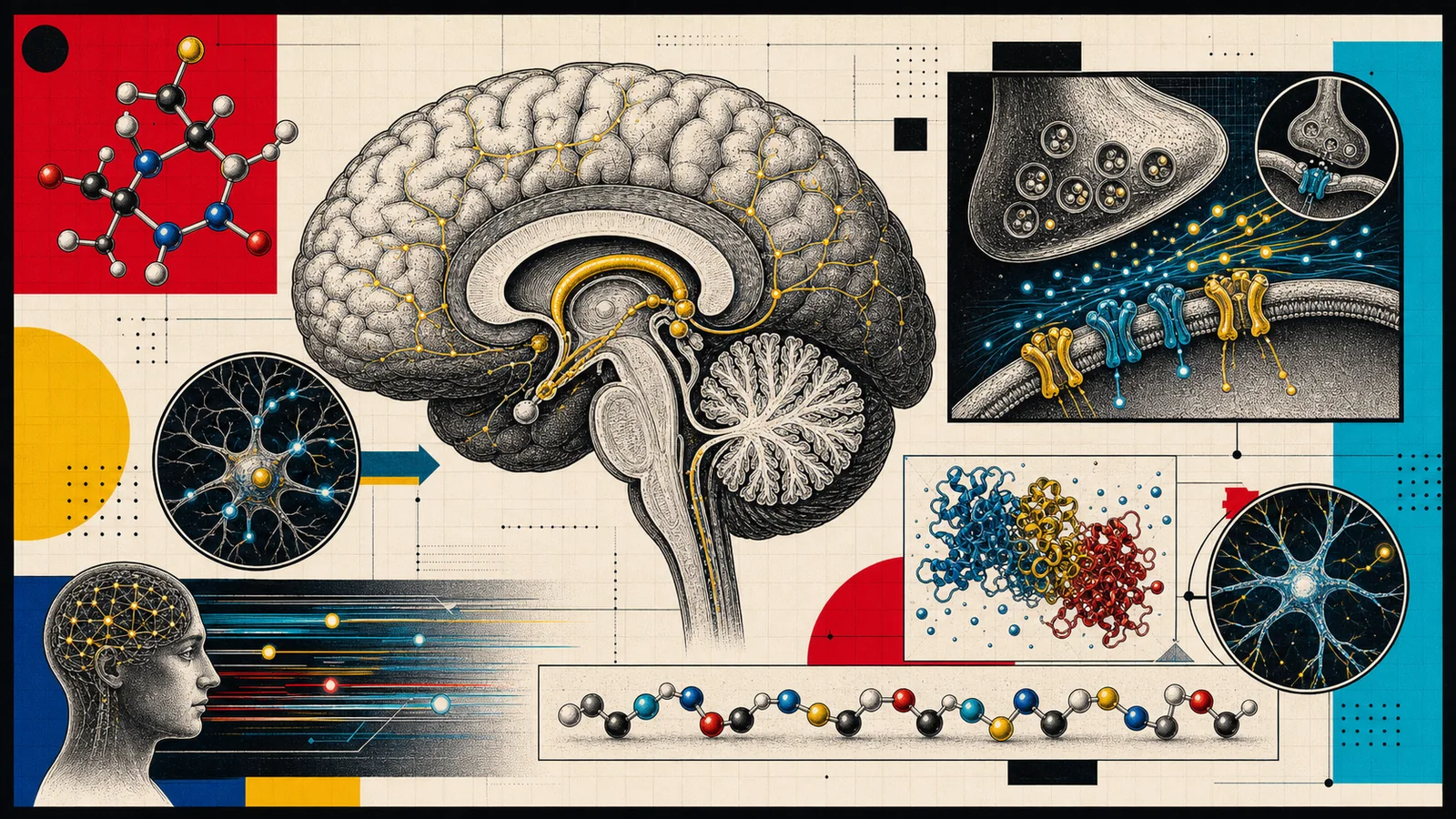
What is Noopept?
Noopept (GVS-111) is a dipeptide nootropic synthesized by the Zakusov Institute of Pharmacology in Russia in 1996 and originally derived from Soviet research programs. This compound, whose chemical name is N-Phenylacetyl-L-prolylglycine ethyl ester, is structurally similar to the endogenous neuropeptide cyclo-prolylglycine (CPG).
Frequently compared to Piracetam, Noopept exhibits similar or stronger effects at much lower doses on a milligram basis. The main reason for this difference in potency is that Noopept rapidly hydrolyzes into bioactive metabolites after oral intake, and these metabolites easily cross the blood-brain barrier.
Noopept, used as a prescription drug for memory impairment and cognitive decline in Russia and some CIS countries, has research chemical status in Western countries.
Comparison with Piracetam
Comparison with Piracetam: While Piracetam requires 1600–4800 mg/day for equivalent effect, Noopept provides similar effect with 10–30 mg/day. However, this difference in potency does not necessarily mean that Noopept is safer or more effective – although the mechanisms and effect profiles overlap, there are differences.
Mechanism of Effect

1. Increasing NGF and BDNF Gene Expression
The most notable feature of Noopept is its capacity to increase neurotrophic factor gene expression. Ostrovskaya et al. Animal studies conducted by (2007) showed that Noopept significantly increased NGF (Nerve Growth Factor) and BDNF (Brain-Derived Neurotrophic Factor) mRNA levels in the hippocampus and cortex. This effect is defined as a "trace effect" that continues after the drug is stopped.
2. AMPA and NMDA Receptor Modulation
Noopept positively allosterically modulates AMPA-type glutamate receptors, similar to piracetam. In addition, it supports both memory consolidation and long-term potentiation (LTP) processes through its metabolites that also affect NMDA receptors. Its effect on the glycine binding site plays a particular role in lowering the learning threshold.
3. Facilitating Acetylcholine Release
Noopept, which also acts on the cholinergic system, increases the release of acetylcholine in the hippocampus. This mechanism specifically explains its effects on episodic memory and spatial learning. Like Piracetam, Noopept may increase choline consumption; however, this effect is less pronounced because the dose is much lower.
4. Antioxidant and Neuroprotective Effects
Noopept shows protective effects on neurons against oxidative stress. It contributes to neuroprotection against ischemic brain injury through mechanisms that neutralize reactive oxygen species and support mitochondrial function. This effect has been observed in both acute use and chronic protocols.
Clinical Evidence
Memory and Learning
Ostrovskaya et al. (2007) showed that Noopept (0.1–1 mg/kg) application in rats with memory impairment significantly improved reference and working memory in the Morris water maze test. The impact has been observed in both acquisition and consolidation phases.
Alzheimer's and Cognitive Decline
In a double-blind clinical study conducted in Russia (Neznamov and Teleshova, 2009), 53 patients with mild cognitive impairment (MCI) received 20 mg of Noopept or piracetam daily for 56 days. Both groups showed improvements on cognitive measures; Additional benefits for anxiety and asthenia were also reported in the Noopept group.
neuroprotection
Animal studies using oxidative damage models have shown that Noopept exerts a protective effect against beta-amyloid-induced neurotoxicity. This finding is of interest to researchers in the context of Alzheimer's disease prevention; However, long-term studies confirming it in humans are not yet sufficient.
⚠ Evidence Limitation
Limitation of Evidence: The vast majority of available clinical data originates from Russia and has not been independently replicated. The evidence base for use for cognitive enhancement in healthy young individuals is quite limited. Randomized controlled studies conducted in the West are inadequate.
Dosage and Usage Protocol
| target | Dose | frequency | Note |
|---|---|---|---|
| Start (tolerance test) | 5–10 mg | Morning, single dose | First 3–5 days |
| cognitive support | 10–20 mg | 1–2×/day | Take it before noon |
| Clinical protocol | 20–30 mg | 1–2×/day | With choline source |
| Sublingual (faster effect) | 10 mg | When necessary | Hold sublingually for 60 seconds |
Loop Protocol
The common cycle for Noopept is: 56 days on (8 weeks), followed by 4 weeks off. This protocol aims to limit the development of tolerance and optimize the accumulation of neurotrophic effects. Cyclic use is recommended as continuous long-term use has not been studied.
Safety and Side Effects
Noopept has been generally well tolerated in human studies. Thanks to its short half-life (about 1 hour), it has less negative effects on sleep when taken in the evening. However, the following effects have been reported in some users:
| Possible Impact | frequency | Management |
|---|---|---|
| headache | Common (in choline deficiency) | Add CDP-Choline or Alpha-GPC |
| Irritability/restlessness | rare | Reduce dose or cycle |
| insomnia | rare | Avoid using in the afternoon |
| Brain fog (overdose) | rare | Reduce dose, cycle |
| mild stomach upset | rare | Take with food |
⚠ Warning
Warning: Noopept is an unlicensed research chemical in Türkiye; Its sale and consumption as medicine remains in a legal gray area. Interactions with MAO inhibitors, anticoagulants and psychiatric medications have not been studied. If you have any psychiatric diagnosis or are taking medication, do not take it without consulting your doctor.
Noopept vs Piracetam: Key Differences
| Property | noopept | Piracetam |
|---|---|---|
| potency | ~1000× stronger | base reference |
| daily dose | 10–30 mg | 1600–4800 mg |
| half life | ~1 hour | 4–5 hours |
| NGF/BDNF effect | Strong (gene expression) | weak/indirect |
| AMPA modulation | Yes | Yes |
| Clinical approval (Russia) | Yes (cognitive impairment) | Yes (myoclonus) |
| Legal situation in the West | research chemical | research chemical |
Sources
- Ostrovskaya, R.U. et al. (2007). Noopept stimulates the expression of NGF and BDNF in rat hippocampus. Bulletin of Experimental Biology and Medicine, 146(3), 334–337. Search PubMed (match unverified)
- Neznamov, G.G. & Teleshova, E.S. (2009). Comparative studies of Noopept and piracetam in the treatment of patients with mild cognitive disorders in organic brain diseases of vascular and traumatic origin. Neuroscience and Behavioral Physiology, 39(3), 311–321. PubMed · PMID 19234797
- Gudasheva, T.A. et al. (1997). The major metabolite of dipeptide piracetam analogue GVS-111 in rat brain and its similarity to endogenous neuropeptide cyclo-L-prolylglycine. European Journal of Drug Metabolism and Pharmacokinetics, 22(3), 245–252. PubMed · PMID 9358206
- Romanova, G.A. et al. (2001). Nootropic and neuroprotective effects of GVS-111 (noopept) at experimental ischemia. Bulletin of Experimental Biology and Medicine, 132(6), 1245–1247. Search PubMed (match unverified)
- Pelsman, A. et al. (2003). GVS-111 prevents oxidative damage and apoptosis in normal and Down's syndrome human cortical neurons. International Journal of Developmental Neuroscience, 21(3), 117–124. PubMed · PMID 12711349
- Ostrovskaya, R.U. et al. (2012). Neuroprotective effect of novel cognitive enhancer noopept on AD-related cellular model involves the attenuation of apoptosis and tau hyperphosphorylation. Journal of Biomedical Science, 19(1), 74. Search PubMed (match unverified)
Link verification checks the identity of the publication; it does not constitute independent expert review of clinical claims. Our evidence and source methodology · Source directory
Frequently Asked Questions
Noopept is a synthetic dipeptide nootropic that aims to increase memory consolidation, learning speed and focus capacity. It supports the growth and survival of neurons by increasing the gene expression of neurotrophic factors such as NGF and BDNF; It also facilitates long-term potentiation (LTP) by modulating AMPA and NMDA glutamate receptors. It is approved in Russia as a prescription drug for mild cognitive impairment and organic brain diseases.
To start, a single dose of 5–10 mg in the morning is recommended; After tolerance is evaluated, the dose can be increased to 10–20 mg 1–2 times a day. The protocol used in clinical trials is usually 20–30 mg per day. Since it is approximately 1000 times more potent than Piracetam, even small doses can have significant effects; Exceeding more than 30 mg/day does not provide additional benefit, on the contrary, it increases the risk of headache or irritability.
The most commonly reported side effect is headache caused by increased choline consumption; Using it with a choline source such as CDP-Choline or Alpha-GPC reduces this risk. In addition, irritability, mild insomnia, and rarely brain fog have also been reported. Since its half-life is approximately 1 hour, it is unlikely to negatively affect sleep quality when taken in the afternoon. It is recommended that those who use MAO inhibitors or psychiatric drugs do not take them without a doctor's approval.
Noopept is not a drug approved by the Turkish Medicines and Medical Devices Agency (TITCK) in Türkiye; For this reason, it is not sold in pharmacies with or without a prescription. Its legal status remains in the gray area and it can be purchased from some online international suppliers labeled as a research chemical. Bringing it from abroad for personal use may carry risks in terms of legislation in Türkiye; It is recommended that you research the current legal status before purchasing.
After oral intake, the effect usually begins to be felt within 15–30 minutes. This period may be even shorter in sublingual (under the tongue) use. Since its half-life is approximately 1 hour, the acute cognitive effect diminishes markedly within 2–4 hours. However, the neurotrophic effects that increase NGF and BDNF gene expression are cumulative and occur over days to weeks; In clinical protocols, the most significant cognitive improvements were observed after 56 days of use.


