Contents 2 min read
Important Note
This page is not medical advice. While the potential benefits of NAC are supported by research, it should not be used to treat any health problems. For psychiatric symptoms, be sure to consult a specialist physician.
What is NAC?
N-Acetyl Cysteine (NAC) is the acetylated form of the amino acid L-cysteine. For decades in medicine; It is primarily used in the treatment of paracetamol (acetaminophen) poisoning and chronic obstructive pulmonary disease. In the last decade, it has come to the fore with its research in neuropsychiatric applications, neuroprotection and general health.
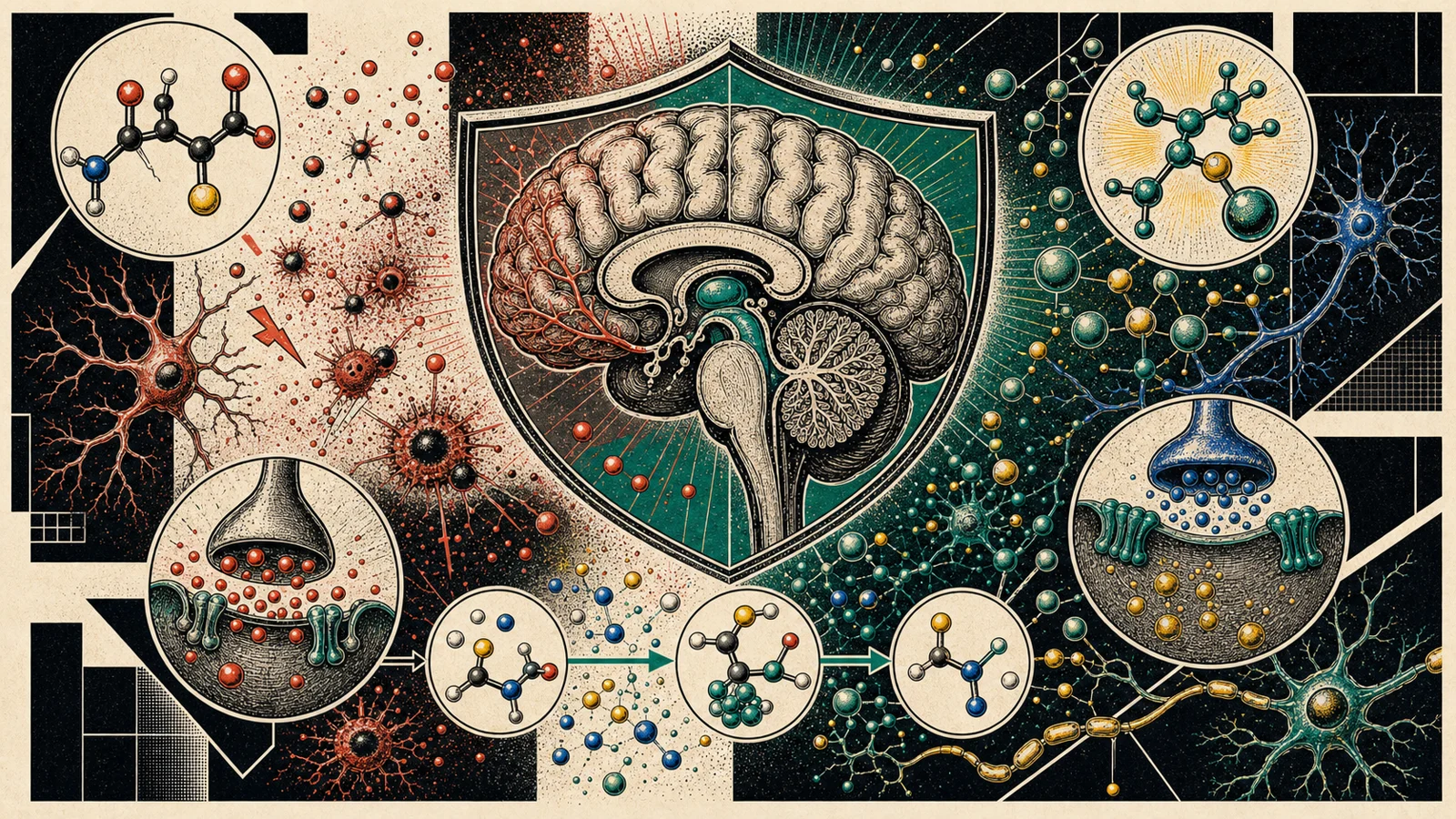
The importance of NAC in the brain is based on two basic mechanisms: by increasing glutathione (GSH) synthesis Strengthening antioxidant capacity and by regulating glutamate homeostasis balancing excessive glutamatergic neuronal activation. These two pathways produce complementary neuroprotective effects.
Mechanism of Effect

| mechanism | target | Conclusion |
|---|---|---|
| Glutathione precursor | Cysteine → GSH | Protection against oxidative damage |
| Glutamate modulation | xCT antiporter | Reducing neuronal hyperactivation |
| anti-inflammatory | NF-κB inhibition | Reduced neuroinflammation |
| Mitochondria protection | ROS reduction | Neuron energy efficiency increase |
Clinical Trials
NAC has been investigated in a wide range of neurological and psychiatric conditions:
- OCD (Obsessive-Compulsive Disorder): Multiple studies have shown that NAC supplementation relieves OCD symptoms; evaluated in the context of the glutamate hypothesis
- Trichotillomania and skin picking disorder: Significant symptom reduction has been found in double-blind studies
- Addiction (cocaine, cigarettes, alcohol): There are promising studies on reducing cravings.
- Bipolar disorder: There is evidence that it may reduce depressive symptoms
- Neurodegeneration: Protective effects have been observed in Parkinson's and ALS models
⚠ FDA Decision (2022)
In the USA, some supplement products were withdrawn from the market because the FDA placed NAC in "prior drug exclusion" status. It is freely available as medicine (Mucosolvan, Fluimucil, etc.) and food supplement in Türkiye.
Dosage Protocol
| Intended Use | Dose | Timing |
|---|---|---|
| General antioxidant/neuroprotection | 600–1200 mg/day | Split dose, with food |
| Psychiatric support (investigational dose) | 1200–2400 mg/day | 2×600 or 2×1200 mg |
| Addiction craving support | 1800–3600 mg/day | Divided, under expert supervision |
Safety and Side Effects
NAC has a safe profile in short- and long-term use. Long-term use data of medical forms are also available. Possible side effects:
- Nausea, bloating, or digestive upset (most commonly relieved with meals)
- Rare: skin rash or allergic reaction
- Anticoagulants: Caution in combined use, may increase the risk of bleeding
- Nitroglycerin: Risk of serious hypotension, avoid combination
- The smell of sulfur may disturb some people.
Sources
- Berk M, et al. (2013). N-acetyl cysteine as a glutathione precursor for schizophrenia - a double-blind, randomized, placebo-controlled trial. Biological Psychiatry, 64(5), 361–368. Search PubMed (match unverified)
- Grant JE, et al. (2009). N-acetyl cysteine, a glutamate-modulating agent, in the treatment of trichotillomania. Archives of General Psychiatry, 66(7), 756–763. Search PubMed (match unverified)
- LaRowe SD, et al. (2006). Is cocaine desire reduced by N-acetylcysteine? American Journal of Psychiatry, 163(6), 1115–1117. Search PubMed (match unverified)
- Dean O, et al. (2011). N-acetylcysteine in psychiatry: current therapeutic evidence and potential mechanisms of action. Journal of Psychiatry & Neuroscience, 36(2), 78–86. PubMed · PMID 21118657
Link verification checks the identity of the publication; it does not constitute independent expert review of clinical claims. Our evidence and source methodology · Source directory
Frequently Asked Questions
NAC (N-Acetyl Cysteine) strengthens antioxidant defense by increasing glutathione production, regulates glutamate homeostasis and reduces neuroinflammation. It is being researched in the areas of OCD, addiction, bipolar disorder, and general neuroprotection.
600–1200 mg/day is sufficient for general antioxidant support. 1200–2400 mg/day has been used in studies for psychiatric indications. Taking it with food reduces digestive side effects.
While oral glutathione has poor absorption, NAC offers much better bioavailability as an intracellular precursor of glutathione. Therefore, the standard method to increase glutathione levels is NAC supplementation.
Excessive glutamate activation in addiction is associated with craving mechanisms. NAC may reduce cravings by regulating glutamate homeostasis through the xCT antiporter. Studies on cocaine and tobacco addiction are particularly promising.


