Contents 3 dk okuma
Important Note
This page is not medical advice. Although lemon balm's potential benefits are supported by research, it should not be used to treat any health problems. For chronic anxiety, be sure to consult a specialist physician.
What is Melisa?
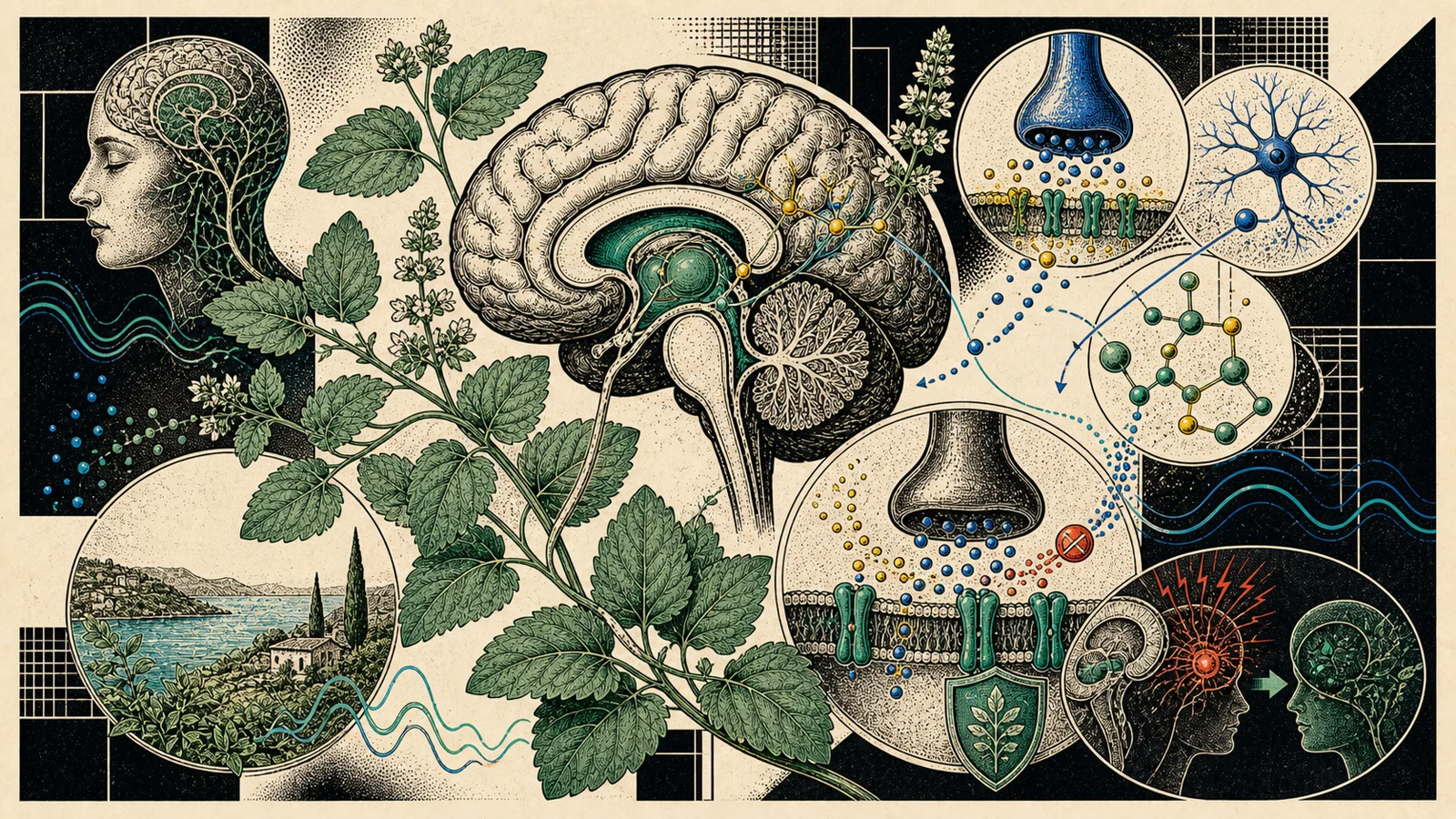
Melisa (melissa officinalis) is a perennial plant from the mint family, native to the Eastern Mediterranean and Central Asia. In ancient Greece, it was famous for its bee-attractive properties; "Melissa" in Latin already means "honey bee". In Medieval Europe, lemon balm, known as Paracelsus' miraculous life-extending plant, has been used for centuries for sleep disorders, anxiety, stomach complaints and colds.
Main active compound of the plant rosmarinic acidBy inhibiting the GABA-T (GABA transaminase) enzyme, it slows down the degradation of GABA and increases synaptic GABA concentrations. This mechanism works by increasing endogenous inhibitory neurotransmitter levels rather than direct receptor activation, unlike benzodiazepines or barbiturates – creating a much milder and safer profile.
Mechanism of Effect

| compound | target | Impact |
|---|---|---|
| Rosmarinic acid | GABA-T inhibition | Increase in synaptic GABA level, anxiolysis |
| Rosmarinic acid | Weak inhibition of MAO-A | Serotonin/norepinephrine protective additive |
| Luteolin, apigenin | GABA-A positive modulation | Sedative synergy |
| oleanic acid | cholinergic activity | Mild cognitive support |
Clinical Evidence
Lemon balm's effects on anxiety and stress are supported by well-controlled studies. in 2004 Psychosomatic MedicineThe study published in showed that 300 mg and 900 mg of lemon balm extract significantly improved mood and cognitive performance and reduced stress scores in healthy volunteers. Additive sedation and slight decreased arousal were observed at the 900 mg dose.
The effectiveness increases especially when lemon balm is combined with L-Theanine and valerian. Avivit etc. Clinical studies of commercial combination products are available. The cognitive effect has a different profile: lemon balm keeps focus and cognitive processing at a calm and steady level, not high - not through a stimulant effect like caffeine, but through anxiolytic calming.
Dosage Protocol
| Intended Use | Dose | Timing |
|---|---|---|
| Anxiety/stress management | 300 mg (std. extract) | As needed or in the morning |
| sleep support | 600–900 mg | 30–60 minutes before bed |
| Combination with L-Theanine | 300 mg lemon balm + 200 mg L-Theanine | During stressful times |
Safety and Side Effects
Lemon balm is an unusually safe herbal product. It has GRAS (Generally Recognized As Safe) status. At high doses (above 900 mg), mild sedation and decreased attention may occur. Those who use thyroid medications should be careful: lemon balm may inhibit thyroid hormone synthesis. Drug interactions may exist in the context of hypothyroidism.
Sources
- Kennedy DO, et al. (2004). Modulation of mood and cognitive performance following acute administration of Melissa officinalis (Lemon Balm). Psychosomatic Medicine, 66(4), 607–613. Search PubMed (match unverified)
- Awad R, et al. (2007). Phytochemical and biological analysis of skullcap (Scutellaria lateriflora L.): a medicinal plant with anxiolytic properties. Phytomedicine. Search PubMed (match unverified)
- Cases J, et al. (2011). Pilot trial of Melissa officinalis L. leaf extract in the treatment of volunteers suffering from mild-to-moderate anxiety disorders and sleep disturbances. Mediterranean Journal of Nutrition and Metabolism, 4(3), 211–218. Search PubMed (match unverified)
- Scholey A, et al. (2014). Anti-stress effects of lemon balm-containing foods. Nutrients, 6(11), 4805–4821. PubMed · PMID 25360512
Link verification checks the identity of the publication; it does not constitute independent expert review of clinical claims. Our evidence and source methodology · Source directory
Frequently Asked Questions
Lemon balm (Melissa officinalis) increases brain GABA levels through GABA-T inhibition, reduces anxiety and stress, and improves mood. Thanks to its calming mechanism, it helps keep cognitive performance stable under high stress.
Yes, these two substances create a synergistic anxiolytic profile. Both work through GABAergic and serotoninergic mechanisms; The combination is suitable for both acute stress management and daily calm focus support.
Yes. At higher doses (600–900 mg), lemon balm exerts its sedative effect and facilitates the onset of sleep. When combined with valerian, its effects on sleep quality are strengthened; There are studies examining this combination.
No, caution should be exercised. It is known that lemon balm compounds can inhibit thyroid hormone synthesis. Those who use thyroid medications or are diagnosed with hypothyroidism should consult their doctor before using lemon balm.


