Contents 4 dk okuma
Important Note
This page is not medical advice. Although the potential benefits of DMAE have been studied by research, it should not be used to treat any health problems. Consult a healthcare professional.
What is DMAE?
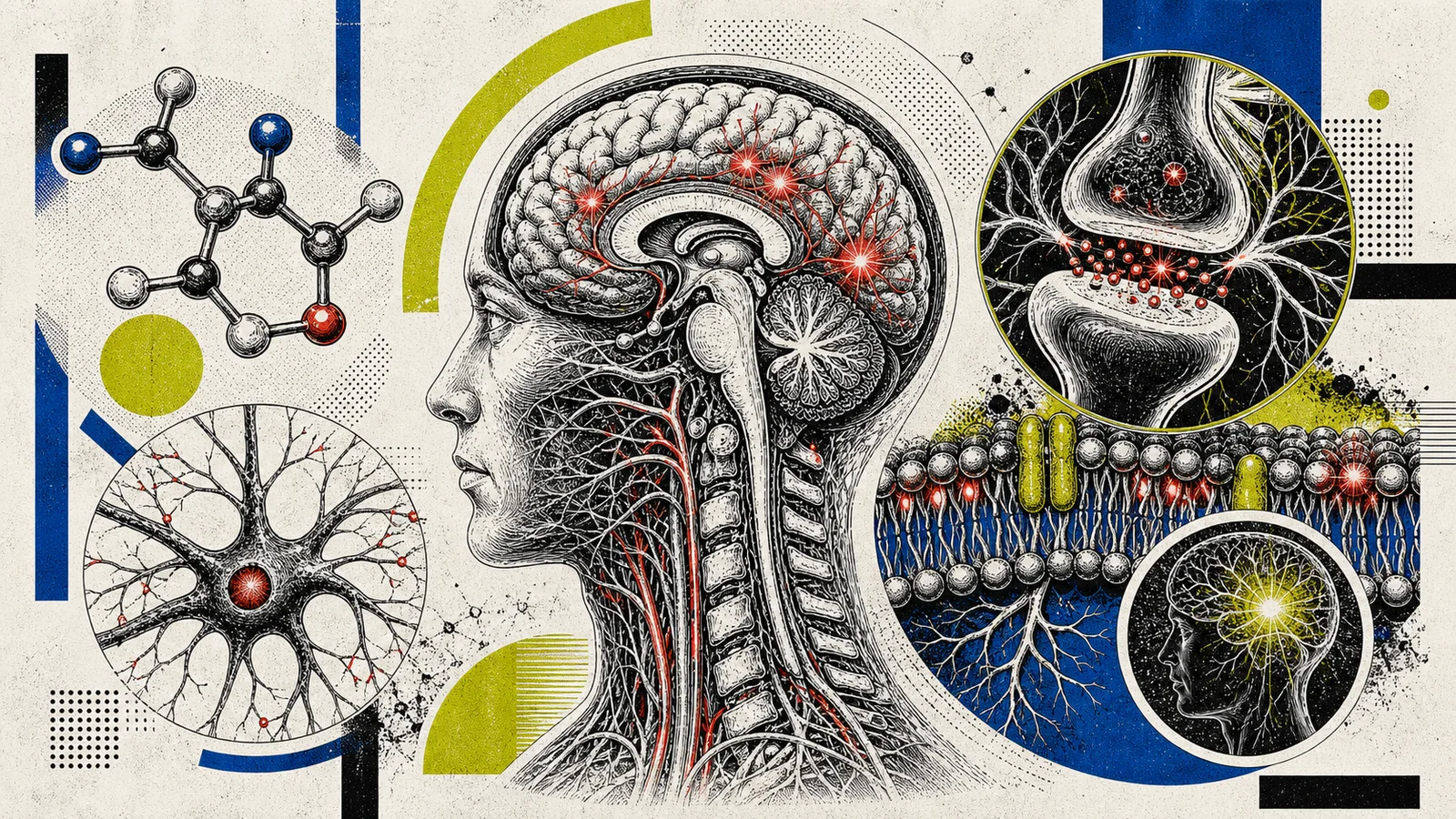
DMAE (dimethylaminoethanol) is a compound produced naturally in small amounts in the human brain and found in fish such as sardines and anchovies. The form sold as a supplement is produced chemically (semi-synthetic). It is structurally similar to choline; DMAE contains only two methyl groups, as opposed to the three methyl groups of choline.
Besides its widespread use in cosmetic products (Rona-Lac and skin-firming creams), it is also taken as a nootropic supplement. Research conducted during the 1970s and 1980s on ADHD-like symptoms and memory problems brought it to wider attention; findings from this period underpin its current use as a nootropic.
Mechanism of Effect

DMAE is known for its effects on the cholinergic system. However, its exact mechanism is controversial: while some studies argue that it functions directly as a precursor of acetylcholine, more recent studies indicate that its contribution to choline synthesis is quite limited.
| Target/Mechanism | Impact | Conclusion |
|---|---|---|
| Choline synthesis (indirect) | DMAE choline conversion (limited) | Acetylcholine precursor support |
| Acetylcholine reuptake | Increased choline retention | Cholinergic transmission enhancement |
| Phosphatidylcholine synthesis | cell membrane component | membrane health |
| Beta-amyloid prevention | Theoretical, experimental | Neuroprotective potential |
| DMAE tartrate form | better absorption | Effective dose is lower |
⚠ Mechanism Discussion
Whether DMAE is a precursor of acetylcholine is controversial in the scientific literature. New research shows that its contribution to choline synthesis is limited. The mechanism of action has not been fully elucidated; Users are advised to consider this uncertainty.
Clinical Evidence
The majority of research on DMAE dates back to the period 1960-1980. Although these studies are limited by today's methodological standards, the main findings can be summarized as follows:
- Fisman (1981): Observation of modest cognitive improvement in Alzheimer's patients.
- Ferris (1977): Limited effect on age-related memory problems.
- Murphree (1960): Attention and behavior improvement in ADHD-like symptoms.
- Modern period: There are no sufficient large-scale randomized controlled trials; The level of evidence is considered weak-moderate.
In terms of cosmetic research, the picture is stronger: topical formulations containing DMAE are supported by more robust clinical data regarding skin-firming effects.
⚠ Research Limitations
The majority of existing cognitive studies have small sample sizes, short follow-up periods, and outdated methodology. There are no current RCTs examining the effectiveness of DMAE in healthy young individuals.
Dosage Protocol
A standardized dosing protocol for DMAE has not yet been established. Dosages and recommendations observed in common use:
| Intended Use | Dose | Timing |
|---|---|---|
| cognitive support | 150–300 mg/day | Morning or noon |
| Intensive work periods | 300–500 mg/day | Morning, with food |
| DMAE Bitartrate form | 100–200 mg (more potent) | morning |
Cyclic use: A preferable protocol is to use it 5 days a week and take a 2-day break. It is not necessary to combine with a choline source (Alpha-GPC, CDP-Choline); On the contrary, excess choline accumulation can cause headaches and feelings of irritability.
Safety and Side Effects
DMAE is considered a compound with a moderate safety profile. Although tolerable at recommended dosages, significant contraindications exist for certain groups.
- Headache: The most frequently reported side effect; It usually regresses with dose reduction.
- Irritability/restlessness: It can be seen especially in high doses.
- Muscle tension: If you feel pain or tightness in your muscles, reduce the dose immediately.
- Sleep disorder: Avoid afternoon intake; It may have a stimulant-like effect.
⚠ Critical Contraindications
Epilepsy: DMAE may theoretically lower the seizure threshold. Its use is contraindicated in those diagnosed with epilepsy.
Pregnancy: Mouse studies indicate that DMAE use may produce teratogenic effects associated with choline deficiency. NEVER use during pregnancy.
Bipolar disorder: The risk of triggering a manic episode has been reported. It should not be used in people with a psychiatric history without consulting a physician.
Sources
- Ferris SH, et al. (1977). Senile dementia: treatment with deanol. Journal of the American Geriatrics Society, 25(6), 241–244. PubMed · PMID 864168
- Fisman M, et al. (1981). Double blind trial of 2-dimethylaminoethanol in Alzheimer's disease. Canadian Journal of Psychiatry, 26(7), 482–484. PubMed · PMID 7020434
- Murphree HB, et al. (1960). The pharmacology of certain drugs used as antidepressants. Annals of the New York Academy of Sciences, 80, 679–687. Search PubMed (match unverified)
- Grossman R. (2005). The role of dimethylaminoethanol in cosmetic dermatology. American Journal of Clinical Dermatology, 6(1), 39–47. PubMed · PMID 15675889
Link verification checks the identity of the publication; it does not constitute independent expert review of clinical claims. Our evidence and source methodology · Source directory
Frequently Asked Questions
DMAE (dimethylaminoethanol) is a compound associated with the cholinergic system of the brain. Although it has traditionally been suggested to be a precursor of acetylcholine, current research shows that this transformation is limited/controversial. However, it is reported that it can positively affect focus, cognitive clarity, and mood. It is also used in cosmetic products for its skin tightening effect.
For cognitive support, 150–300 mg of DMAE per day is generally recommended. During intense study periods, this dose may increase up to 500 mg. If DMAE is in bitartrate form, lower doses (100–200 mg) provide equivalent effect. It is recommended to take it with food, in the morning or at noon; Taking it late at night may cause sleep problems.
The most commonly reported side effects are headache, nervousness and muscle tension. These symptoms usually improve with dose reduction. Afternoon intake may cause sleep disturbance. Those diagnosed with epilepsy, pregnant women, and those with a history of bipolar disorder should not use DMAE; There are serious risks in these groups.
DMAE is classified as a food supplement, not a medicine, in Türkiye and its sale is possible through legal means. It can be obtained from domestic supplement stores and international online platforms. Since product quality may vary significantly depending on the manufacturer, reliable brands should be preferred and product certifications should be taken into consideration.
Although the cognitive effects of DMAE vary from person to person, some users may notice a slight increase in focus within a few days. 1 to 4 weeks of regular use is usually required for significant and consistent effects to appear. The rate at which the effect is felt depends on the individual's metabolism, the dose used, and the initial cholinergic state.


